About this place
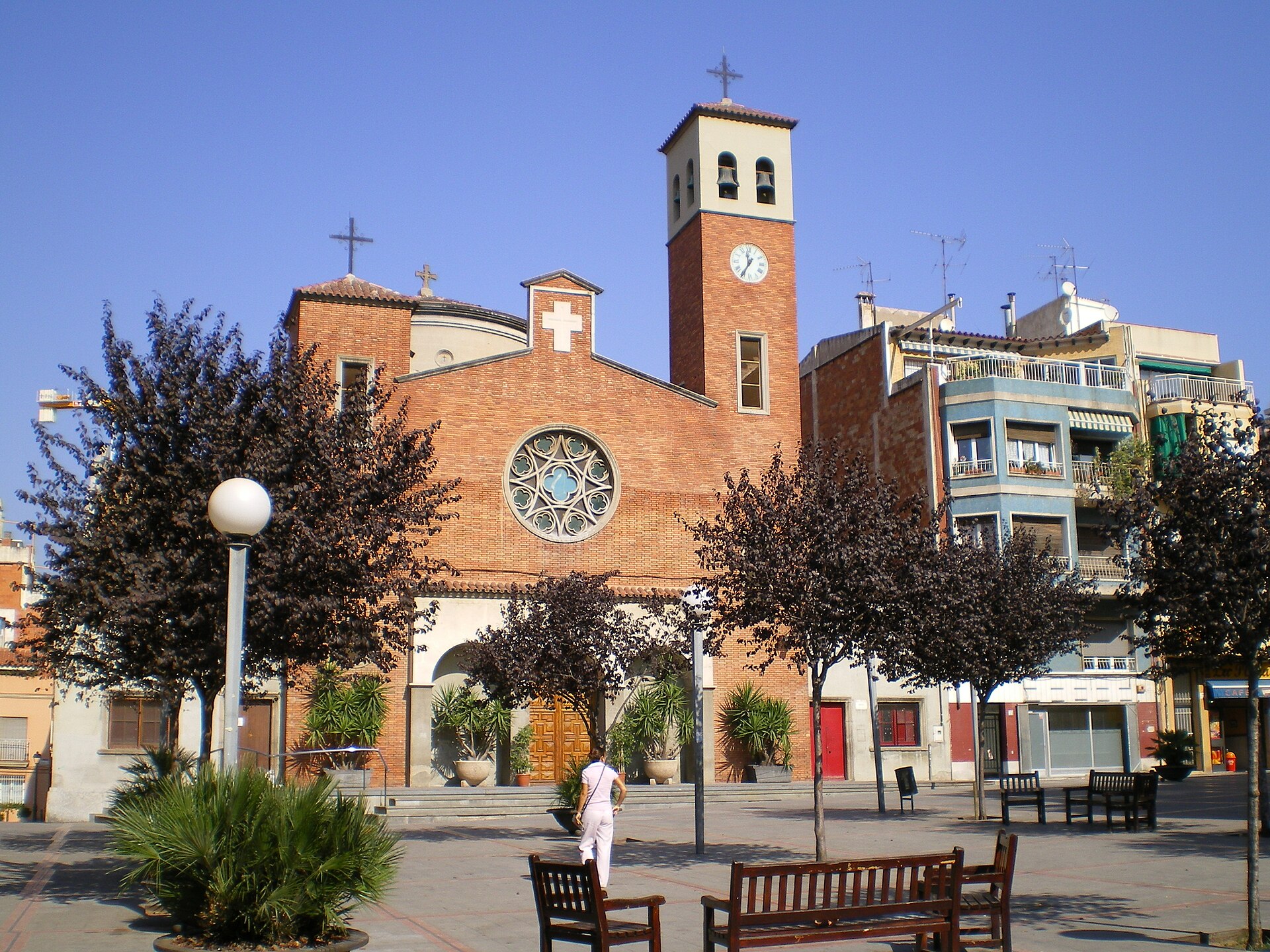
Església de Sant Andreu de Palomar is the imposing parish church of Barcelona's Sant Andreu district, standing over a square that has been the heart of the former independent town of Sant Andreu de Palomar for centuries — a town only absorbed into Barcelona in the late 19th century. Its monumental dome is visible from far across the neighborhood and ranks among the landmarks of the city's northern districts.
What is the history behind this church?
A place of worship has stood here since at least the 10th century — the earliest records of a church beside the old Roman road date to 974. The name "Sant Andreu de Palomar" is linked to a local priest and landowner, Geribert, mentioned in a document from 1034. The parish was first consecrated in 1105, but the building was destroyed twice by Saracen raids before Bishop Sant Oleguer consecrated it again in 1132.
The site also holds a symbolic place in Catalan history: on 8 June 1640, reapers (segadors) set out from the old church here, and their uprising escalated into the bloody unrest known as the Corpus de Sang, the spark that ignited the Reapers' War (Guerra dels Segadors), one of the pivotal conflicts in the region's history.
The church visitors see today is not the medieval building. The current structure was raised between 1881 and 1904, designed initially by architect Pere Falqués in an eclectic style with a classical, monumental character. The project was completed by Josep Domènech i Estapà, who designed the dome — one of the largest in Barcelona, rivaling in scale the dome of the National Palace on Montjuïc.
The 20th century brought further upheaval: the church suffered damage during unrest in 1909, and during the Spanish Civil War in 1936 its rectory was ransacked while the church itself was requisitioned as a storehouse for agricultural produce and aviation fuel. Architect Enric Piqué led its restoration in 1940, and in the 1950s the interior was decorated with murals by Josep Verdaguer.
What can you see there today?
The standout feature is the monumental dome, one of the largest in the city, visible from many points around Sant Andreu. The eclectic facade blends classical elements with the more decorative detailing typical of the turn of the 20th century. Inside, look for the murals painted by Josep Verdaguer in the 1950s, a legacy of the postwar restoration that followed the Civil War damage. The square in front of the church remains a popular local gathering spot and a good starting point for exploring the historic center of Sant Andreu de Palomar.
How do you get there?
The church sits at the heart of the Sant Andreu district in northern Barcelona, well connected to the city center by metro (line L1, Sant Andreu station) and city bus routes. From Plaça de Catalunya, the journey typically takes around 20-25 minutes.
When is the best time to visit?
The church and its surrounding square can be visited year-round — it remains an active parish, so it's worth checking Mass times if you want to see the interior outside of services. Sant Andreu still carries the character of the independent town it once was, so it pairs well with a walk through the neighboring streets and the Mercat de Sant Andreu, ideally in the quieter morning hours.
Frequently asked questions
Is Església de Sant Andreu de Palomar the same building as its medieval predecessor? No. The original 10th-12th century church no longer stands in its early form — today's building was constructed between 1881 and 1904 on the site of the earlier one.
Why is this church significant in Catalan history? It was the starting point in 1640 for the reapers' revolt that turned into the Corpus de Sang and triggered the Reapers' War.
What is the church's most notable architectural feature? Its monumental dome, designed by Josep Domènech i Estapà, one of the largest domes in Barcelona.
Is entry to the church free? As an active parish, entry for Mass and private prayer is generally free; it's best to check current opening hours before visiting.
Nearby places

Earn badges for the places you visit
Download NextOnTrip, discover new places and check off your trails.