About this place
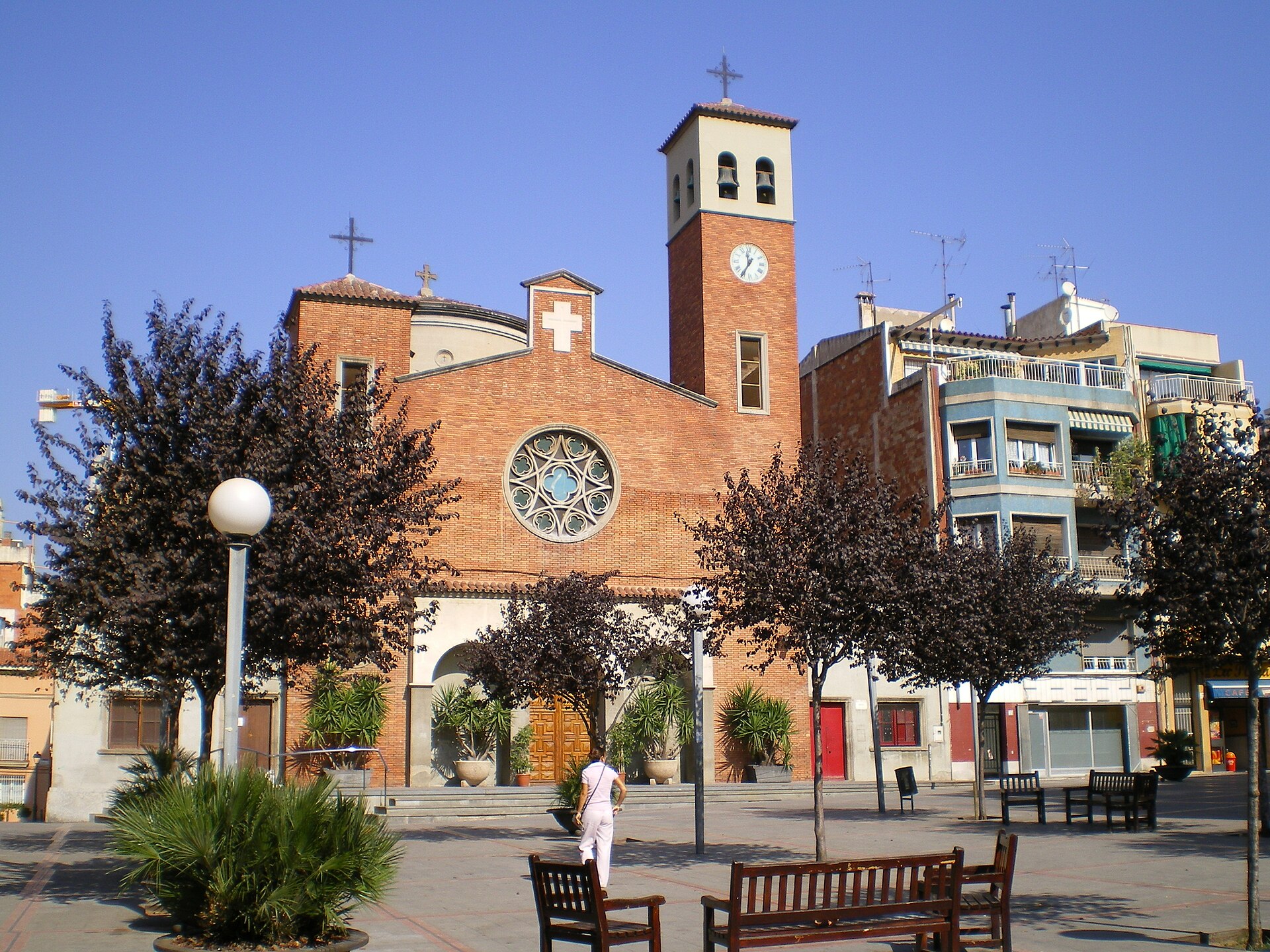
Sant Sebastià de Verdum is a parish church in Barcelona, located in the Verdum neighborhood within the Nou Barris district. Tucked away inside a residential block, the church is closely tied to the history of one of the city's postwar working-class neighborhoods and remains a familiar landmark for locals in this part of Barcelona.
Where is it located?
The church stands on Carrer de Viladrosa, in the heart of Verdum, a small neighborhood in northern Barcelona within the Nou Barris district. Its setting is unusual: rather than facing the street directly, the parish building sits inside the interior courtyard of a housing block, with access through a passage in the surrounding residential structure. This kind of layout was common for churches built on the city's outskirts during that period, when plots for new places of worship were carved out within already-planned housing estates.
What is its history?
The parish's origins are directly tied to Barcelona's rapid growth in the mid-20th century. The Verdum neighborhood largely took shape after the International Eucharistic Congress held in the city in 1952, when housing blocks were built here for the wave of newcomers arriving in Barcelona. In response to this surge of migration into the city's outlying districts, Archbishop of Barcelona Gregorio Modrego Casaús formally established the parish of Sant Sebastià de Verdum in 1958.
Given the urgent need to provide residents with a place of worship, a provisional church made of prefabricated materials was put up in a remarkably short time — around three months. This temporary building opened on 1 March 1959. The permanent parish building on Carrer de Viladrosa was not completed until several years later, being inaugurated on 23 October 1966.
Both the provisional and the permanent church were designed by architects Oriol Bohigas and Josep Maria Martorell, founders of one of the most influential Catalan architecture studios of the 20th century. Their involvement gives Sant Sebastià de Verdum added significance in the history of postwar religious architecture in Barcelona — this is not a generic, mass-produced neighborhood church design, but the work of architects who later achieved international recognition.
What does it look like today?
The building's appearance has changed considerably in recent years. In 2020, it underwent a major renovation that gave it a completely different look from the one it had held since the 1960s. The church was integrated into a modern building housing the Som Via assistance centre, meaning that its current form departs substantially from the original architecture designed by Bohigas and Martorell. This blending of a place of worship with modern social-service facilities reflects how the parish's role within the neighborhood has continued to evolve over time.
Sant Sebastià de Verdum remains an active Catholic parish, carrying out regular pastoral activities for residents of Verdum and neighboring parts of Nou Barris.
Who might find it worth a visit?
Given its low-key, local character, the church is likely to appeal mainly to those interested in Barcelona's 20th-century urban and architectural history — in particular, followers of Bohigas and Martorell's work scattered across the city. It's also a worthwhile stop for travelers wanting to see Barcelona beyond the usual tourist routes, in neighborhoods shaped by the postwar migration into the city.
Frequently asked questions
Where exactly is the Sant Sebastià de Verdum church located? The church stands on Carrer de Viladrosa in the Verdum neighborhood, within Barcelona's Nou Barris district, set inside a residential city block.
When was the parish founded? The parish was formally established in 1958, a provisional church opened in March 1959, and the permanent building on Carrer de Viladrosa was completed in October 1966.
Who designed the church? Both the provisional and permanent buildings were designed by architects Oriol Bohigas and Josep Maria Martorell.
Does the church still look the way it originally did? No — in 2020 it underwent a major renovation and was incorporated into a new building housing the Som Via assistance centre, so its current appearance differs significantly from the original 1960s design.
Nearby places

Earn badges for the places you visit
Download NextOnTrip, discover new places and check off your trails.