About this place
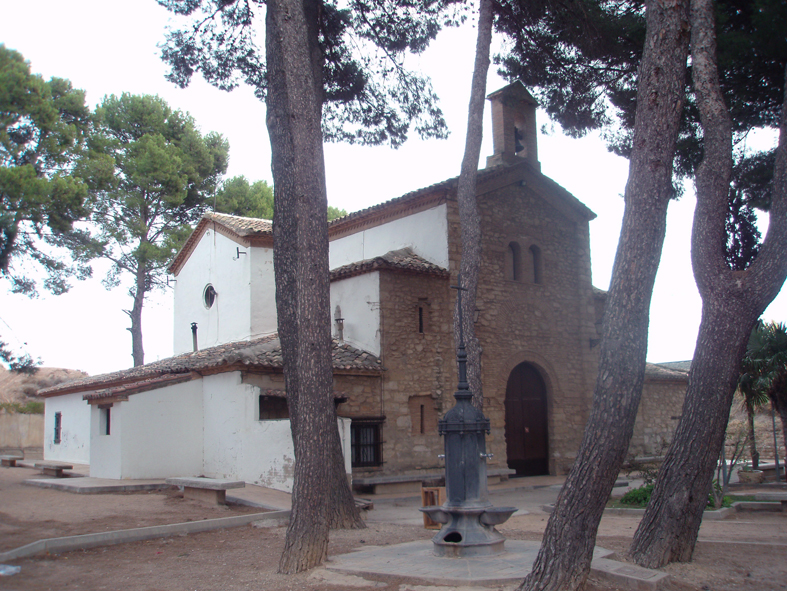
Ermita de Santa Cruz – El Cristo is a small pilgrimage chapel in Tudela, Navarre, standing roughly a kilometre north of the old town on the right bank of the Ebro river. Locals rarely use its formal name, calling it simply "El Cristo," and it remains one of the most significant devotional sites in the area.
Where does the name Santa Cruz come from?
The chapel is first documented in 1145, when the land was linked to a monastic community connected to a foundation dating back to the era of Alfonso the Battler, king of Aragon and Navarre. Local tradition holds that the site was chosen at the spot where a large cross was said to have appeared floating on the waters of the Ebro — which explains the name Santa Cruz, or Holy Cross. A confraternity known as the Ballesteros (crossbowmen) was later associated with the chapel, with roots possibly going back as far as the 13th century.
Why is it also called "El Cristo"?
The chapel's more common nickname comes from its role as the seat of a confraternity devoted to the cult of Christ. Over time this popular name overtook the formal one, and today residents of Tudela almost always refer to the building as El Cristo rather than Santa Cruz.
How has the building changed over the centuries?
The site's history has been anything but calm. The chapel was rebuilt in 1620, then destroyed by French troops in 1808 during the Peninsular War. It was reconstructed in 1815, only to burn down again in a fire in 1857. The building visitors see today dates from 1859 and stands on a new plot nearby, because the original location conflicted with the route planned for the Zaragoza–Alsasua railway line. As recently as 2025, Tudela's town council allocated around 11,000 euros toward restoring the chapel's roof, a sign that the building remains actively maintained by the local community.
What is the El Cristo festival about?
The tradition of pilgrimages to the hermitage dates back to 1734, credited to Juan de Mur, a military officer from Tudela who later became captain general of the Canary Islands. The main celebration falls on 3 May, preceded by a nine-day novena held at the chapel. A key part of the festivities is culeca, a traditional sweet bread eaten specifically for the occasion. The romería to El Cristo is one of the most recognisable fixtures on Tudela's annual calendar, drawing both townspeople and visitors from surrounding villages.
What should visitors know before going?
The chapel sits close to the city centre, right along the Ebro, making it an easy short walk from the old town. It combines a scenic riverside setting just outside the city walls with a history stretching back to the Middle Ages and a living folk tradition that has survived despite the building itself being destroyed and rebuilt more than once.
Frequently Asked Questions
How far is the hermitage from central Tudela? It stands about 1 km north of the old town, on the right bank of the Ebro, so it's reachable on foot.
Why does the chapel have two names? The formal name, Santa Cruz, refers to the legend of a cross found in the river, while "El Cristo" comes from the confraternity devoted to Christ that was based there.
When is the main festival held at the chapel? The romería and main celebrations take place on 3 May, preceded by a traditional novena during which the sweet bread culeca is eaten.
Is the current building the original medieval structure? No — it was destroyed and rebuilt several times, including by French troops in 1808 and in a fire in 1857. The structure standing today dates from 1859, though devotion at this site goes back to the 12th century.
Nearby places

Earn badges for the places you visit
Download NextOnTrip, discover new places and check off your trails.