About this place
Église Saint-Martin de Sorèze is a former parish church at the heart of Sorèze, a small town in the Tarn department of southern France. Only the choir and its striking bell tower survive from the original building today, but that fragment alone has dominated the rooftops of the old town for centuries and remains one of Sorèze's most recognizable landmarks.
What will you see there?
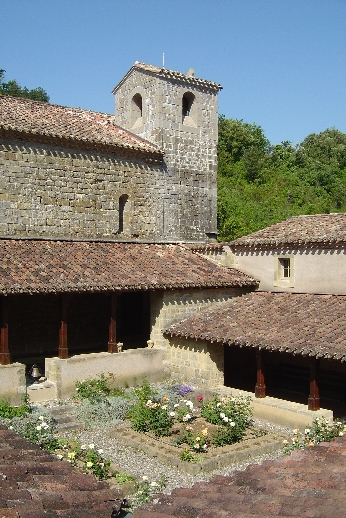
The standout feature is the octagonal tower rising above a seven-sided choir — the only part of the church to survive the region's turbulent history. The tower has two levels and still bears traces of its old defensive role: machicolations, openings once used for dropping projectiles on attackers, are visible above the entrance arch, while heavy buttresses meet at the top under barrel vaults. This part-fortress, part-sanctuary design reflects the unsettled conditions of the Middle Ages, when local churches often doubled as places of refuge during attacks.
The nave itself, originally fairly short, no longer exists — it was lost during the Wars of Religion. In 1573, Protestant forces tore down most of the building, sparing only the medieval tower, which still stands today as a witness to that conflict. The church was most likely built in the 13th century, on the site of an even older parish church, close to the town's historic core and the Sainte-Marie-de-la-Sagne abbey that gave rise to Sorèze itself. That abbey was founded in the early 9th century in marshy ground — hence "la sagne," meaning marshland — at the foot of the old Verdun castrum.
The building's significance is reflected in its legal protection: it was listed as a classified historic monument (monument historique classé) on 17 April 1879, making it one of the earlier protected structures in the region. The site is owned by the Tarn department.
How do you get there?
The church stands right in the center of Sorèze, close to the town's famous former college (Collège de Sorèze), one of the area's best-known attractions. Sorèze sits in the Tarn department, in the Occitanie region, and is most easily reached by car; the town itself is small enough that the walk from any parking area to the tower takes only a few minutes. Since the old abbey and historic town center lie just a few hundred meters away, it's easy to combine a visit to all three in one stop.
When should you visit?
Spring and early autumn are the best times to come, when the weather in Occitanie is pleasant for walking the stone streets of the old town, and the crowds drawn to the nearby abbey are thinner. The tower and choir remains can be admired from the outside year-round, since they form part of the town's skyline visible from many vantage points.
Frequently Asked Questions
Is there anything left of the original church besides the tower? No — the nave and most of the building were destroyed by Protestant forces in 1573 during the Wars of Religion. Only the choir, topped by its tower, has survived.
Why does the tower look defensive? The machicolations above the entrance and its sturdy construction show the tower once served a partly fortified purpose, a common feature for churches built during the unsettled Middle Ages in this area.
Is the site legally protected? Yes, it was listed as a classified historic monument (monument historique classé) on 17 April 1879.
Can visitors go inside? Since only the choir and tower remain rather than the full church, the interior open to visitors is limited — the exterior facade and the tower's silhouette, visible from the surrounding streets, are the main draw.
Nearby places

Earn badges for the places you visit
Download NextOnTrip, discover new places and check off your trails.