About this place
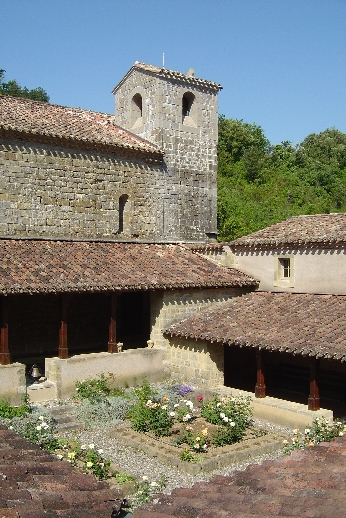
Abbaye de Saint-Polycarpe is a former Benedictine abbey tucked into a narrow valley of the Aude river, in the village of Saint-Polycarpe, in the Razès area near Limoux. It sits within a cluster of monastic foundations that once shaped this corner of Languedoc, alongside the abbeys of Alet and Lagrasse a short drive away.
When was the abbey founded, and by whom?
Tradition places the founding in 783, during the Carolingian period. The first abbot is said to have been Attala, a wealthy nobleman of Iberian origin who fled a Saracen invasion and took refuge in this valley. He is credited with clearing the land and laying the foundations of both the church and the monastic buildings. For centuries, though, the community was not fully independent: it fell under the authority first of the abbey of Alet, then of Lagrasse, only regaining its autonomy at the end of the 12th century.
What happened to the community over time?
The abbey's later history includes a rough patch. In 1525 it was placed under the commendam system, which loosened monastic discipline, as it typically did elsewhere. Records from after 1526 describe a monastery in decline, with some monks living far from the Rule — given to feasting, dancing, gambling and hunting rather than prayer and labor. Reform came at the start of the 17th century: in 1600 the community joined the congregation of the Exempt Benedictines. In 1705, Henri-Antoine de la Fitte Maria was appointed abbot.
What survives on site today?
The core of the site is the 11th-century abbey church, dedicated to the Virgin Mary. Inside, the standout feature is a set of Carolingian choir screens — stone slabs carved with flat interlace patterns, birds and shell motifs, framing the side Romanesque altars. Such early stonework is rare to find this well preserved in the region. Traces of 12th-century wall and vault paintings also remain, depicting scenes from the Apocalypse of Saint John and the Nativity; only a handful of scenes survive from what was once a fuller cycle, and further fresco fragments have come to light during more recent restoration work.
The abbey's treasury is another highlight, permanently displaying a reliquary bust of Saint Benedict and one of Saint Polycarpe, both dated to the 14th century, along with a 14th-century monstrance-reliquary carried by two angels.
Who should visit?
Saint-Polycarpe suits travelers with an interest in Romanesque and Carolingian architecture, the history of monasticism in Languedoc, or anyone tracing a route through the abbeys of the Razès — Alet-les-Bains and Lagrasse are both within easy reach by car. It's a quiet, small-scale site, well away from the crowds drawn to the region's better-known Cathar landmarks.
Frequently asked questions
When was the Abbaye de Saint-Polycarpe founded? Tradition dates its founding to 783, crediting Attala, a nobleman who reportedly fled a Saracen invasion, as its first abbot.
Which abbeys was Saint-Polycarpe once dependent on? It was successively under the authority of the abbeys of Alet and then Lagrasse, before gaining full independence at the end of the 12th century.
What are the most notable things to see inside the church? Carved Carolingian choir screens with interlace, bird and shell motifs, remnants of 12th-century frescoes, and 14th-century reliquaries of Saint Benedict and Saint Polycarpe kept in the treasury.
Where exactly is the abbey located? In the village of Saint-Polycarpe, in the Razès area of the Aude department, along the Aude river valley near Limoux.
Nearby places

Earn badges for the places you visit
Download NextOnTrip, discover new places and check off your trails.