Save this place and discover nearby attractions with NextOnTrip
In the app you can add it to your favorites, see what else is worth visiting nearby on the map, and earn a badge for your visit.
The app is available for iPhone and Android.
About this place
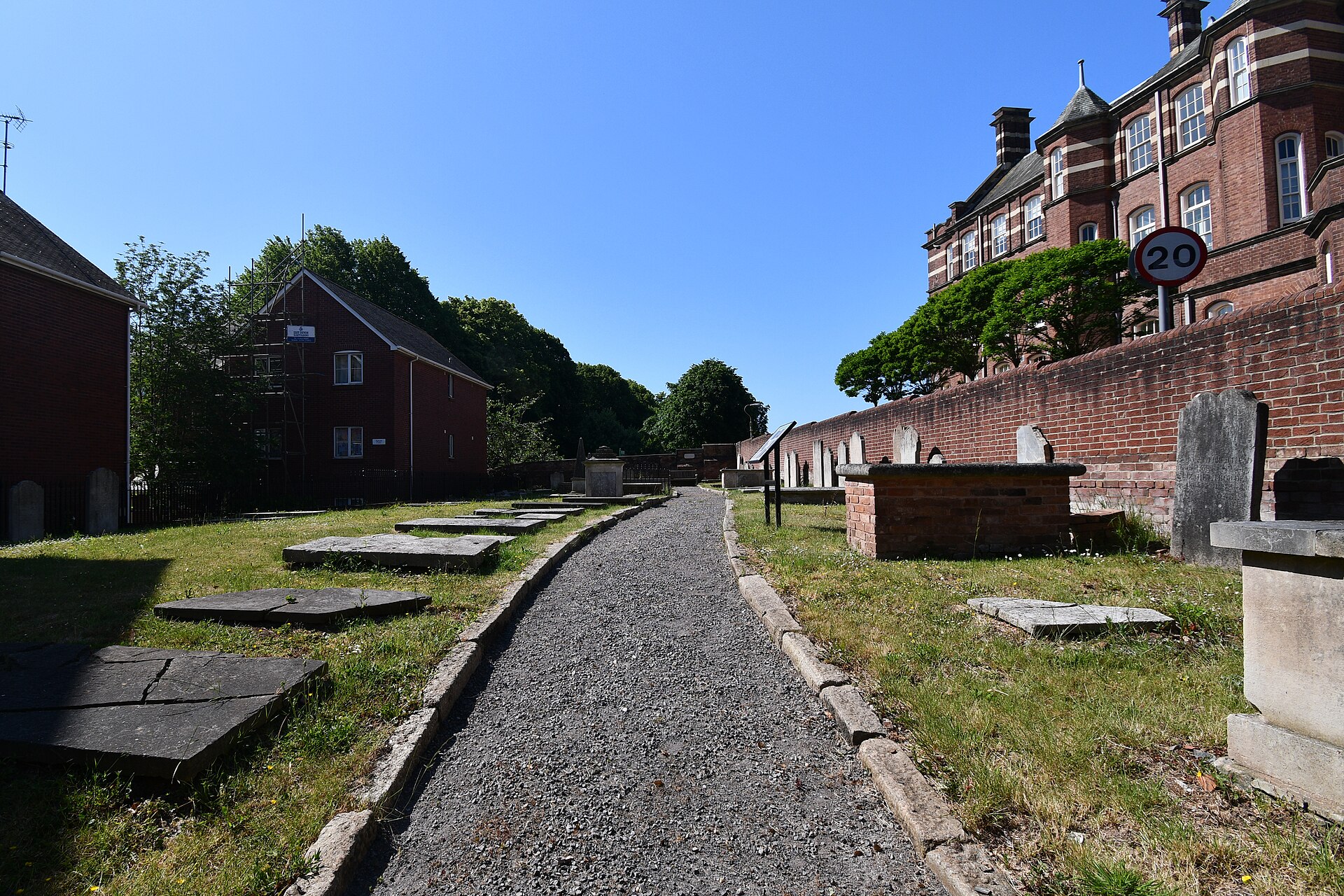
Dissenters Graveyard is a historic cemetery in Exeter, Devon, in south-west England. For more than a century it served Protestants who stood outside the Church of England, known as Dissenters. It is a quiet, understated place, but one that says a lot about the city's religious history.
What is the Dissenters Graveyard?
The graveyard was in use from 1748 to 1854 by the united congregations of Protestant Dissenters, mainly Presbyterians and later Unitarians. "Dissenters" were Christians who did not belong to the established church. The site lies at roughly 50.720 N, 3.526 W, just outside the old city walls, within the Southernhay and Friars Conservation Area.
Why was it created?
Dissenters faced obstacles to burial in Anglican churchyards. The Bishop of Exeter forbade the burial of Dissenters in church graveyards across his diocese. The congregations responded by buying a plot of land and founding a burial ground of their own. Some of them called it "The Saints' Rest".
Who is buried here?
The first burial, in October 1748, was Mary Green, wife of the Reverend James Green, minister of James's Meeting. Sources suggest at least 1,300 people were buried here, and by some estimates as many as 2,000. Those interred include Samuel Kingdon, father of "Iron Sam", and Micaijah Towgood.
Neglect and revival
For many years the site was closed to the public, neglected and overgrown. A volunteer-led project later helped to identify and record the tombs and their condition. The Exeter Dissenters' Graveyard Trust works on research and restoration planning, and has published a 32-page booklet covering the site's history from 1748 to 2018, written by Beryl G Coe, Gordon Read and Ian M. Varndell.
How to visit
Access can be limited, so check current details with the organisers before you go. The graveyard features in Heritage Open Days, when guided tours, exhibitions and talk series are run by the Trust.
Frequently asked questions
Who were the Dissenters? Protestants outside the Church of England, including Presbyterians and Unitarians.
When was the graveyard in use? From 1748 to 1854.
How many people are buried here? At least 1,300, and by some estimates up to 2,000.
Can I visit? Mainly during events such as Heritage Open Days; check with the Exeter Dissenters' Graveyard Trust first.
Why it is worth knowing
It is a small, calm piece of history close to the centre of Exeter. It shows how communities shut out of the established church built their own institutions, down to their own burial ground, and it adds a different layer to a city better known for its cathedral and quayside. For anyone interested in genealogy, religious history or local stories, it pairs well with a walk through the city.
Nearby places


Earn badges for the places you visit
Download NextOnTrip, discover new places and check off your trails.