Save this place and discover nearby attractions with NextOnTrip
In the app you can add it to your favorites, see what else is worth visiting nearby on the map, and earn a badge for your visit.
The app is available for iPhone and Android.
About this place
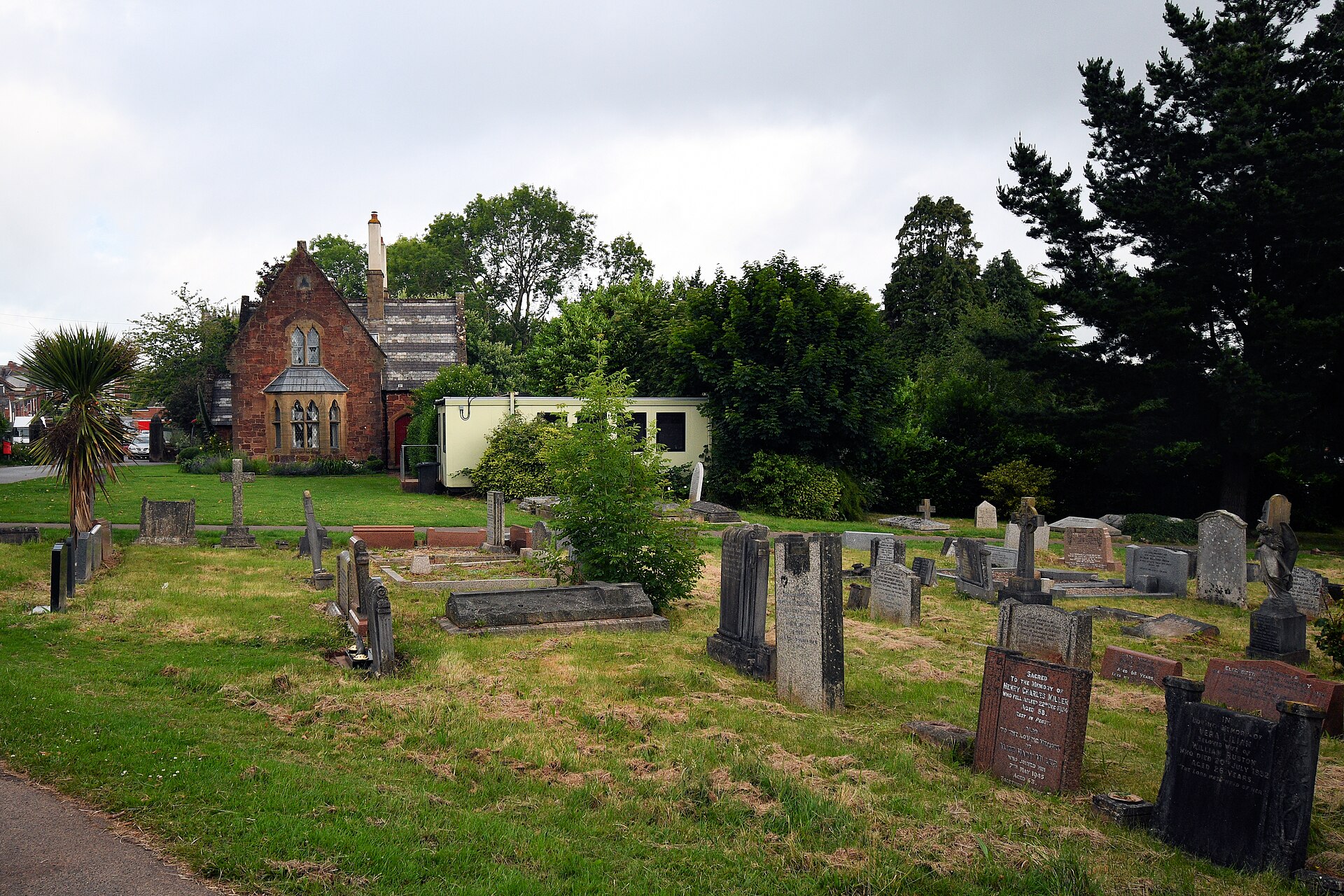
Higher Cemetery in Exeter is the largest of the city's three working cemeteries, set in the Heavitree district of Devon, England. Opened in 1866, it combines an active burial ground with Victorian heritage, quiet greenery and an important place of wartime remembrance.
What is Higher Cemetery?
It is a municipal cemetery with more than 70,000 burials and over 12,000 headstones. The grounds were consecrated on 26 May 1866 by Bishop James Chapman. The landscaping was carried out by Robert Veitch and Son, a firm well known for garden design in the region, while Edward Ashworth designed the buildings: an entrance lodge and two chapels, all built from local Heavitree stone.
How was the site divided in Victorian times?
The layout reflected the religious divisions of the age. Around four and a half acres were reserved for the Church of England and one and a half acres for Nonconformists. Two chapels served the two groups, and the whole design fits the Victorian idea of a cemetery as an orderly, park-like place for walking and reflection.
Why visit?
For anyone interested in local history and funerary architecture, the cemetery reads like an open book of Exeter's past. Along the paths you will find monuments from many decades, from nineteenth-century tombs to modern headstones. The older sections are shaded by mature trees and shrubs, giving the place the feel of a quiet park.
War graves and memorials
In April 1915 a section was set aside for the war dead. Today the cemetery holds more than 200 First World War burials, over 180 of them in two war graves plots near the entrance. At the centre of the First World War plot stands a granite cross, the City of Exeter War Memorial, unveiled in 1922.
The Second World War plot holds most of the burials from that conflict, which number over a hundred. It also contains the graves of service personnel of other nationalities, including Polish and German, which makes it particularly meaningful for Polish visitors. Three separate rows of graves commemorate victims of the 1942 air raids on Exeter, close to the Long Valley Path.
Tips for visiting
This is a working cemetery, so keep a quiet manner and show respect to mourners. Entry is free, and a walk along the main paths usually takes an hour or two depending on your interests. A good plan is to begin near the entrance, with the lodge and the war plots, and then move deeper into the grounds.
Frequently asked questions
Where is Higher Cemetery? In the Heavitree district of Exeter, Devon, in south-west England.
When was it founded? It was opened and consecrated in 1866.
Is it still in use? Yes, it is the largest of the city's three active cemeteries.
Are there war graves? Yes, plots from both World Wars, with a memorial cross and graves of servicemen of several nationalities, Polish among them.
Is there an entrance fee? No, it is a public municipal cemetery open to visitors.
Nearby places


Earn badges for the places you visit
Download NextOnTrip, discover new places and check off your trails.