About this place
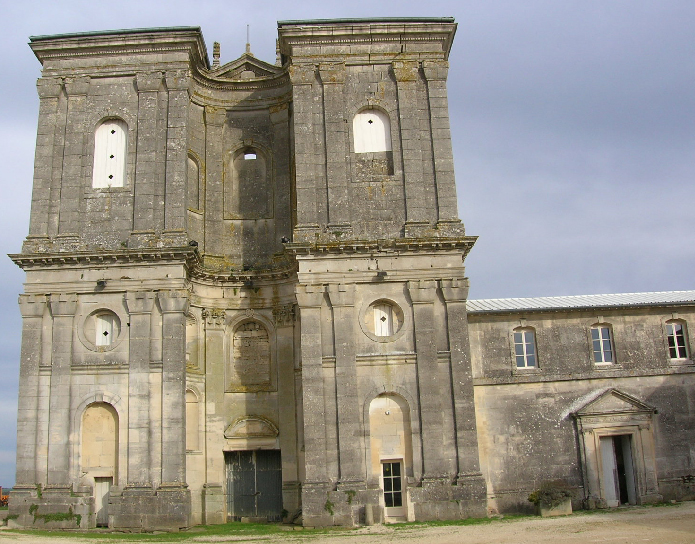
The Notre-Dame Collegiate Church is the defining landmark of Vitry-le-François, a town in the Marne department of France. Standing over the Place d'Armes for more than four centuries, it is the city's symbol and one of the very few sizeable buildings to survive two world wars intact.
Where does this place come from?
Vitry-le-François was founded in 1545 on the order of King Francis I, after troops of Charles V razed the medieval stronghold of Vitry-en-Perthois. The new town took the king's name and coat of arms, along with an urban plan centred on a grand church facing the main square. The foundation stone of the collegiate church was laid in 1629 — though the building itself would take almost three centuries to finish.
Why did construction take so long?
The two upper storeys of the north tower alone took thirty years to raise. The façade was completed in 1678, the nave in 1704, and the transept with the choir not until 1750. The final piece — the apse and ambulatory — followed the original 1629 plan but was only built between 1895 and 1898, funded by a donation from the Count de Felcourt. As a result, despite spanning classical styles from the 17th and 18th centuries, the church keeps the unified silhouette its first architects intended.
What will you see on site?
The façade rises to roughly 42 metres and is arranged in three tiers of portals, flanked by two square towers. The main portal and central window are framed by paired columns, a typical gesture of classical austerity and grandeur. Inside, the furnishings are surprisingly rich: an 18th-century organ, a Baroque high altar, and a collection of paintings and sculptures, some of which carry the same heritage protection as the building itself. The collegiate church has been listed as a French historic monument since 13 September 1920.
What role has it played in the town's history?
In September 1914, during the Battle of the Marne (6–10 September), the church was converted into a field hospital that treated more than 700 wounded soldiers. During the Second World War, Vitry-le-François was almost entirely destroyed, yet the collegiate church survived as one of the town's few surviving buildings. It did not escape unscathed, though: a fire caused by bombing in 1940 destroyed the five bells and the carillon of the south tower.
How do you get there and when should you visit?
The church stands on the Place d'Armes, right at the heart of Vitry-le-François, making it the natural starting point for exploring the town on foot. The town sits in the Grand Est region, on the route between Châlons-en-Champagne and Saint-Dizier, so it is easy to reach by car or regional train. The interior is best seen during the day, when light through the nave windows highlights the proportions of the classical interior — plan your visit outside service hours.
Frequently asked questions
What is the Notre-Dame Collegiate Church in Vitry-le-François? A 17th-century classical church, the town's main architectural landmark, listed as a French historic monument since 1920.
How long did it take to build? Nearly 270 years — from the foundation stone in 1629 to the completion of the apse and ambulatory in 1898.
Why does the church matter so much to Vitry-le-François? Because it survived the near-total destruction of the town during the Second World War and remains one of the few witnesses to its history before 1944.
What should you look out for inside? An 18th-century organ, a Baroque high altar, and a collection of heritage-protected paintings and sculptures.
Nearby places

Earn badges for the places you visit
Download NextOnTrip, discover new places and check off your trails.