About this place
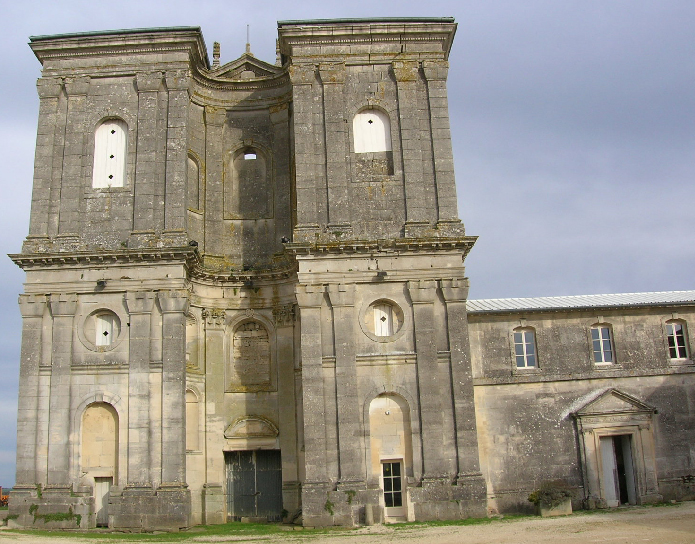
Abbaye de Hautefontaine is the ruined site of a former Cistercian abbey in the commune of Ambrières, in the Marne department of northeastern France. Perched on a hillside above a spring that gave the site its name, the abbey today survives only as scattered wall fragments hidden among overgrown vegetation, yet its story stretches back more than eight centuries.
When was the abbey founded, and by whom?
The monastery was established in 1136 on land granted by Isambard de Vitry, who handed the site to monks from the nearby abbey of Trois-Fontaines on the condition that they build a new religious house there. The community's first abbot, Raoul, was personally selected by Bernard of Clairvaux, the towering figure behind the Cistercian reform movement of the 12th century. That direct link to Clairvaux gave the young foundation real standing among the other Cistercian houses springing up across Champagne at the time.
What did the Cistercian layout at Hautefontaine look like?
Like other Cistercian houses, Hautefontaine followed a deliberately austere architectural plan. A cross-shaped church stood at its heart, its choir oriented toward the rising sun in keeping with monastic custom. Attached to the church's south side was a square cloister gallery, around which the buildings needed for daily communal life were arranged: a dormitory, a chapter hall, and a refectory. This compact, functional layout, repeated across countless Cistercian sites in medieval Europe, kept the architecture tied closely to the monks' daily rhythm of prayer and labor.
What happened to the abbey in later centuries?
The early modern period brought hard times. In the 16th century the buildings were looted and badly damaged, and in 1544 they were burned by troops under Emperor Charles V. Monastic life nonetheless continued, and by the 17th century Hautefontaine had become linked to Jansenism, the religious movement that gained followers after the death of Cornelius Jansen and that also took hold at the abbey of Port-Royal des Champs. In 1653, Guillaume Le Roy, a figure well known in Jansenist circles, became the abbey's commendatory abbot. From 1663 he lived at the monastery permanently and effectively ran it until his death in 1684.
How did the abbey's story come to an end?
The community held on until the French Revolution — as late as 1790, eight monks were still recorded living there. Soon afterward the abbey was closed and its property sold off as national land, purchased by Henri Lepage, a master ironworker, before passing through further hands. The final blow came in 1840, when the mayor of Ambrières ordered the demolition of the 12th-century abbey church itself.
What remains of the abbey today?
Only wall fragments and ruins survive, now heavily overgrown and difficult to reach. In 1979 the remains were added to the supplementary inventory of French historic monuments as a ruin, formally recognizing the site's historical value even as its physical decay continued. Because of the vegetation and restricted access, examining the surviving structure up close is not straightforward for casual visitors.
Frequently asked questions
Where is Abbaye de Hautefontaine located? In the commune of Ambrières, in the Marne department, on a hillside beside the spring from which the abbey took its name.
Who founded the abbey, and when? It was founded in 1136 on land donated by Isambard de Vitry, with Raoul, chosen by Bernard of Clairvaux, serving as its first abbot.
Can visitors explore the ruins today? The site is listed as a protected ruin, but overgrown vegetation and limited access make an independent visit difficult.
Why did the abbey stop functioning? It suffered serious damage in the 16th century and was ultimately closed after the French Revolution; its remaining church building was torn down in 1840.
Nearby places

Earn badges for the places you visit
Download NextOnTrip, discover new places and check off your trails.