About this place
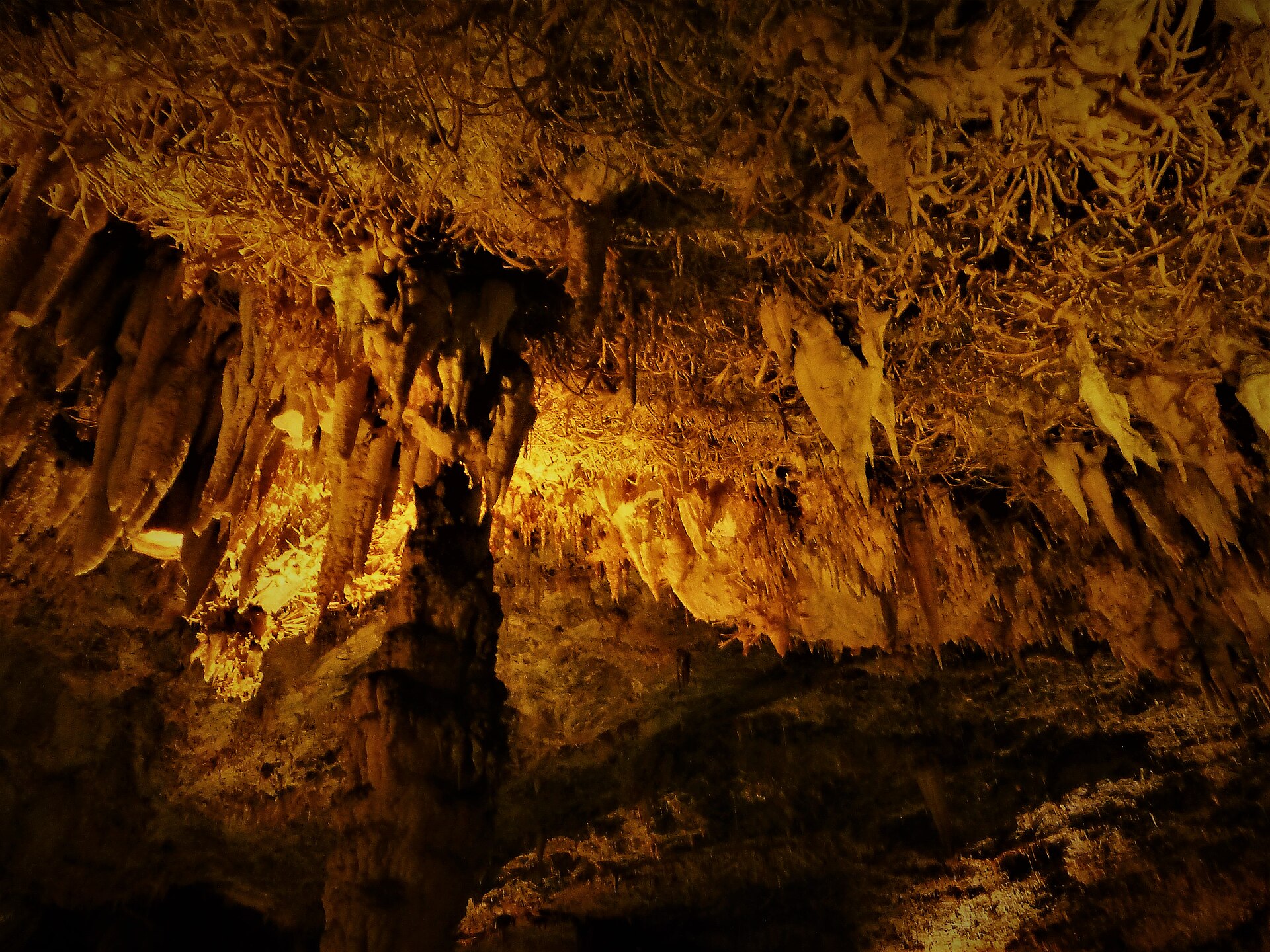
Cueva Grande o de los Corrales is a cave holding Paleolithic art in Otañes, a parish of the municipality of Castro-Urdiales in Cantabria, northern Spain. Unremarkable from the outside, its interior preserves traces of human presence going back tens of thousands of years, placing it among the notable rock-art sites of the region.
Where is it and how to get there?
The cave lies in Los Corrales, a small settlement within Otañes — one of the parishes of Castro-Urdiales, in eastern Cantabria near the border with the Basque Country. Castro-Urdiales itself, best known for its Gothic church of Santa María and its harbour old town, sits several kilometres from the cave, and the most practical way to reach Otañes is by car, through a rural landscape of rolling hills typical of inland Cantabria. Before setting out, it is worth checking with the local tourist office, since access to the cave's interior is restricted and controlled to protect the images inside.
What does the cave contain?
Cueva Grande was discovered in 1970. Even the vestibule, the most accessible part of the cave, yielded a rich set of finds — animal bones, flint tools and pottery fragments — pointing to repeated use of the site by different groups over time. The vestibule splits into two galleries: the left one leads to a small, circular chamber, while the right one connects to a further section of the cave holding its most valuable images.
It is there that two carefully executed engravings appear, depicting a deer and a goat, dated to the Magdalenian period, roughly between 16,500 and 14,000 years ago. Deeper inside, black paintings belonging to the so-called Schematic-Abstract cycle are also visible, along with fine engravings showing animals facing one another. This mix of techniques and motifs — from realistic engravings to abstract compositions — makes Cueva Grande a notable example of the long, layered use of caves by prehistoric communities along this stretch of the Cantabrian coast.
Given its scientific value and the fragility of the images it preserves, the cave was listed as a Bien de Interés Cultural (Site of Cultural Interest) in 1998. This designation underlines the importance of the site for the study of Paleolithic art on the Cantabrian coast, alongside the region's more widely known cave-art locations.
When to visit?
Since Cueva Grande is primarily a restricted-access archaeological site, a visit is best planned in advance by contacting the local tourism office or the institutions responsible for protecting Cantabria's cultural heritage. For those interested in the surrounding area without entering the cave itself, spring and summer are the best times to explore Otañes and the nearby coastline, when the weather favours walking along the region's rural roads. Autumn and winter bring fewer visitors, though Cantabria's damp climate is worth keeping in mind year-round.
Frequently asked questions
What is Cueva Grande o de los Corrales? It is a cave in Otañes (Castro-Urdiales) containing Magdalenian-period engravings and paintings, including depictions of a deer and a goat dated to 16,500–14,000 years ago.
When was the cave discovered? It was discovered in 1970, and excavation of its vestibule uncovered paleontological materials, flint tools and pottery fragments.
Can visitors freely enter the cave? Access is restricted to protect the rock art inside — it is advisable to check visiting conditions with the local tourist information office beforehand.
What protected status does the cave have? Since 1998, Cueva Grande has been listed as a Bien de Interés Cultural, confirming its importance to Cantabria's archaeological heritage.
Nearby places

Earn badges for the places you visit
Download NextOnTrip, discover new places and check off your trails.