About this place
Cueva del Cuco is a small cave in Castro-Urdiales, in the Urdiales district of Cantabria, holding a rare set of Palaeolithic rock engravings. Its entrance opens in a limestone cliff clearly visible from the town's bullring, making it an easy landmark to spot even for visitors who won't be going inside.
Where is the cave located?
Cueva del Cuco sits within the town of Castro-Urdiales, in its eastern Urdiales district. The mouth of the cave is set into a rock face right at street level, directly across from the local bullring — the simplest reference point for finding it. The surroundings are part of the town's built-up coastal stretch, so reaching the site doesn't involve any hiking.
What is inside the cave?
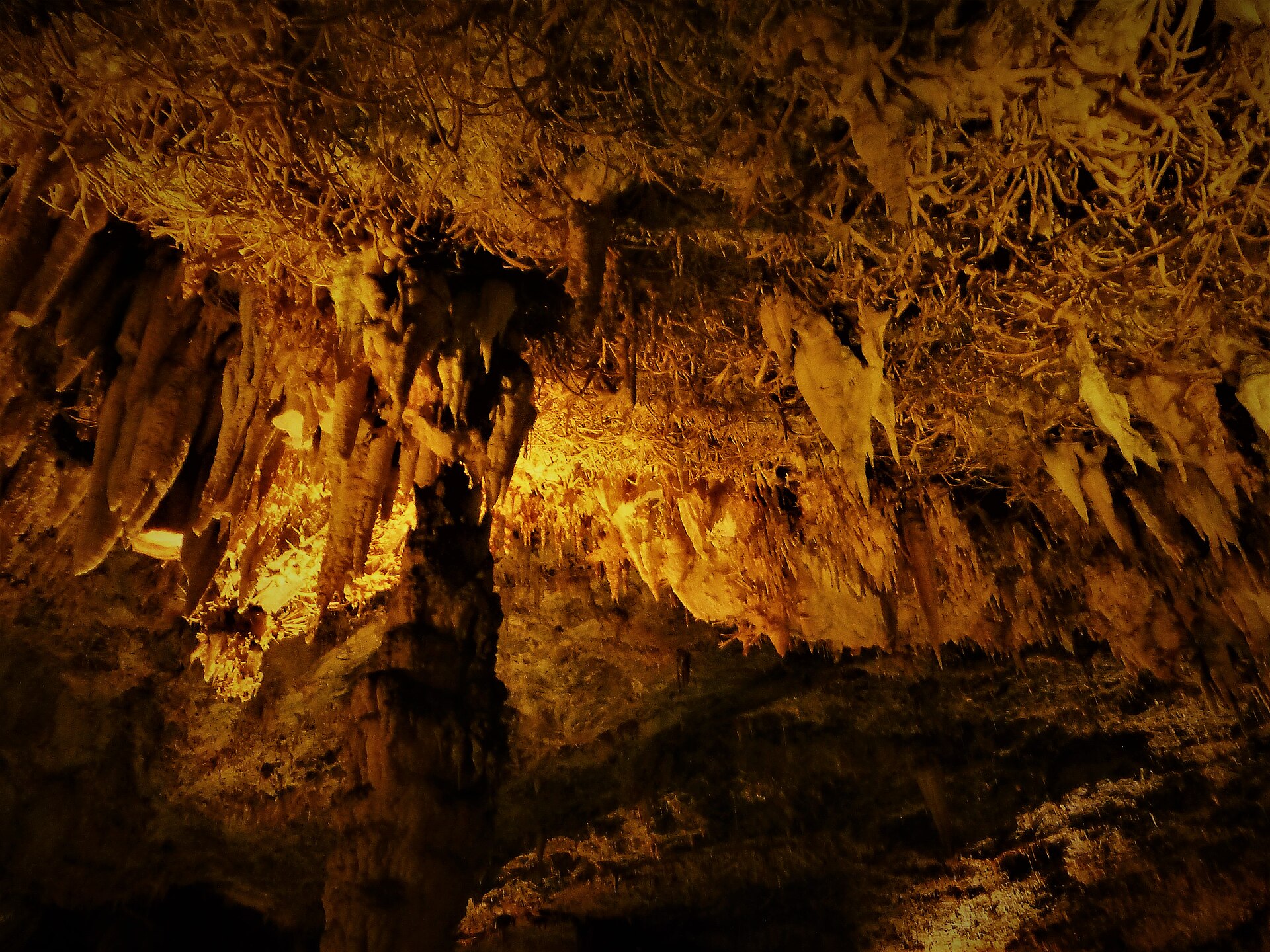
Past a small vestibule, a narrow, largely straight passage runs for around 100 metres. Roughly halfway along it opens a small chamber, which holds most of the discovered engravings. Two techniques were used: fine incised lines depicting animal heads and hindquarters, and wide, deeply cut grooves, including one large, complete deer figure. In total, the engravings identified include three deer, two ibex, two horses, and two animals that remain unidentified.
Why does the cave matter historically?
The engravings have been attributed to the Upper Solutrean period, giving them an estimated age of around 17,500 years. The cave was discovered in 1966, and its rock art was studied and published in 1968 by archaeologist Miguel Ángel García Guinea. Given its scientific value, the site was granted Bien de Interés Cultural status — Spain's cultural heritage protection category — in 1996.
Can visitors go inside?
The cave is currently closed to general public access. Visiting requires prior authorisation from Cantabria's regional culture and tourism authorities. In practice, this means there's no walk-in access — anyone wanting to see the interior needs to arrange the visit in advance through the relevant regional office.
When is the best time to visit?
Since entry depends on advance authorisation rather than opening hours, timing a visit is more about lead time with the regional administration than about weather or season. The cliff face and cave entrance itself, however, can be viewed from outside year-round — an easy stop while exploring the Urdiales district, for instance alongside a look at the nearby bullring.
Frequently asked questions
Can you enter Cueva del Cuco without booking ahead? No. The cave is closed to casual visits, and access has to be arranged in advance with Cantabria's regional culture and tourism authorities.
What can be seen inside the cave? A narrow passage roughly 100 metres long leading to a small chamber with engravings of deer, ibex, horses, and a few unidentified animals, made using both fine incised lines and deeper carved grooves.
How old are the cave's engravings? They date to the Upper Solutrean period, around 17,500 years old.
Where exactly is the cave entrance? It opens in a limestone cliff in the Urdiales district of Castro-Urdiales, clearly visible from near the town's bullring.
Nearby places

Earn badges for the places you visit
Download NextOnTrip, discover new places and check off your trails.