About this place
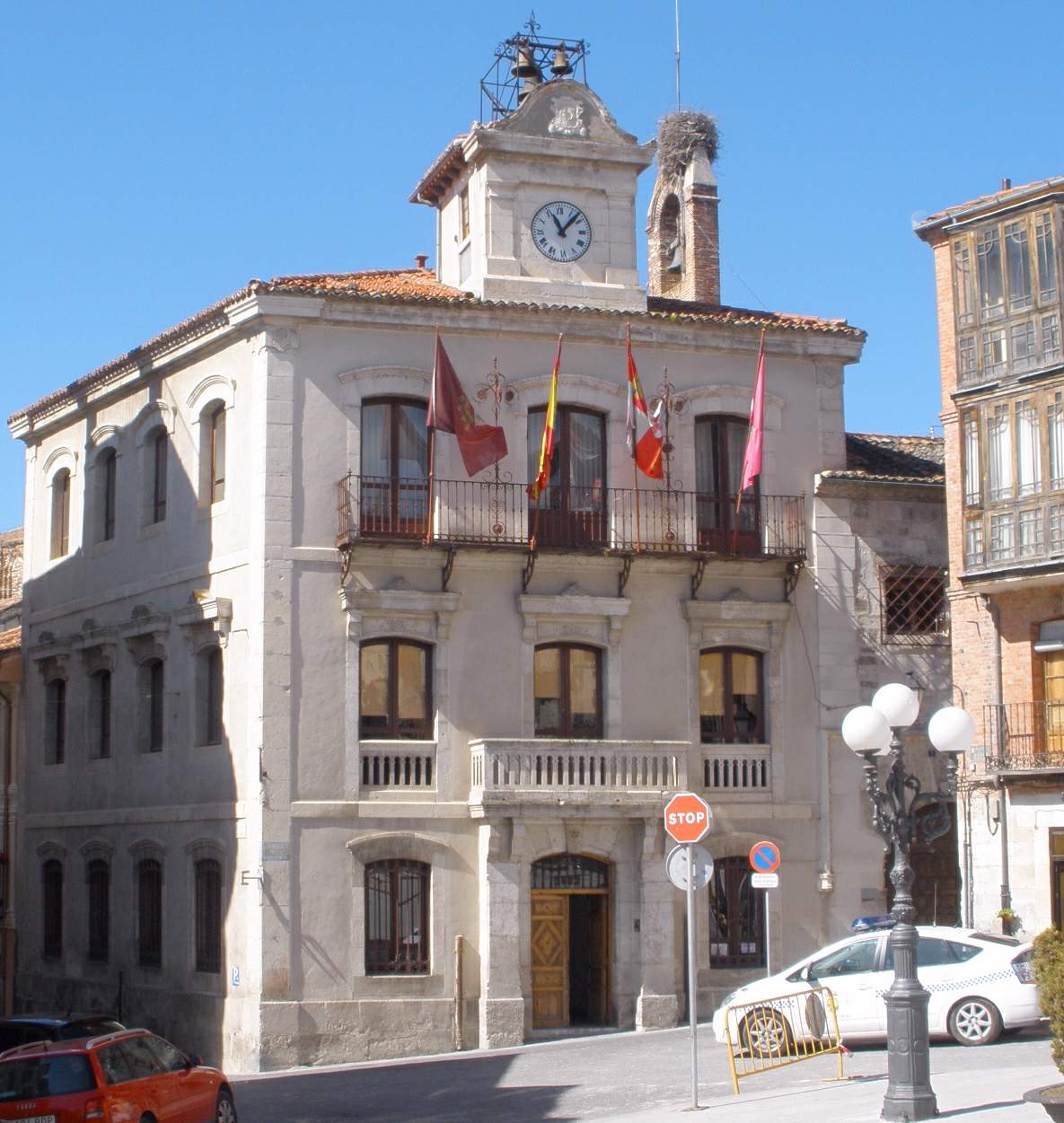
Cuéllar Town Hall, in the town of Cuéllar in Spain's Segovia province, occupies the most prominent address on the Plaza Mayor — the building at number one, facing the square it has overlooked for centuries. It remains an active seat of local government rather than a museum piece.
Where exactly is it, and what happens inside?
The town hall closes off one side of the Plaza Mayor, a Castilian-style square lined with stone and adobe houses whose upper floors carry wooden galleries and deep, Mudéjar-influenced eaves. Inside the building today you'll find the offices of the Cuéllar city council, the local police station, and the modern section of the town's historical municipal archive. Because it's a working municipal office, casual visitors typically see the exterior and courtyard rather than roam freely through administrative floors.
How old is the building, and what's its history?
The current casa consistorial was raised at the turn of the 15th and 16th centuries, on the site of an earlier council house and the town jail. The oldest surviving sections date to the era of Francisco Fernández de la Cueva, 2nd Duke of Alburquerque, one of the lords tied to Cuéllar's development in that period. Everything except the courtyard and the ground-floor rooms was rebuilt between 1888 and 1889 in a historicist style, which is why the building reads as a layered mix of eras rather than a single architectural moment.
What architectural style should visitors expect?
The structure blends a Gothic-Renaissance core with a later, more ornate facade added during the late 19th-century rebuild. Its most valuable surviving feature is the interior courtyard, built in Gothic-Renaissance style and dedicated to Isabella the Catholic — a space that escaped the later remodeling and still reflects the building's earliest phase. That contrast between the plain medieval core and the decorative 19th-century front is precisely what makes the building interesting to anyone curious about how Spanish civic architecture evolved over four centuries.
What else is worth seeing nearby?
The Plaza Mayor itself is a landmark, not just a backdrop: a classic Castilian town square framed by traditional stone-and-adobe houses, timber balconies, upper-floor galleries, and eaves that show clear Moorish influence. A walk around the square and the surrounding old-town streets naturally extends a visit to the town hall — Cuéllar is known for a well-preserved historic quarter, and the town hall sits right at its center.
When and how should you plan a visit?
Since the town hall stands directly on Cuéllar's main square, there's no real navigation involved — head for the Plaza Mayor and you've arrived. The town sits in Segovia province, making it an easy stop on a broader tour of Castilla y León. If seeing the interior matters to you, aim for regular municipal office hours; the facade and the square itself are viewable at any time of day.
Frequently asked questions
Can visitors go inside Cuéllar's town hall? Since it functions as an active municipal office, interior access is generally limited to normal administrative hours rather than being open all day like a museum.
How old is the building? Its oldest parts date to the late 15th and early 16th centuries, though most of the facade and upper floors were rebuilt between 1888 and 1889.
What's the most historically significant part of the building? The Gothic-Renaissance interior courtyard dedicated to Isabella the Catholic, considered the oldest and most authentic surviving element.
Is it worth combining with other sights in Cuéllar? Yes — the town hall faces the Plaza Mayor, surrounded by historic buildings, so it's easy to pair a visit with a walk through the rest of the town's protected historic quarter.
Nearby places

Earn badges for the places you visit
Download NextOnTrip, discover new places and check off your trails.