About this place
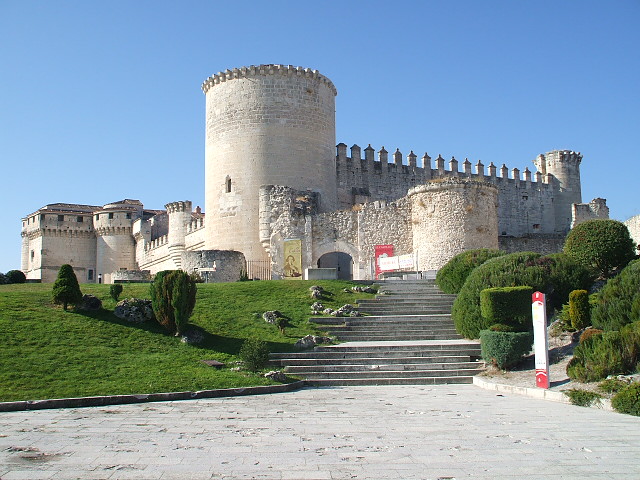
The Palace of Laguna de Contreras is a medieval fortress in the village of Laguna de Contreras, in the province of Segovia, Castile and León, Spain. Its ruins stand on the right bank of the La Hoz stream and represent the only known example of Cistercian civil architecture in the entire province, making the site a genuine rarity among Segovia's many castles and manor houses.
What will you see at the site?
What remains today is mainly the stone tower and an adjoining chapel. The whole complex was once enclosed by a rectangular wall built from masonry combined with rammed earth, a construction technique typical of defensive architecture in this part of Castile — over the centuries that outer wall has almost entirely disappeared. The chapel has recently undergone restoration work, including a new roof and a rebuilt entrance, leaving it in noticeably better condition than it was a decade ago. A short distance from the fortress ruins stands a separate 18th-century church dedicated to the Assumption of Our Lady; it was never part of the defensive complex, but it belongs to the same historic setting and is worth pairing with a visit to the ruins.
What is the history behind it?
The story of the settlement goes back to 1130, when Emperor Alfonso VII granted Bishop Pedro the lands known as Lagunillas, together with their surrounding hills, meadows and springs. For centuries the territory remained under the bishopric of Segovia, until it passed to the Suárez de la Concha family toward the end of the 16th century. A turning point came in 1623, when the estate was acquired by Luis Jerónimo de Contreras y Velázquez de Cuéllar, who became the first Viscount of Laguna de Contreras — the very title from which the village and palace take their present name. The fortress served as a combined residence and stronghold, a common arrangement for regional nobility and clergy in the medieval and early modern periods. In February 2022, the ruins were officially declared a Bien de Interés Cultural (an asset of cultural interest with monument status), paving the way for the conservation work now visible on site.
How do you get there?
Laguna de Contreras sits in the province of Segovia, in the heart of Castile and León, surrounded by the quiet farmland typical of this part of Spain. The easiest way to reach it is by car, following the local roads that connect the smaller villages of the province with the city of Segovia, the region's main hub and a natural base for exploring the wider area. Given the village's small size, travelers should plan on private transport, since public transit options to settlements this small tend to be limited.
When is the best time to visit?
Castile and León has a continental climate, with hot summers and cold, occasionally frosty winters. Spring and autumn offer the most comfortable conditions for exploring the ruins and walking around the site, with milder temperatures and softer light that flatters the old stone walls in photographs. Summer heat can be intense around midday, so an early morning or late afternoon visit is the more comfortable choice during that season.
Frequently Asked Questions
Can you go inside the palace? The site consists of partially exposed ruins rather than a fully preserved, inhabited palace, so a visit means viewing the historic structure from outside and around its immediate surroundings.
What makes this palace different from other castles in the Segovia region? Its distinction lies in being the only known example of Cistercian civil architecture in the whole province, rather than the purely defensive or purely residential building types more common in the area.
Are there other historic sites nearby? Yes, an 18th-century church dedicated to the Assumption of Our Lady stands close to the ruins and is easy to combine with a visit to the palace.
Why does the palace carry the Contreras name? Because in 1623 the estate passed to Luis Jerónimo de Contreras y Velázquez de Cuéllar, the first Viscount of Laguna de Contreras, and it is from his title that the village and the palace derive their current name.
Nearby places

Earn badges for the places you visit
Download NextOnTrip, discover new places and check off your trails.