About this place
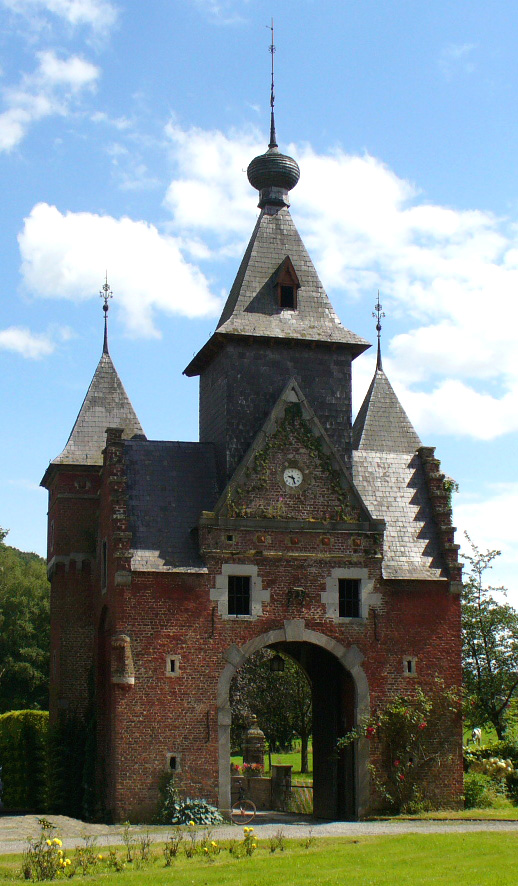
Commanderij is a castle built in the Maasland Renaissance style in Sint-Pieters-Voeren, a sub-municipality of Voeren in Belgian Limburg. The building stands on the site of a former commandery of the Teutonic Order and still carries visible traces of centuries of rebuilding and changing ownership.
Where did the commandery come from?
The story begins in 1242, when Daniel van Voeren, upon entering the Teutonic Order, donated all of his possessions in the area to the order. The Teutonic Order had already been active in the County of Loon within the bailiwick of Biesen since 1220, and the commandery in Sint-Pieters-Voeren was subordinate to the landcommandery of Alden Biesen in Bilzen-Rijkhoven. Over the following centuries, the post of commander here was held by no fewer than 39 different people, a sign of just how long and continuously the site remained under the order's control.
Which part of the building is the oldest?
The oldest surviving part of the complex is the L-shaped wing with a tower. It dates from a renovation carried out at the start of the seventeenth century, completed under commander Willem Quaest de Beeck, who held the post from 1631 to 1661. This wing gives the whole complex its distinctive, fortress-like silhouette, even though the site gradually took on more of a residential character over time.
What happened to the commandery after the order was dissolved?
The Teutonic Order's presence here came to an end in 1798, when the French occupying authorities dissolved the order. The commandery's estate then passed into private hands. The first owner was J.-J. Dresse of Verviers, who later sold the property to A.-J. Sauvage, also from Verviers. Over the following decades the castle changed hands several more times: from 1856 to 1893 it belonged to Baron Otto Napoleon de Loë-Imstenraedt from nearby Mheer, and in 1893 it passed to Baron L. de Potesta de Waleffe.
Who owns the castle today?
Since 2006, Commanderij has been owned by Eric Rochtus and his wife Anne Van Mulders. Under their ownership the castle functions primarily as a private residence, while also serving as an exclusive venue for weddings and corporate events and operating partly as a guesthouse. The interior is not generally open to the public for regular sightseeing, so most visitors experience the castle from the outside or as guests attending an organized event.
Why is it still worth seeing from the outside?
Even without access to the interior, the sight of the complex is worthwhile for anyone interested in the architecture and history of the Voerstreek region. The combination of medieval monastic origins, a Renaissance-era structure, and centuries of changing private ownership makes Commanderij one of the more notable heritage landmarks in Sint-Pieters-Voeren, alongside other sites recorded in the region's built heritage inventory.
Frequently asked questions
What was the commandery in Sint-Pieters-Voeren? It was a local outpost of the Teutonic Order, subordinate to the landcommandery of Alden Biesen, founded after Daniel van Voeren donated his estate to the order in 1242.
How many people served as commander? Over the centuries, 39 different commanders held the post.
When did the order's presence here end? In 1798, when the French occupying authorities dissolved the Teutonic Order.
Can the castle be visited today? It is not a standard tourist attraction — it functions as a private residence and a venue for weddings and corporate events, and the interior is not generally open to the public.
Who owns the castle now? Since 2006 it has belonged to Eric Rochtus and Anne Van Mulders.
Nearby places

Earn badges for the places you visit
Download NextOnTrip, discover new places and check off your trails.