About this place
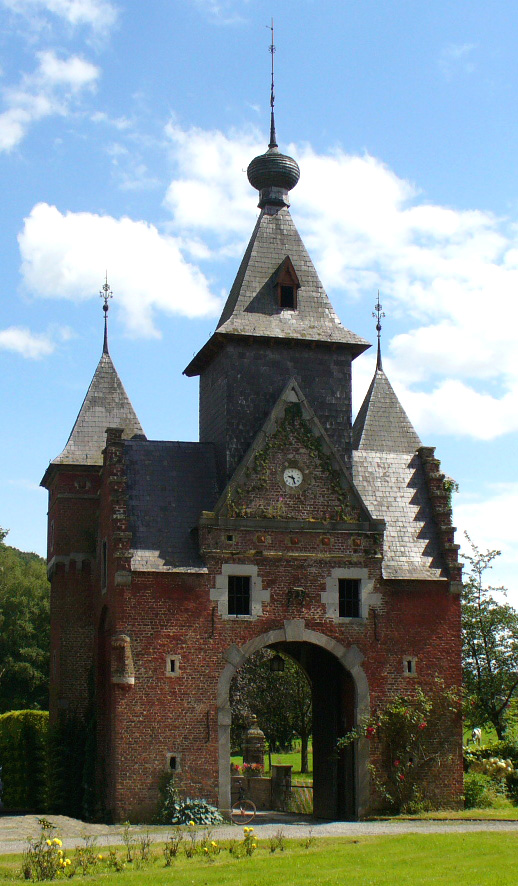
Kasteel van Obsinnich is a castle standing on the banks of the Gulp river, near the village of Remersdaal, in the far southeastern corner of the Belgian Voerstreek region in the province of Limburg. It is one of the lesser-known yet oldest noble seats in this part of the country, with a history stretching back to the medieval period.
How far back does the site's history go?
Some historians believe a fortified stronghold already stood here as early as the 8th century. It was reportedly captured in 1285 by Duke John I of Brabant and then completely burned down following the Battle of Worringen in 1288. The Obsinnich estate itself was held as allodial property — land free of feudal obligations, a notable exception within the feudal structures of medieval Europe. In the 14th century it belonged to the Rhoe van Obsinnich family, passing to the van Eynatten family from the mid-15th century onward.
Who shaped the castle into its current form?
The oldest surviving part of today's building is the round corner tower dating from 1641. The rest of the structure dates from the 17th and 18th centuries. It was Winand van Eynatten, lord of Obsinnich from 1619, who expanded the castle by adding two wings set at right angles to each other. The date 1641, inscribed on a weathervane, most likely commemorates this building campaign.
What happened to the estate in later centuries?
In 1721 the property passed to the de Furstenberg family, who held it until roughly 1950. It was under Baron Clément-Auguste-Egon de Furstenberg that a major renovation took place in 1880: the central wing was extended toward the southwest, a tower that had fallen into ruin was rebuilt, and the side facades were raised. These works gave the castle much of the appearance it retains today.
What is the castle used for now?
Since 1961 the building has belonged to a foundation linked to the Diocese of Liège, which gave it a new name — Castel Notre-Dame — under which it still operates today, serving as a residential center for groups, including retreats and educational stays.
What should visitors know before planning a trip?
The castle sits in the scenic, hilly landscape of the Voerstreek, an area popular with travelers for its countryside straddling the Belgian, Dutch and German borders. The region is known for walking and cycling routes running along the Gulp valley, where historic noble estates such as Obsinnich form an important part of the cultural landscape.
Frequently asked questions
Is Kasteel van Obsinnich an original medieval building? Not entirely — the oldest surviving part, the corner tower, dates from 1641, although a stronghold is said to have existed on the site as early as the 8th century before being destroyed in the 13th century.
Who manages the castle today? Since 1961 it has belonged to a foundation connected to the Diocese of Liège and operates under the name Castel Notre-Dame.
Where exactly is the castle located? On the Gulp river, near the village of Remersdaal, in the Voerstreek region of Limburg province, in southeastern Belgium.
Nearby places

Earn badges for the places you visit
Download NextOnTrip, discover new places and check off your trails.