About this place
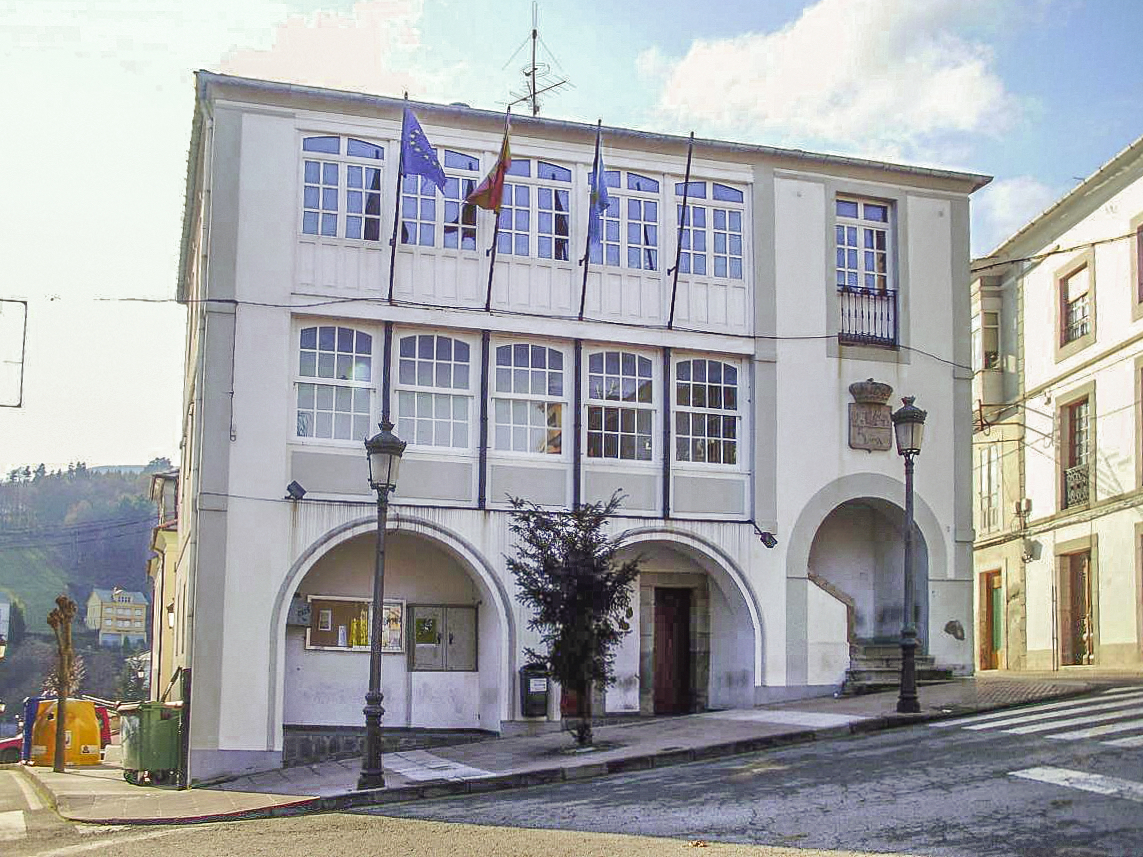
Coaña Town Hall (Casa Consistorial de Coaña) sits on Plaza del Ayuntamiento in the heart of Coaña, a small municipality on the western coast of Asturias, Spain. The 19th-century building still houses the working council of Coaña (Cuaña in Asturian-Galician), with general administrative offices on the first floor and the municipal registry on the second.
How do you get to Coaña Town Hall?
Coaña lies on the Cantabrian coast in western Asturias, bordered by the Navia River to the east and the municipality of El Franco to the west. The easiest approach is by car from Oviedo or from the nearby town of Navia, both reachable via the A-8 motorway or its local connecting roads. The town hall itself faces the main square of Coaña, a short walk from parking and the local bus stop — it's one of the most recognizable buildings in the town centre, so finding it takes no real effort.
What will you see there?
The building follows the plain, solid administrative style typical of 19th-century Asturian town halls: stone construction, a symmetrical façade, and little in the way of decoration. The council received a permanent seat in 1841, when Coaña was granted its own town hall building for municipal meetings. That milestone came centuries after the area had been part of the much larger Obispalía de Castropol, a territory granted to the Bishop of Oviedo by King Alfonso VII in 1154. Coaña only became an independent municipality in 1581, when its residents purchased that status from King Philip II under a papal bull.
The square in front of the town hall is a natural stopping point while exploring the centre, close to the parish church and the rest of the old town. It's worth pairing the visit with a trip to the nearby Castro de Coaña, one of the best-preserved Iron Age hillfort settlements in northern Spain and the municipality's main archaeological draw, located just a few kilometres away.
When is the best time to visit?
Since the town hall is a working administrative building, its interior — the offices on the upper floors — is only accessible during business hours, while the square and façade can be seen at any time of day. Spring and early autumn offer the mildest weather on this stretch of the Cantabrian coast, ideal for wandering the town and continuing on to the castro. Summer brings more visitors thanks to the nearby beaches, while winter is quieter but wetter, as is typical for this part of northern Spain.
What else should you know?
Coaña is a small municipality, so a visit to the town hall itself rarely takes more than a few minutes — its value lies less in the building as a sightseeing target and more in its role as the administrative and symbolic centre of the town. It makes a convenient base for exploring the surrounding area: the coast, the mouth of the Navia River, and the aforementioned castro are all within easy reach.
Frequently asked questions
Can you go inside Coaña Town Hall? The building is a working municipal office, so interior access is limited to opening hours for administrative business — it is not set up as a museum with regular visiting hours.
How long does it take to see the town hall? The façade and square can be seen in a matter of minutes; it's a stop along a walk through central Coaña rather than a destination in itself.
What's nearby the town hall? The town centre and parish church sit right next to it, while the Castro de Coaña, one of the region's most important archaeological sites, lies a few kilometres away.
When was Coaña Town Hall established? The council gained its own dedicated building in 1841; before that, Coaña had spent centuries as part of a larger ecclesiastical territory, only becoming an independent municipality in 1581.
Nearby places

Earn badges for the places you visit
Download NextOnTrip, discover new places and check off your trails.