About this place
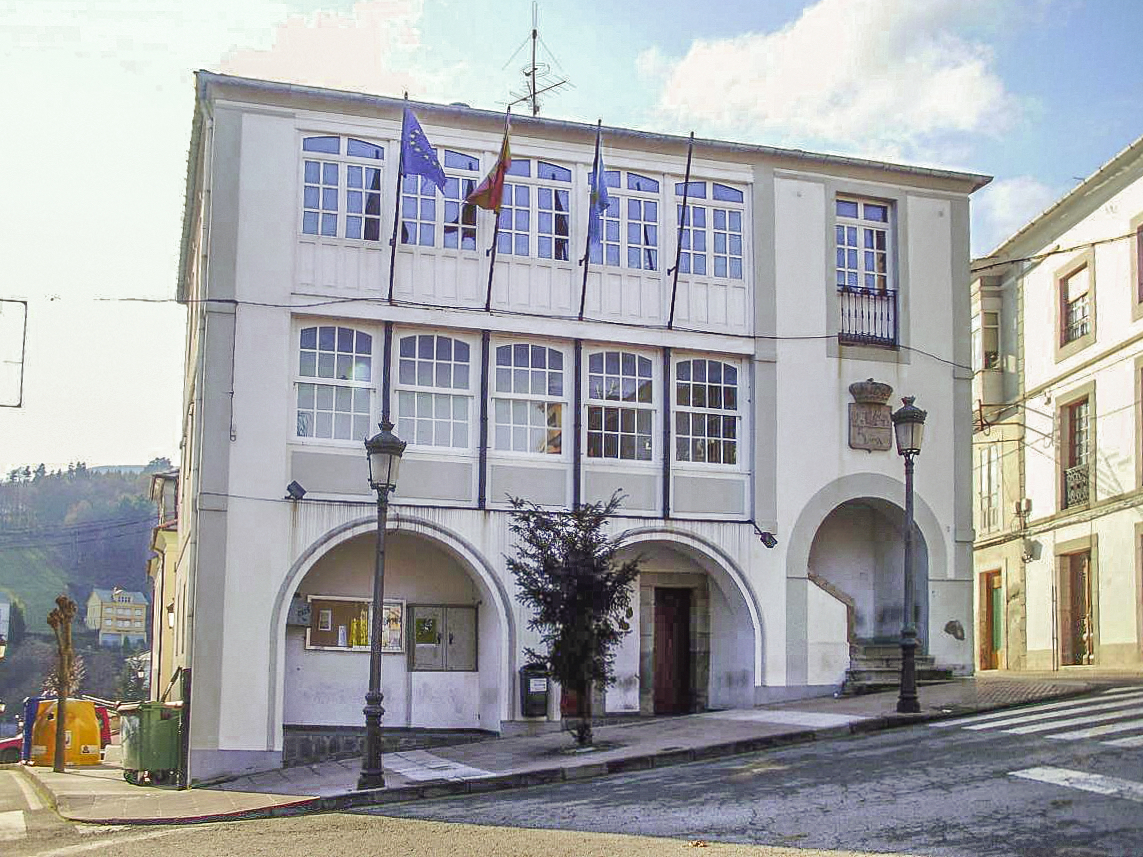
Boal Town Hall (Ayuntamiento de Boal) stands on Plaza del Ayuntamiento, right at the heart of this small municipality in western Asturias, along the Navia river. It's the most recognizable public building in town and a natural starting point for exploring the surrounding area.
How do you get there?
Boal sits deep in western Asturias, in the Navia river valley, surrounded by the Doiras and Arbón reservoirs and the ranges of El Coto, San Isidro, Santín and Penouta. The town hall is literally in the center of town, so once you reach Boal, finding the main square is straightforward — there's no need to hunt for extra directions or separate parking outside the center. It makes a solid base before heading out to the nearby viewpoints or reservoirs.
What will you see on site?
The building represents the popular architecture typical of the early 19th century in this region — modest in form but sturdily built, characteristic of local Asturian government seats of that era. It underwent a recent restoration, so its facade retains a clearly historic character even though the building still functions as an active administrative office. This isn't a museum-style attraction to walk through — it's a living part of the municipality's daily life, best appreciated from outside while strolling the square.
What's the history behind it?
Boal's council became administratively independent and drafted its first bylaws in 1584, with Boal as its seat. Even so, the area went without a dedicated town hall and jail building for centuries — such a structure wasn't built until after 1824, and the actual town hall and jail opened in 1842, a year after the building itself went up in 1841. That gives the structure nearly two centuries of continuous use as the municipality's administrative center.
The municipal archive kept in connection with the town hall is a genuine trove for regional historians: eight volumes of tax records spanning 1525–1799, two books of council minutes from 1719–1799, and civil registry books from 1841–1869, back when the town administration handled that function.
When's the best time to visit?
Boal is worth timing around its local events — October brings the Feria de Otoño (autumn fair), and November hosts the Certamen de la Miel, a honey festival tied to the region's beekeeping tradition, which the nearby Casa de la Apicultura explores in more depth. Spring and summer are also ideal for trips to the Penouta viewpoint overlooking Asturias's western coast, or for visiting the Pendía hillfort, one of the region's most significant prehistoric settlements.
Frequently asked questions
Can you go inside Boal's town hall? The building is an active administrative office, so interior access is limited to office hours and official business. The facade and square, however, can be viewed freely at any time.
What else is worth seeing near the town hall? Within the municipality you'll find the Centro de Interpretación de la Emigración in San Llouguís, dedicated to indiano architecture, the Casa de la Apicultura, and the prehistoric Pendía hillfort, with an acropolis and settlement separated by a defensive wall.
Is Boal a good base for exploring Asturias? Yes — its proximity to the Doiras and Arbón reservoirs, the Navia river valley, and viewpoints like Penouta make Boal a convenient base for nature lovers and active tourism in the western part of the region.
Where do the archival records kept at the town hall come from? The municipal documents, including tax records dating back to 1525, have been collected continuously since the council gained administrative independence in 1584, making them one of the oldest surviving collections of their kind in the region.
Nearby places

Earn badges for the places you visit
Download NextOnTrip, discover new places and check off your trails.