About this place
Church of the Finding of the Holy Cross in Česká Lípa
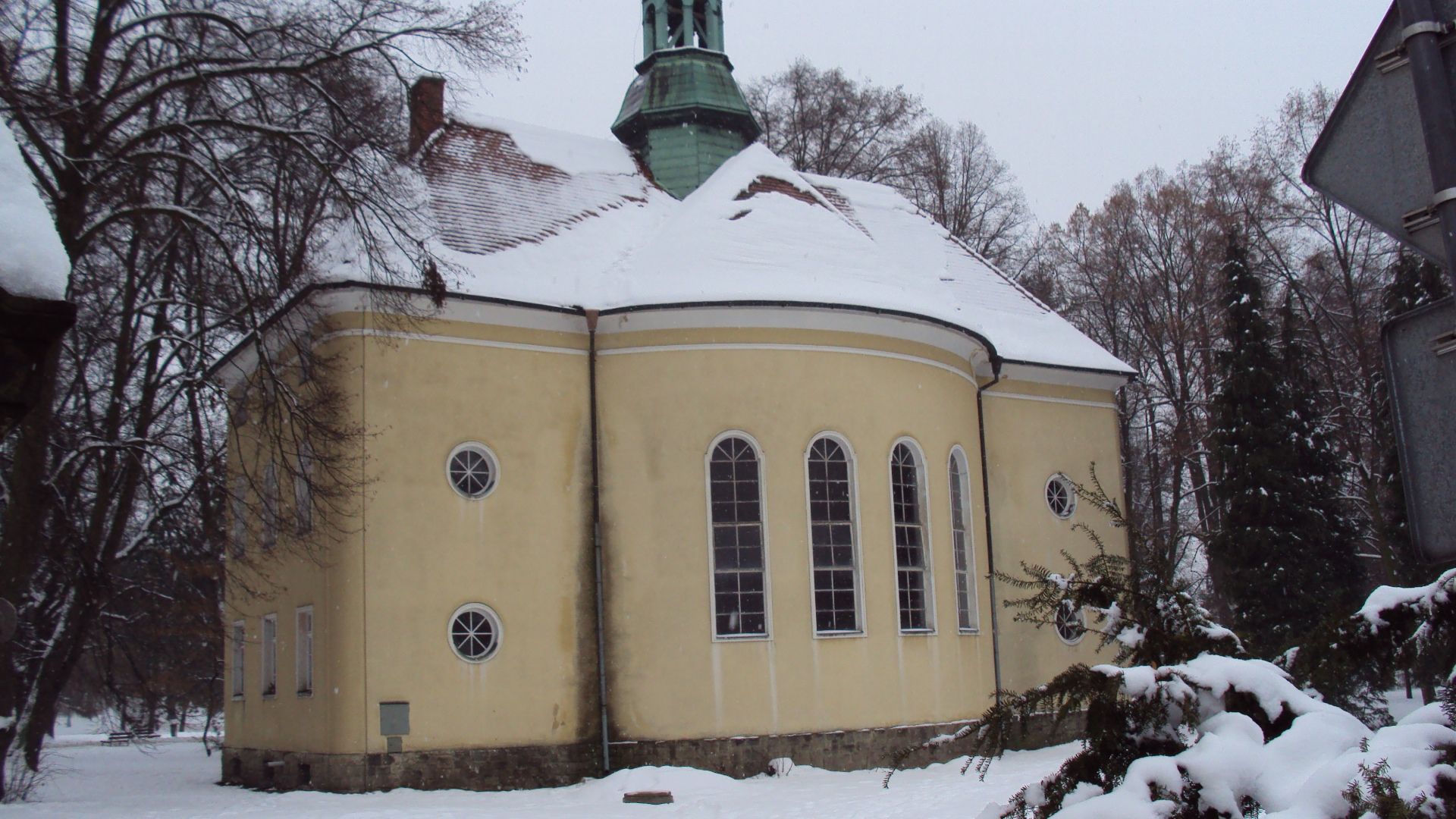
The Church of the Finding of the Holy Cross is the oldest surviving church in Česká Lípa, a Gothic building standing today on Moskevská Street, just below the town's municipal cemetery. Historical sources also list it under its current, more commonly used dedication — the Church of the Exaltation of the Holy Cross — while older German-language records refer to it simply as the Kreuzkirche.
When was the church built, and who paid for it?
Construction began in the late 14th century, during the rule of Hynek Berka of Dubá, the local lord of Česká Lípa. The project was initiated by a burgher named Heinrich von Weitmühle, and the new church was raised on what was then the eastern edge of town, outside its main built-up area. That stretch of land is now part of the town centre and falls within Česká Lípa's protected historic zone.
What does the church look like architecturally?
The building is a single-nave Gothic structure with a recessed presbytery covered by a star-ribbed vault and topped with a saddle roof. On its western side, an open vestibule adds a five-sided ribbed vault of its own. Inside the main nave, a coffered wooden ceiling dated to 1675 has survived through later renovations and fires alike.
What historical events has the church been through?
The church has weathered several of the town's worst disasters. A fire in 1426 badly damaged both the town and the building itself; the church wasn't repaired and reconsecrated until 1490. During the 16th century, in the era of the Reformation, non-Catholic clergy preached from its pulpit, and it was only in 1622 that Albrecht von Wallenstein returned the building to Catholic use. A second major town fire in 1787 spared the church, which has served as a parish church ever since.
When did the church take on its present appearance?
Its current architectural form dates to a thorough Neo-Gothic renovation carried out between 1897 and 1899, designed by architect Josef Mocker, known for his work on numerous historic religious buildings across the Czech lands. The renovated church was reconsecrated on 19 September 1897.
Who manages the church today?
The building remains the property of the Roman Catholic Church and falls under the parish deanery of Česká Lípa, which is responsible for its upkeep and its continued use as an active place of worship.
Where exactly does the church stand?
The church stands on today's Moskevská Street — formerly known as Křížová Street, or Kreuzgasse in German — directly below the municipal cemetery in Česká Lípa. Though originally built at the edge of town, it now sits within the historic core of the city.
Frequently asked questions
What is the church's Czech name? Kostel Nalezení svatého Kříže, though it is now more often referred to as Kostel Povýšení svatého Kříže — the Church of the Exaltation of the Holy Cross.
When was the church built? Construction began in the late 14th century, under Hynek Berka of Dubá, at the initiative of a burgher named Heinrich von Weitmühle.
Why is it considered the oldest church in Česká Lípa? It is the town's oldest surviving religious building, dating back to the medieval period, despite surviving fires in 1426 and 1787 and a major later renovation.
Who redesigned the church in Neo-Gothic style? Architect Josef Mocker, between 1897 and 1899. The renovated building was reconsecrated on 19 September 1897.
Where is the church located? On Moskevská Street in Česká Lípa, just below the municipal cemetery, within the town's historic protected zone.
Nearby places

Earn badges for the places you visit
Download NextOnTrip, discover new places and check off your trails.