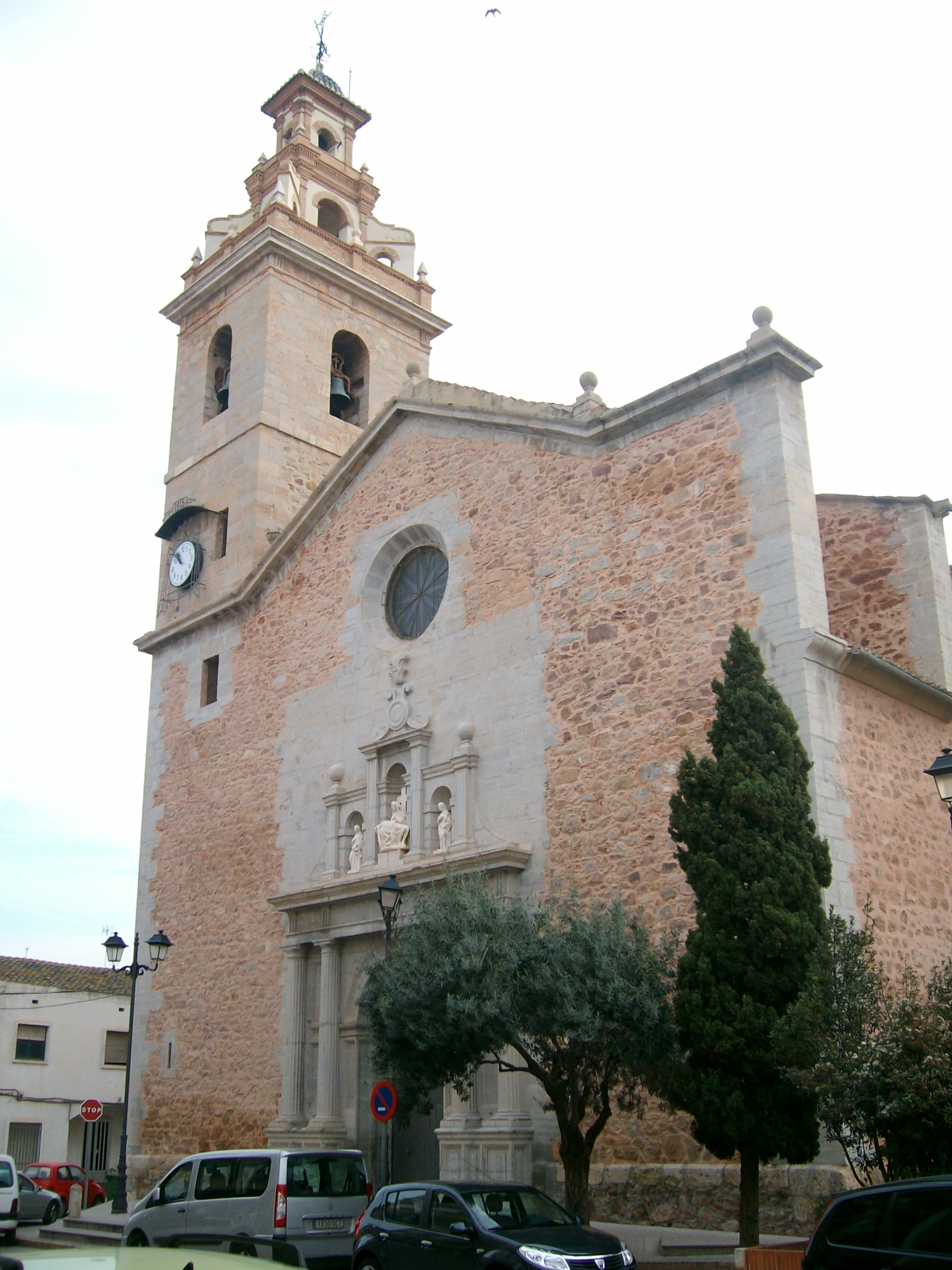
About this place
The Church of the Sants Joans (Iglesia de los Santos Juanes) stands as the main religious landmark of Puçol, a small town in the province of Valencia, only a short drive north of the regional capital. Rising above the old quarter, the building has anchored community life here for more than four centuries.
How do you get there?
Puçol sits along the corridor connecting Valencia to Sagunto and is served by the C-6 suburban rail line as well as regional buses, with journeys from central Valencia taking roughly 20–25 minutes. The church occupies the heart of the historic centre, so once in town a short walk through narrow streets brings you straight to it. Drivers should look for parking near the edge of the old quarter, since the surrounding lanes are tight.
What is the story behind the building?
Construction of the current church began in 1587. On 29 April 1588, the first stone was blessed by Juan de Ribera, Patriarch of Antioch and Archbishop of Valencia — a towering figure in the region's history who was later canonised. The stonework was carried out by the brothers Antonio and Pedro de Xado, master masons from Argoños in Cantabria. Building continued for a full twenty years.
The finished church was consecrated on 28 October 1607 by Tomás de Espinosa, auxiliary bishop of Valencia. On that same day, Juan de Ribera moved the Blessed Sacrament from the old parish church into the new building and celebrated the first mass there — an episode still remembered locally as the symbolic beginning of a new chapter for the parish.
What can you see inside and outside?
The main facade, designed between 1588 and 1589 by Juan de Ambuesa, an architect from Paris who had earned considerable renown in Valencia at the time, ranks among the building's most artistically significant features. The church itself is Baroque in style, marked by lavish gilded ornamentation, though a closer look reveals traces of earlier Gothic and Renaissance elements — the result of the two-decade construction process and later modifications.
Inside, several notable works of religious art await. Chief among them is the image of Nostra Senyora del Peu de la Creu, which holds a place of particular devotion among locals. Also worth attention are a painted canvas decorating one of the chapels and the main altarpiece, the work of Manuel Vergara, one of the more significant sculptors of the Valencian Baroque period.
When is the best time to visit?
The interior is easiest to appreciate during quieter morning hours, outside mass times — it is worth checking the parish schedule in advance. Summers in Puçol run hot, so plan a visit for early morning or late afternoon and combine it with a walk through the old town and its nearby square. The town also comes alive during the patronal festivities linked to the cult of the Sants Joans, when the church becomes the focal point of the religious celebrations and the events surrounding them.
Frequently asked questions
How old is the church in Puçol? Construction began in 1587 and the church was consecrated in 1607, making it more than four hundred years old.
Who designed the facade? The main facade was designed by Juan de Ambuesa, an architect from Paris who was highly regarded in Valencia at the time.
What architectural style does the building represent? It is predominantly Baroque, with gilded decoration, though Gothic and Renaissance elements from earlier construction phases are still visible.
What are the highlights inside? The image of Nostra Senyora del Peu de la Creu, a painted canvas in one of the chapels, and the main altarpiece by Manuel Vergara.
Nearby places
-
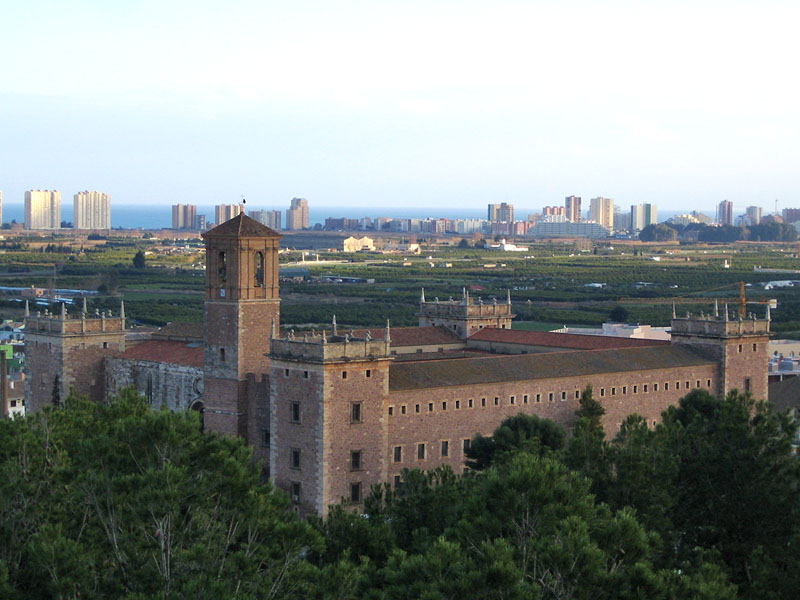
Monastery of Santa Maria, El Puig
el Puig de Santa Maria
-

Església de Sant Llorenç Màrtir de Massalfassar
Massalfassar
-
Monastery of Sancti Spiritu, Gilet
Gilet
-
Albalat dels Sorells Municipal Cemetery
Albalat dels Sorells
-
Church of the Immaculate
Albalat dels Tarongers
-
Meliana Municipal Cemetery
Meliana
Earn badges for the places you visit
Download NextOnTrip, discover new places and check off your trails.