- Sacred Monuments
- Religious monuments
Monastery of Santa Maria, El Puig
About this place
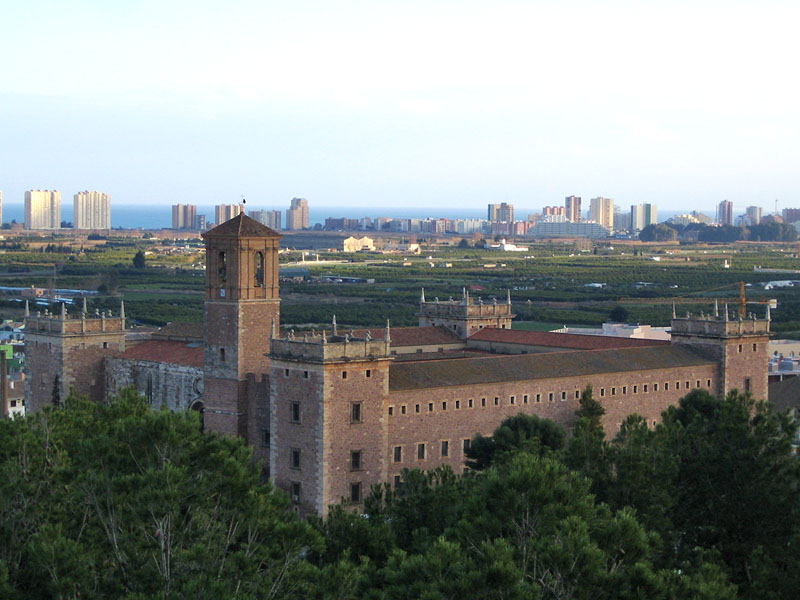
The Monastery of Santa Maria in El Puig is a Gothic-and-Renaissance monastic complex located about 18 km north of Valencia, in the province of Valencia, Spain.
What makes this monastery worth a visit?
The complex sits on a small hill — the name El Puig means "hill" in Valencian — which has served as a natural lookout point over the coastal plain since medieval times. The church itself is built in Gothic style, while the surrounding monastic buildings follow Renaissance design principles. This mix of two architectural periods within a single complex gives it a different character from many Spanish monasteries built in a single era, with a fortress-like solidity in the stonework that reflects its historical role as both a religious and defensive structure.
The monastery has remained an active place of worship for centuries and stands as a landmark of the Valencia region's religious heritage. Its hilltop position gives visitors views over the surrounding orange groves and the nearby Mediterranean coastline, making it a natural viewpoint as well as a religious site.
How do you get there?
El Puig sits along the main route connecting Valencia to the northern part of the province, close to the coastal motorway. Driving from central Valencia takes roughly 20–25 minutes. Regional bus services also connect the town, so a visit is possible without a rental car — though it's worth checking timetables in advance, since connections run less frequently than in larger cities.
For travelers with a car, the monastery makes a convenient stop between Valencia and the towns along the Costa del Azahar, and it's often combined with a day trip that pairs sightseeing with time on the coast.
What will you see on site?
A visit centers on the Gothic church and the Renaissance monastic buildings surrounding it. Typical of this kind of complex are the interior cloister and the plain, heavy stone façades, which contrast with more decorative elements inside the church itself. The hill the monastery stands on is an attraction in its own right, offering views over the plain and the agricultural land characteristic of the Valencia region.
It's worth setting aside time not only for the monastic complex but also for a walk through the town of El Puig itself, which has kept a small, provincial character quite different from the pace of nearby Valencia.
When is the best time to visit?
Spring (March–May) and autumn (September–November) offer the most comfortable conditions, with mild temperatures before the summer heat sets in across the surrounding hills and fields. Summers in the Valencia region can get quite hot, which makes extended time outdoors around the monastery less comfortable. Winters remain mild by European standards, making El Puig a realistic option for a visit even outside the main tourist season.
Frequently asked questions
Is the monastery open to visitors? Yes, the complex remains an active place of worship and is open for visits — it's worth checking current opening hours before arriving, as these can vary by season and religious holidays.
How much time should you plan for a visit? Seeing the complex typically takes one to two hours, depending on whether the visit covers only the exterior or also the interior spaces.
Can this be combined with other nearby attractions? Yes, the proximity to both Valencia and the Costa del Azahar coastline makes it easy to combine the monastery with a route covering the city and regional beaches.
What's the best way to reach El Puig without a car? Regional bus services run from Valencia, though it's best to check the schedule in advance since connections are less frequent than in larger cities.
Nearby places

Earn badges for the places you visit
Download NextOnTrip, discover new places and check off your trails.