About this place
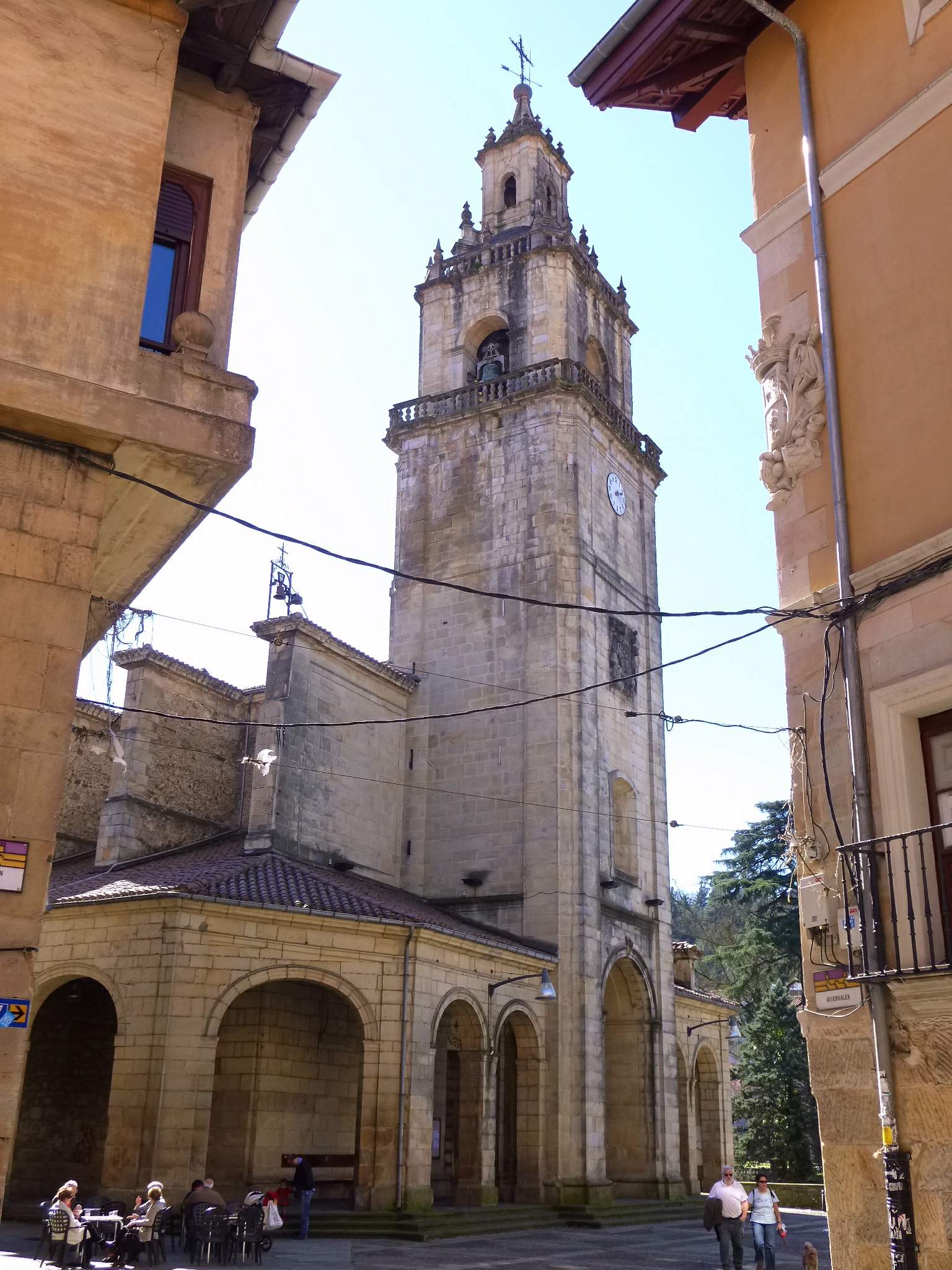
The Church of Santa María de la Asunción stands as the main parish church of Amorebieta-Etxano, a town in the Basque Country. Set at the heart of the town, it has served as the community's principal landmark for centuries.
How old is the church?
Written records place a place of worship on this spot as far back as 1441, and local tradition credits the faithful of Etxano with founding an even earlier chapel here in the 10th century. That early building was rebuilt and enlarged in the 16th century once it became too small for a growing congregation. The structure visitors see today dates mainly from a major rebuilding campaign that began in 1556, led by master stonemason Domingo de Iturrieta from the nearby village of Cortézubi. The project was originally expected to take about a decade, but work dragged on for roughly 103 years in total — a timeline that says a lot about the scale of ambition behind what was, on paper, a single parish's building project.
What architectural style does it show?
The church blends late Gothic elements with the restrained geometry of Renaissance design, close to the austere Herrerian style favored in Spain during that era. Inside, a single nave runs into a rectangular chancel, divided into five equal bays covered by ribbed vaults. That plain, symmetrical layout without side aisles was typical of the large Renaissance parish churches built across Biscay in the 16th and 17th centuries. The upper section of the bell tower came later, added in a more ornate Baroque style during the final decades of the 18th century — a visible contrast to the plainer stonework of the nave below.
What should visitors look for inside?
The main altarpiece, dedicated to the Assumption of Mary, is the standout feature of the interior. Its carved structure was finished in 1752, but gilding and painting the figures took another two decades, not wrapping up until 1778. That drawn-out timeline — a century to raise the stone walls, then another twenty years to finish gilding the altarpiece — turns the building into a layered record of local craftsmanship and parish patronage stretching across several centuries.
Why does this church stand out regionally?
The church in Amorebieta-Etxano is regarded as one of the finest examples of Classicist architecture in the Basque Country. Together with the church of San Juan in Molinar de Gordejuela, it is counted among the two most significant single-nave Renaissance churches in the whole of Biscay. For anyone interested in the region's religious architecture, that makes it a useful reference point for comparing local building traditions against the better-known churches of Bilbao or Durango.
Frequently Asked Questions
Where is the Church of Santa María de la Asunción located? In the center of Amorebieta-Etxano, a town in the province of Biscay, in Spain's Basque Country.
When was the current church building constructed? The main structure was raised between 1556 and the 17th century, though a place of worship on the site is documented from at least 1441, with roots tracing back to an earlier 10th-century chapel.
Who built the church? Master stonemason Domingo de Iturrieta of Cortézubi began the construction work in 1556.
What is the most valuable feature inside the church? The main altarpiece devoted to the Assumption of Mary, carved by 1752 and fully gilded and painted only by 1778.
Nearby places

Earn badges for the places you visit
Download NextOnTrip, discover new places and check off your trails.