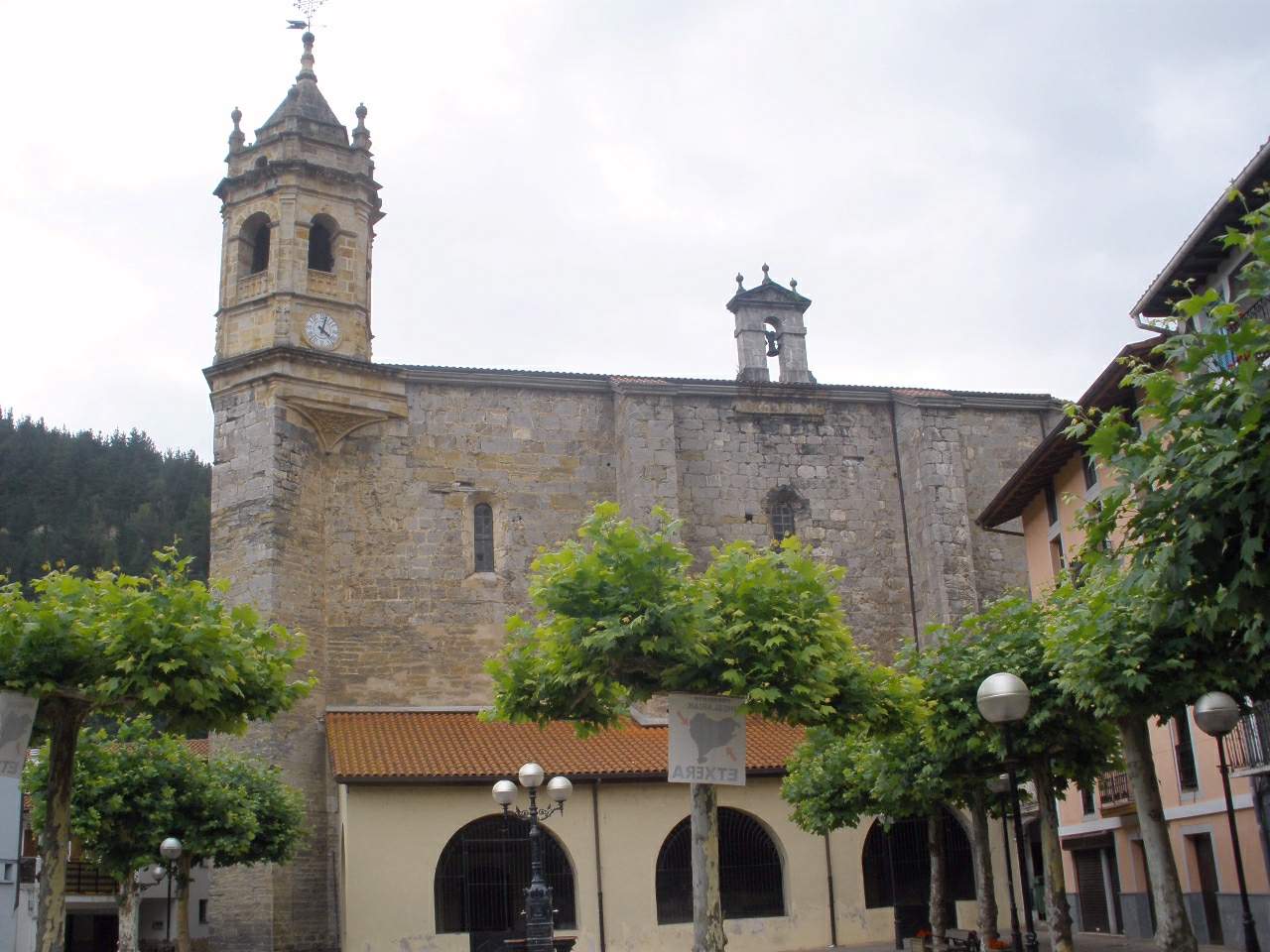
About this place
The Church of San Salvador stands at the heart of Legorreta, a small town in the province of Gipuzkoa, in Spain's Basque Country. It serves as the town's parish church and is the most significant piece of religious architecture in this stretch of the valley.
What is the history behind the church?
The building seen today dates largely from the 16th century, when an earlier place of worship on the same site was substantially rebuilt. The work was carried out under Domingo de Eceiza, a master stonemason who would later work on the construction of El Escorial near Madrid, one of the defining monuments of Spanish Renaissance architecture. Construction at Legorreta began in 1580, and the result is a building that layers late-Gothic, Renaissance and Baroque elements on top of one another — a mix that is visible at first glance on the facade.
What should visitors notice in the architecture?
The church was built from roughly dressed stone, known locally as sillarejo, a technique common in Basque religious buildings of the period. Inside, the plan is a single rectangular nave closing in a faceted, polygonal apse. The oldest surviving feature is the doorway, carved in a late-Gothic style that predates the rest of the structure — a sign that the 16th-century rebuilding incorporated part of an earlier church rather than starting from scratch. The top section of the bell tower, built in cut sandstone, is Baroque in character, showing that work on the building continued well after the main construction phase of the late 1500s. The interior is covered by ribbed vaults, typical of late-Gothic and Renaissance religious architecture in the region.
What can be seen inside?
The centerpiece of the interior is the main altarpiece, together with the side altarpieces flanking it. Their construction was commissioned in 1695 from Juan Bautista Sagüés, a sculptor and altarpiece designer connected to a workshop based in Tolosa, one of the leading centers of decorative craftsmanship in Gipuzkoa at the time. These altarpieces display the ornate character typical of Baroque woodwork, standing in clear contrast to the plainer, heavier stone architecture surrounding them. That contrast between austere exterior and richly decorated interior is one of the main reasons to step inside when the church is open.
Where is the church and how do you get there?
Legorreta lies in the valley of the Oria River, in the heart of Gipuzkoa, surrounded by the hilly terrain typical of the Basque Country. The church sits right in the town center, making it a natural landmark for anyone exploring Legorreta. Given the town's small size, the church is easy to find on foot from the main streets without needing additional navigation.
Frequently Asked Questions
When was the Church of San Salvador in Legorreta built? Its present form dates from the 16th century — construction under Domingo de Eceiza began in 1580, although the church's doorway is older, carved in the late-Gothic style of an earlier building phase.
Who built the church? The main rebuilding was directed by Domingo de Eceiza, a stonemason who also worked on El Escorial. The interior altarpieces were commissioned in 1695 from Juan Bautista Sagüés, of the Tolosa workshop.
What architectural style does the church represent? It combines late-Gothic elements (the doorway), Renaissance features (the overall layout and building technique), and Baroque additions (the top of the bell tower and the altarpieces) — a layering typical of rural Gipuzkoa churches rebuilt over several decades.
Is the interior worth visiting? Yes — the ribbed-vaulted interior houses Baroque altarpieces from the respected Tolosa workshop, offering a striking contrast to the plainer stone architecture on the outside of the building.
Nearby places

Earn badges for the places you visit
Download NextOnTrip, discover new places and check off your trails.