About this place
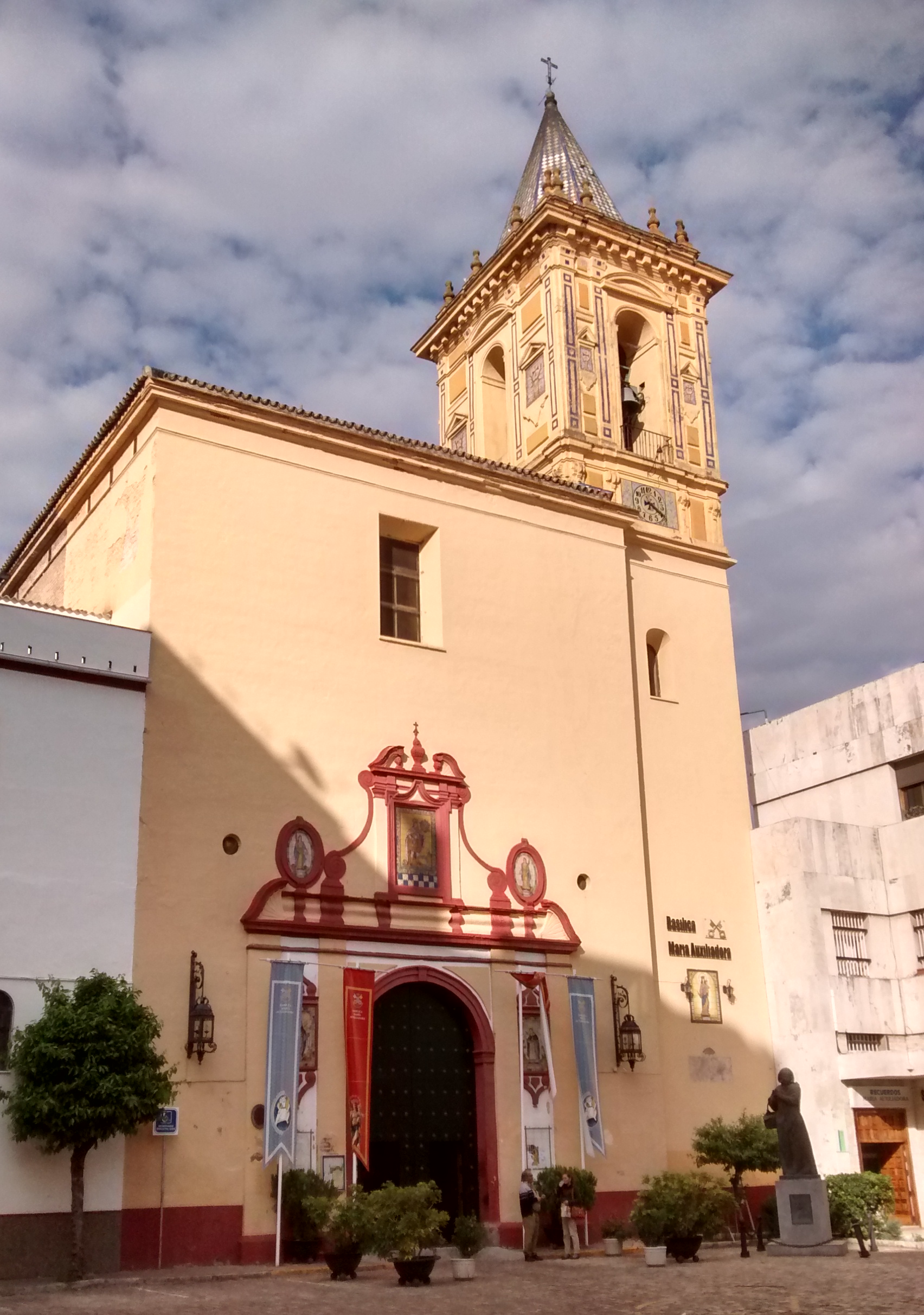
Church of San Pedro is one of the most prominent churches in Carmona, a historic town near Seville, best known for a bell tower modeled on Seville's famous Giralda.
Where does the church come from?
The building was raised in the 15th century on the site of an earlier hermitage dedicated to the Virgen de la Antigua. It was built in the Mudejar style typical of religious architecture in Andalusia at the time, blending Gothic structural elements with decoration inspired by Islamic art. Over the following centuries the church was expanded and adapted to serve a growing parish, eventually becoming one of the key landmarks in the town's skyline.
Why does the church look the way it does today?
The Lisbon earthquake of 1755 had a major impact on the building's current appearance. Although its epicenter lay far to the west, the earthquake caused serious structural damage across much of southern Spain, including Carmona. In its aftermath, the church underwent an extensive 18th-century rebuilding, during which Baroque elements were added on top of the original Mudejar structure. The result is a visible layering of styles and periods, evident both in the architecture and in the church's interior decoration.
What draws the eye the most — the tower?
Without question. The tower attached to the main body of the church is the most recognizable feature of the whole ensemble and one of Carmona's symbols. It was deliberately designed as a smaller-scale homage to the Giralda, the celebrated bell tower of Seville Cathedral, echoing its window rhythm, brick Mudejar-style decoration, and overall proportions. Construction of the tower was completed in 1783. It is crowned by the so-called Giraldillo, a bronze figure created by Alfonso Berraquero García, a local counterpart to the famous weathervane statue atop Seville Cathedral. This combination — a provincial-town tribute to a great architectural model — makes the San Pedro tower one of the most photographed spots in Carmona.
Is the interior worth a visit?
The interior reflects the same layering of styles as the facade. Beneath the 18th-century Baroque additions, the older Mudejar spatial structure of the church is still discernible. For visitors interested in the sacred art and historical architecture of the Seville region, the church makes for a worthwhile stop: it illustrates how local communities rebuilt and reshaped their places of worship after natural disasters, while preserving an unbroken line of religious use stretching back to a medieval hermitage.
How does the church fit into the rest of Carmona?
Carmona is a town with an exceptionally long settlement history, and San Pedro is one of several large parish churches within its boundaries, alongside others in the old town and inside the walled center. Visible from many vantage points, the San Pedro tower acts as a kind of landmark on the approach to Carmona from the Seville side, hinting at the rich sacred architecture that awaits visitors exploring the town center further.
Frequently Asked Questions
Does the San Pedro tower really resemble Seville's Giralda? Yes — the tower was deliberately designed as a tribute to the Giralda, with similar Mudejar decoration and a bronze crowning figure known as the Giraldillo, though on a smaller scale suited to a parish church.
When was the church built? The first structure dates to the 15th century, raised on the site of an earlier hermitage dedicated to the Virgen de la Antigua. The church's current appearance owes much to an 18th-century rebuilding following the 1755 Lisbon earthquake.
In what architectural style was the church built? The church combines the Mudejar style of its original structure and tower with Baroque elements introduced during the 18th-century reconstruction.
When was the tower completed? The tower was completed in 1783 and is crowned by a bronze figure called the Giraldillo, created by Alfonso Berraquero García.
Nearby places

Earn badges for the places you visit
Download NextOnTrip, discover new places and check off your trails.