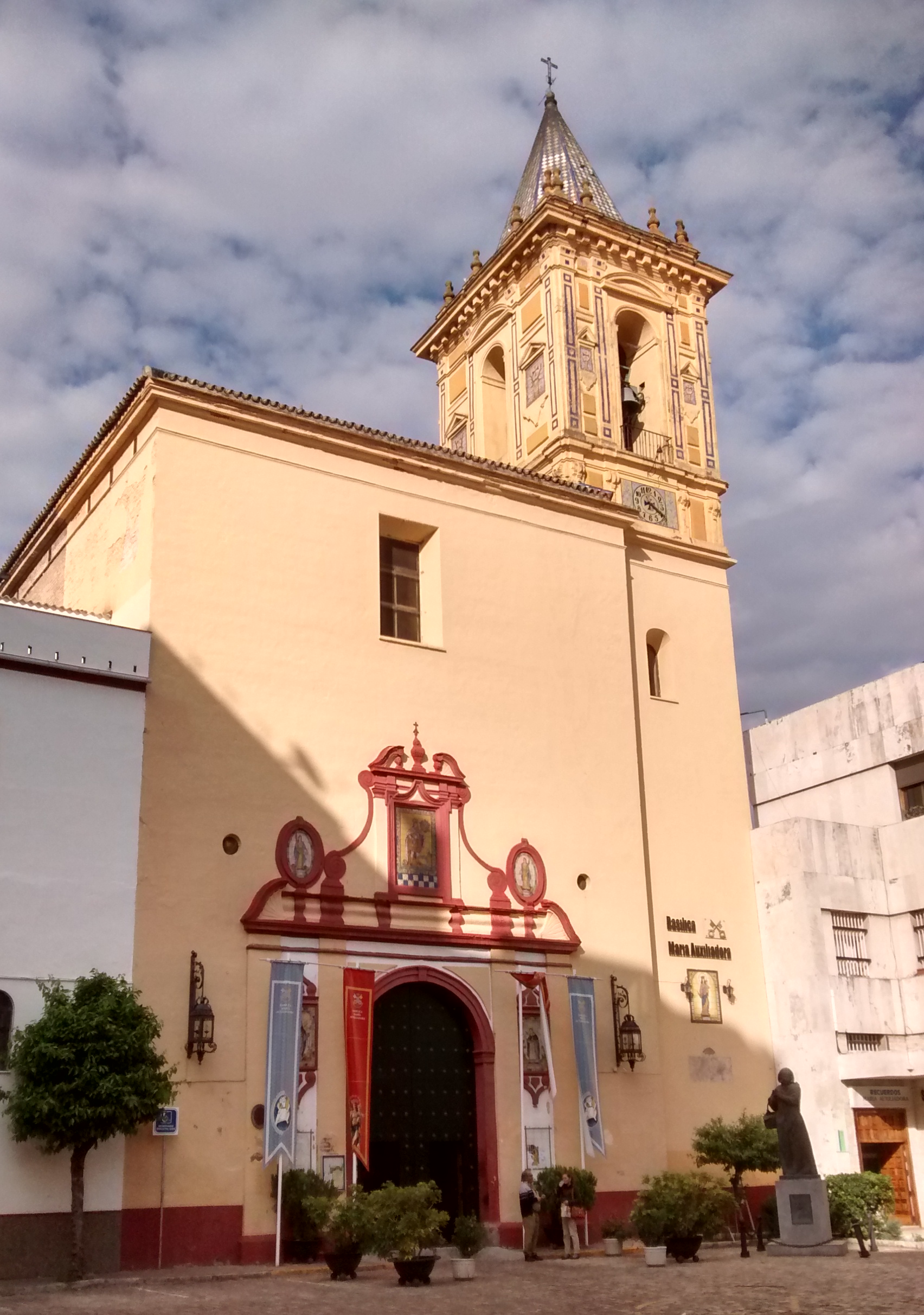
About this place
The Basilica Shrine of Our Lady Help of Christians sits in the La Trinidad district of Seville, a quiet neighborhood that rarely makes it onto shortlists built around the cathedral and the Alcázar. Yet the building carries layers of history stretching back to the city's reconquest by Ferdinand III in 1248, when a Trinitarian convent was first established on the site.
Where does this church come from?
The original convent church declined over the centuries and stood in ruins by 1617. Reconstruction began in 1621 under a design credited to the friar Miguel de Peñalosa and Miguel de Zumárraga, the master architect of Seville Cathedral — a pairing that hints at how seriously the rebuild was taken. Construction itself was carried out by Juan de Segarra and Andrés de Oviedo, the city's master builder at the time. What stands today is therefore a genuine piece of 17th-century Sevillian baroque, even though its current name and purpose date from much later.
The turning point came in 1893, when the Salesian order took over the building and founded the Salesian College of the Holy Trinity there. It was the Salesians who attached the site to the devotion of Mary Help of Christians, a Marian title central to the spirituality of Don Bosco. In 2008 the church was elevated to the status of shrine, and that same year it was granted the title of minor basilica — a designation the Vatican reserves for churches of particular historical or spiritual significance.
What is there to see inside?
Beyond the architecture and the main altar dedicated to Mary Help of Christians, the underground galleries of the former convent are the detail that draws the most curiosity. Local tradition holds that these vaults once held Saints Justa and Rufina — the patron saints of Seville, venerated since early Christian times — before their martyrdom. The legend is deeply woven into the identity of the La Trinidad neighborhood and often surfaces in accounts of its history.
How do you get there, and when is the best time to visit?
The basilica sits in central Seville, within easy walking distance of the city's main landmarks, making it a natural stop when exploring the old town on foot. As an active parish church and Salesian center, it operates year-round, and mornings or early afternoons outside Mass times are the easiest windows for a quiet look inside. Since it remains a working place of worship, modest dress and quiet behavior are expected, particularly during services.
Why is it worth a visit?
Few single stops let you trace so many layers of Seville's story at once: a medieval Trinitarian convent, a 17th-century baroque rebuild, and a modern Salesian identity confirmed by a papal basilica title. For travelers curious about the city's religious history beyond its most crowded monuments, this is a stop that adds real context to a Seville visit.
Frequently asked questions
What makes a church a "basilica" rather than an ordinary church? The title of minor basilica is granted by the Vatican as recognition of a church's historical or religious significance. The Basilica Shrine of Our Lady Help of Christians received this title in 2008.
Who were the Trinitarians, and why did they have a convent here? The Trinitarians were a medieval religious order known for ransoming Christian captives. Their convent in Seville was founded shortly after the city's reconquest by Ferdinand III in 1248.
Can visitors see the crypts linked to Saints Justa and Rufina? Access to the underground galleries can be limited and depends on the parish's current arrangements — it's worth asking on-site or checking ahead of a visit.
Is admission to the basilica free? As a functioning parish church, the basilica is generally open to visitors free of charge outside of service times.
Nearby places

Earn badges for the places you visit
Download NextOnTrip, discover new places and check off your trails.