About this place
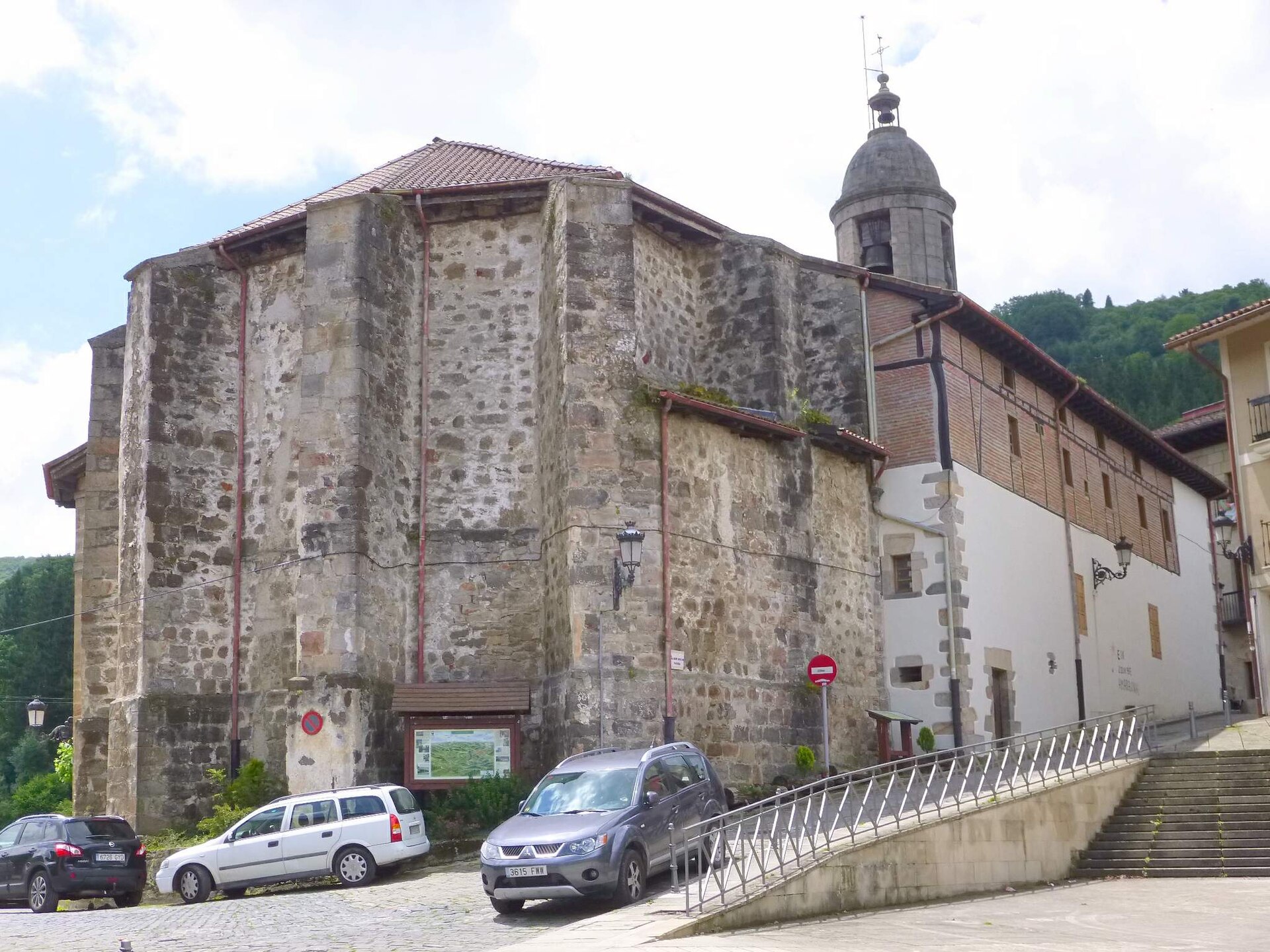
The Church of San Millán stands at the heart of Leintz-Gatzaga (also known as Salinas de Léniz), a tiny fortified town tucked into the mountains on the border between Gipuzkoa and Álava in the Basque Country. It's the most important monument of a settlement founded in 1331 by King Alfonso XI, who wanted to secure control over the nearby salt springs — the very resource the whole town grew up around.
How do you get there?
Leintz-Gatzaga sits in the Deba valley, right on the old Camino Real, the royal road that once linked the Cantabrian coast to the Castilian plateau and carried salt inland for centuries. The easiest way in is by car via the local road from Eskoriatza or Arlaban, branching off the main route between San Sebastián and Vitoria-Gasteiz. The church sits right in the middle of the old town, so you'll spot it almost as soon as you arrive — the whole settlement is small enough to walk end to end in a few minutes.
What will you see?
The building you see today is the product of a turbulent history of fires and rebuilding. The first church on this site went up in the 14th century but was destroyed by fire; its successor, largely built in the 16th century, stood until 1954, when another fire gutted the interior and left only the four outer walls standing. The one element that survived from the older structure is a neoclassical bell tower dating to the 19th century, which still rises above the townscape and is visible from the valley as you approach. Inside the old stone walls, a much simpler, modern parish hall was built after the fire, creating a clear contrast between the historic exterior shell and the plain, contemporary interior. That juxtaposition — centuries-old stone walls wrapped around a modest modern space — is the main reason to step inside, alongside the atmosphere of a town literally built on salt.
When should you visit?
Spring and early autumn are the best times, when the surrounding mountains of Gipuzkoa and Álava look their most striking and temperatures are comfortable for walking the old town and the valley trails. In summer, the town works well as a cool mountain stop for travelers touring the wider Basque region. Winter can make the drive trickier given the mountain climate, but the quiet, near-empty historic center has its own appeal for visitors who prefer solitude over crowds.
Good to know
Leintz-Gatzaga is one of the smallest towns in Gipuzkoa, and its location — a Gipuzkoan enclave surrounded entirely by Álava — is a geographic curiosity in its own right. The Basque name "Gatzaga" literally means "place of salt," a direct reference to the salt springs that led to the founding of both the town and its church centuries ago.
Frequently Asked Questions
How old is the current church building? The original church dates to the 14th century, but it was rebuilt largely in the 16th century after a fire. A second fire in 1954 destroyed the interior, leaving only the walls standing, after which a simpler modern parish section was built inside them — the version visitors see today.
Why does the bell tower look different from the rest of the church? The neoclassical tower dates to the 19th century and was one of the few elements to survive the 1954 fire, which is why it stands out stylistically from the plainer, post-fire parish structure built within the old walls.
Does visiting the church take long? No — it's a small church in an equally small town. Seeing the interior and the square in front usually takes fifteen to twenty minutes, though it's worth staying longer to walk the rest of the old town.
What else is worth seeing nearby? Leintz-Gatzaga itself, as a former salt town on the Camino Real, has kept its medieval street layout and stone houses, and the surrounding mountains of the Deba valley offer hiking trails for anyone looking to explore the Basque countryside.
Nearby places

Earn badges for the places you visit
Download NextOnTrip, discover new places and check off your trails.