About this place
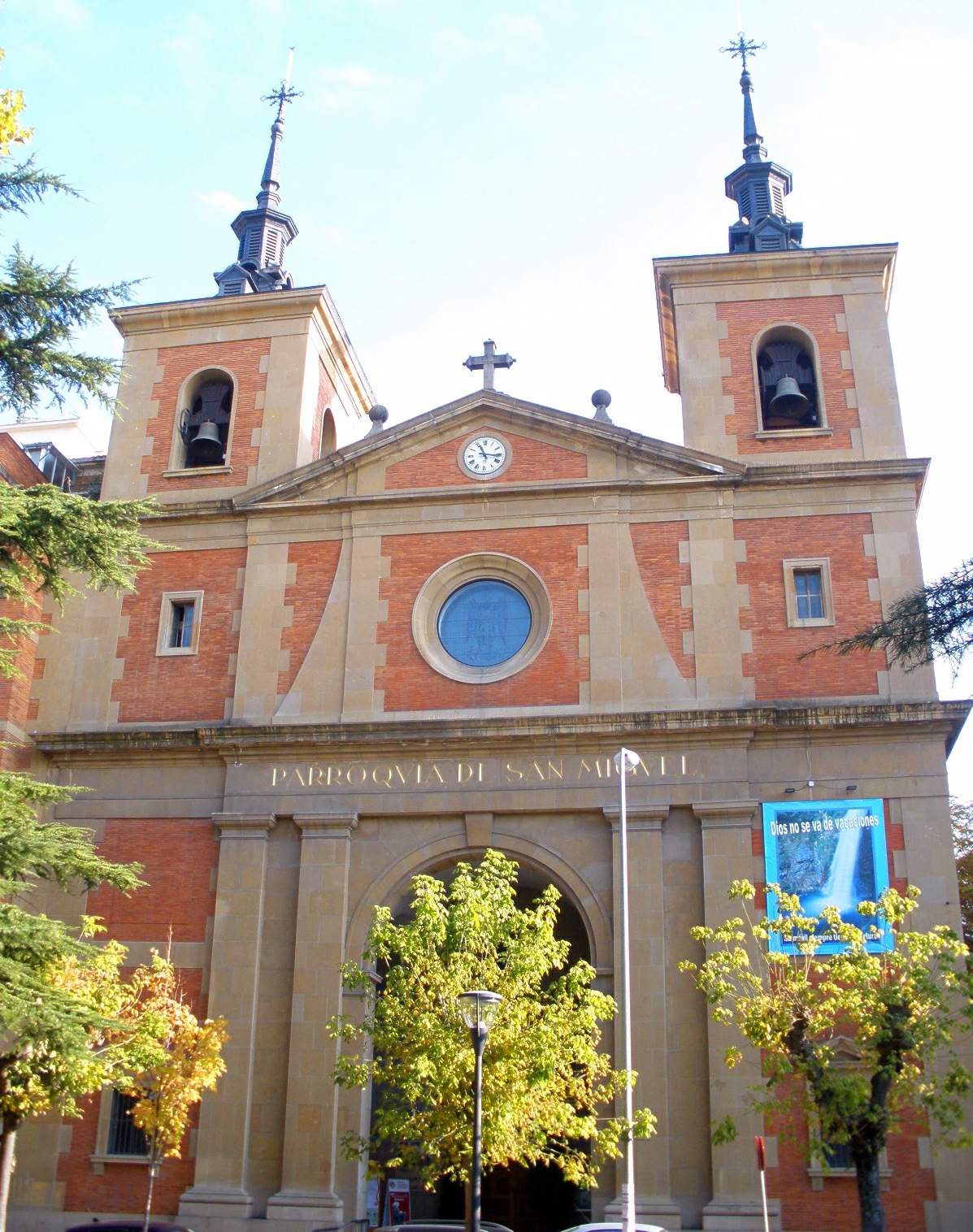
Church of San Miguel is a parish church in Pamplona (Iruña), the capital of Navarre in northern Spain. The building stands in the city's Second Ensanche district, close to Plaza de la Cruz, and while its brick exterior reads as a solid mid-20th-century construction rather than a medieval landmark, its interior holds a piece brought directly from Pamplona's cathedral.
How was the San Miguel parish founded?
The parish of San Miguel Arcángel was established on 7 March 1940 by the Bishop of Pamplona, Marcelino Olaechea Loizaga. On the same day, the neighboring parish of San Francisco Javier was also created — both were meant to serve the growing population moving into new housing built as part of the city's Second Ensanche, the post-war expansion beyond Pamplona's historic walls. The first religious services took place on 1 May 1940, the eve of Ascension, but not in the current building: the parish initially used the nearby Church of La Milagrosa. From 20 September 1941, worshippers gathered in provisionally adapted basement rooms on Calle Navarro Villoslada while they waited for a permanent church of their own.
When was the church built and consecrated?
Constructing the actual church took several more years. The formal consecration took place on 8 May 1959, a date chosen to fall on the feast commemorating the Apparition of Archangel Michael, the parish's patron. From that point on, San Miguel ceased to be a makeshift basement chapel and became a fully-fledged parish church serving the expanding district of Pamplona.
What does the church's architecture look like?
The façade is built of red brick, reinforced with stone blocks at the corners — a combination typical of mid-20th-century Spanish religious architecture, which blended traditional forms with the more economical building materials of the post-war years. The central section of the façade is topped by a triangular pediment set between two towers, each containing a chapel. The entrance opens through a semicircular arch leading into a spacious vestibule, roomy enough for parishioners to gather before entering the main nave.
What is worth seeing inside?
The interior's main highlight is a herreriano-style altarpiece — named after architect Juan de Herrera, whose austere, geometric take on Spanish Renaissance design gave the style its name. This particular altarpiece was not made for San Miguel: it originally stood in Pamplona Cathedral before being moved to the presbytery wall of this smaller parish church. It's an unusual chance to see a piece of cathedral-grade furnishing in a modest neighborhood church — worth a closer look for its disciplined, geometric composition, which contrasts with the more ornate Baroque altarpieces found in many other churches in the region.
Frequently Asked Questions
Is the Church of San Miguel an old, medieval building? No. The parish was founded in 1940 and the church building itself was consecrated in 1959 — it's a 20th-century church built for residents of Pamplona's Second Ensanche, not a medieval landmark.
Where in Pamplona is the church located? It stands in the city's Second Ensanche district, near Plaza de la Cruz, in the part of Pamplona developed beyond the historic old-town walls.
What is the most notable feature inside the church? A herreriano-style altarpiece originally from Pamplona Cathedral, now displayed on the presbytery wall of the San Miguel church.
Why did the parish temporarily use a basement on Calle Navarro Villoslada? Because building the permanent church took nearly two decades after the parish was founded in 1940, worshippers used provisional basement rooms until the church was finally consecrated in 1959.
Nearby places

Earn badges for the places you visit
Download NextOnTrip, discover new places and check off your trails.