- Sacred Monuments
- Churches
Church of San Bizente Martiria-San Vicente Mártir, Donostia-San Sebastián
About this place
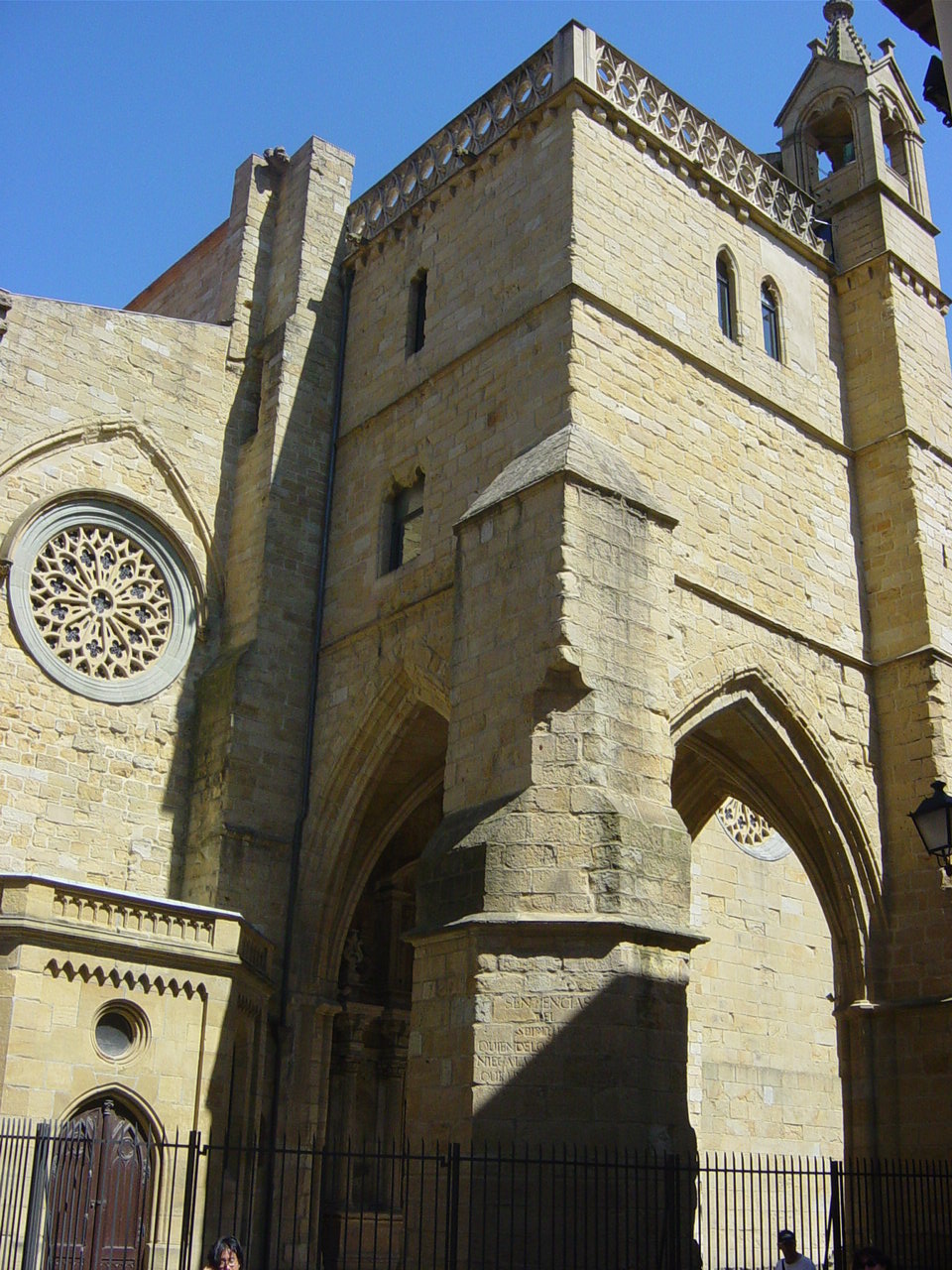
Iglesia de San Vicente Mártir is a Gothic church in Donostia-San Sebastián, regarded as the oldest church in the city and one of the few buildings to survive the fire and destruction of 1813. It stands in the Parte Vieja, San Sebastián's historic old town, and remains one of the most significant examples of religious architecture in the Basque Country.
When was the church built?
Construction of the present building began in 1507 on the site of an earlier church that had been damaged by a fire in 1489. The work was carried out under master stonemasons Miguel de Santa Celay and Juan de Urrutia, and it was not completed until 1574 — a project that stretched across nearly seven decades. Despite this long timeline, the church was never fully finished according to its original architectural plans.
What architectural style does it show?
The church was designed in the Basque Gothic style, also known as late Gothic, and conceived with a defensive purpose in mind — as a church-fortress capable of serving as a point of resistance if needed. Its layout is rectangular, with the interior divided into three naves and a transept aligned with the side façades, a feature that is mainly noticeable from inside through the difference in height. The central nave rises higher than the side naves, following the classic canon of Gothic architecture.
What is worth seeing inside?
The main highlight of the interior is the central altarpiece, commissioned in 1583. Its execution was entrusted to Ambrosio de Bengoechea, a favored disciple of the sculptor Anchieta, who worked with the assistance of Joanes de Iriarte. The workshop completed the piece in 1586. The altarpiece is considered one of the finest examples of Romanist art — a style drawing on the school of Michelangelo — found in Spanish religious art of the late 16th century. The composition is divided vertically into five sections and two intermediate fields, crowned by a Calvary scene set above the three main tiers of the altarpiece.
Why has the church survived so well?
Much of San Vicente's historical importance comes from having survived the disaster that reshaped the city — the 1813 fire and destruction that consumed most of San Sebastián's built fabric. Because of this, the church stands today as one of the rare physical witnesses to the city's architecture before that event, offering a glimpse of what religious buildings in the region looked like in the late medieval and early Renaissance period, before most of the Parte Vieja was rebuilt from scratch.
Frequently Asked Questions
Is San Vicente the oldest church in San Sebastián? Yes, it is considered the oldest church in the city and one of the few buildings that survived the 1813 fire.
In what style was the church built? In the Basque Gothic (late Gothic) style, designed with a defensive function as a so-called church-fortress.
What is the most important feature inside? The late 16th-century main altarpiece, created by Ambrosio de Bengoechea with the help of Joanes de Iriarte, regarded as one of the finest examples of Romanist art in the region.
How long did construction take? Work began in 1507 and finished in 1574, yet the church was never fully completed according to its original design.
Nearby places

Earn badges for the places you visit
Download NextOnTrip, discover new places and check off your trails.