About this place
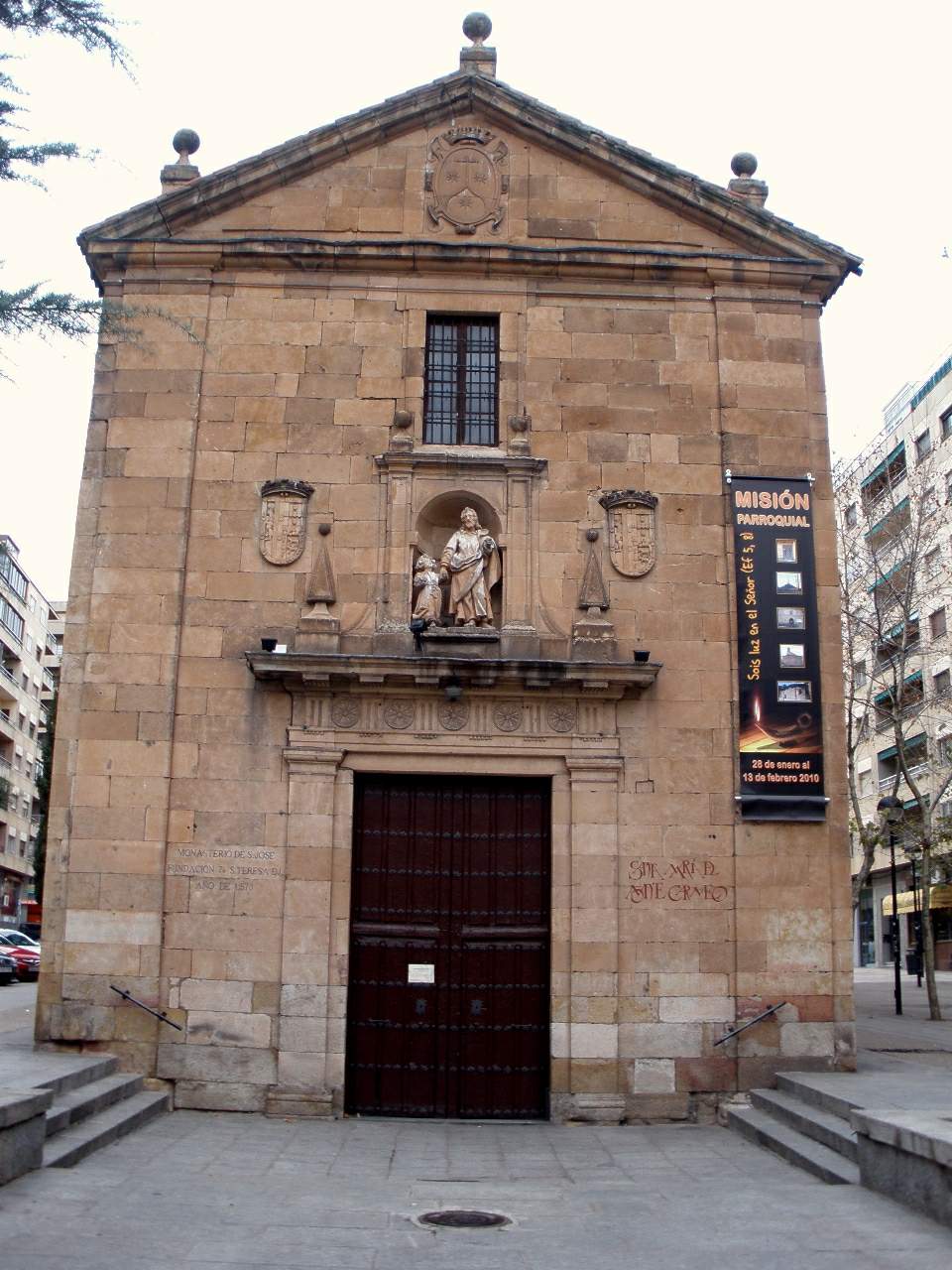
The Church of Our Lady of Mount Carmel (Iglesia de Nuestra Señora del Carmen) stands on Plaza de los Bandos in the historic center of Salamanca, Spain. It is a Baroque church and the only surviving building of a former Discalced Carmelite convent and college.
What is this church actually called?
The building's proper name is Iglesia de Nuestra Señora del Carmen, locally nicknamed "Carmen de Arriba" (the Upper Carmen) to distinguish it from another Carmelite church in Salamanca, "Carmen de Abajo" (the Lower Carmen), which stands closer to the Tormes river. Both churches take their name from devotion to Our Lady of Mount Carmel, patroness of the Carmelite order — the "upper" and "lower" tags simply describe their relative position within the old town.
What is the history behind the building?
The Discalced Carmelites founded their college in Salamanca, the Colegio de San Elías, in 1581. Their original convent was severely damaged by a flood, forcing the friars to relocate. The Monroy family donated the land for a new site, and it was there that the present church and convent were built between 1694 and 1703, to a design by fray Antonio de Jesús María.
The community's fortunes did not stay settled for long. In 1809, during the Peninsular War and the French invasion of Spain, the friars were forced to abandon the foundation. They later returned, only to be permanently expelled in 1835, when Spain's disentailment laws ordered the confiscation of church properties. The Carmelites never recovered the building. Most of the convent structures around the church were subsequently lost, and the site they once occupied is now part of the Plaza de la Libertad. The church itself survived and today functions as a parish church.
What does the building look like inside and out?
The church follows a three-nave plan: a central nave covered by a barrel vault, flanked by side naves topped with domes resting on pendentives. This layout is characteristic of Spanish Baroque church architecture from the turn of the 17th and 18th centuries, and it creates a tall, light-filled interior despite the relatively restrained stone-and-brick exterior. The main façade faces Plaza de los Bandos, one of the notable squares of Salamanca's old town, itself lined with other historic buildings.
Where is the church and how do you get there?
The church sits well within the pedestrian core of Salamanca's old town, within easy walking distance of the Plaza Mayor, the city's main square. Given this central location, the simplest way to reach it is on foot, combining a visit with other nearby historic sites. The streets around Plaza de los Bandos share the dense, sandstone-built character typical of central Salamanca.
Frequently Asked Questions
How is this church different from "Carmen de Abajo" in Salamanca? They are two separate Carmelite churches in the city. This one, known as "Carmen de Arriba" (Upper Carmen), stands in the higher part of the old town on Plaza de los Bandos. "Carmen de Abajo" (Lower Carmen) is a different building, the remnant of an earlier, separate Carmelite convent, located closer to the Tormes river.
When was the current church built? Construction ran from 1694 to 1703, to a design by fray Antonio de Jesús María, replacing an earlier convent that had been destroyed by a flood.
Is there still an active Carmelite convent attached to the church? No. The Discalced Carmelites were permanently forced out in 1835 under Spain's church-property disentailment laws and never regained the building. It now operates as a parish church rather than a monastic house.
Is it easy to combine a visit with other sights in central Salamanca? Yes. Because it sits on Plaza de los Bandos, just steps from the Plaza Mayor, the church fits naturally into a walking route through Salamanca's UNESCO-listed old town.
Nearby places

Earn badges for the places you visit
Download NextOnTrip, discover new places and check off your trails.