About this place
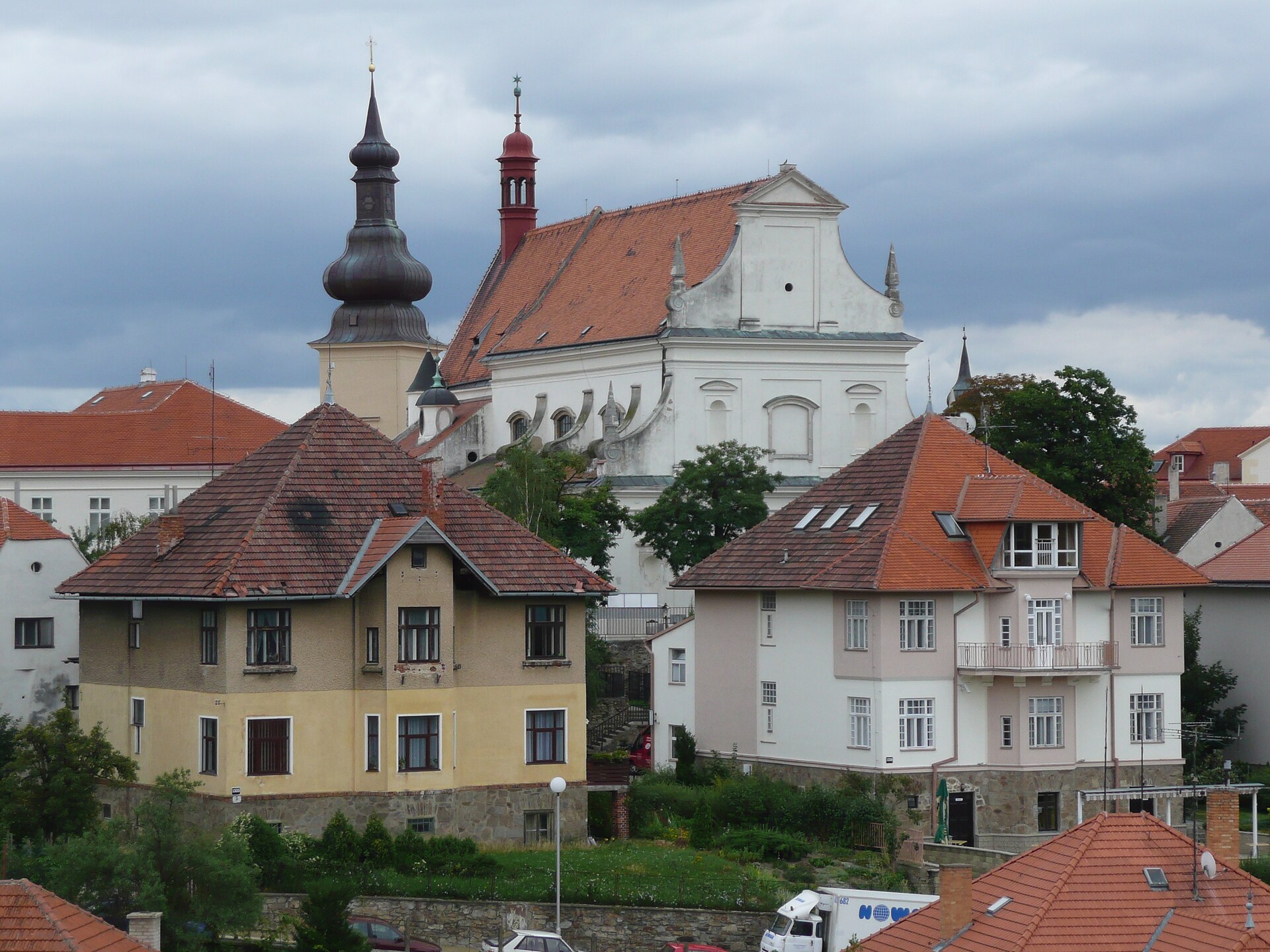
The Church of Saint John the Baptist stands on the southern side of the Lower Square (Masaryk Square) in Znojmo, forming a former Capuchin monastery complex — one of the town's few examples of Baroque architecture built for humility rather than show.
Where does this church come from?
The foundations of the church and adjoining monastery were laid in June 1628, and the founding ceremony — marked by the raising of a crucifix and the laying of the cornerstone — was attended by Emperor Ferdinand II himself. The Capuchins, an order known for plain, single-nave churches stripped of ornamental excess, designed and built the complex in keeping with their rule of poverty. The monastery operated continuously for over three centuries until 1950, when the communist authorities shut it down and the buildings passed into military use. The property was never returned to the order after 1989 — today the church functions as a subsidiary of the parish of Saint Nicholas, with regular services still held inside.
What's worth seeing on the inside?
The interior follows the typical Capuchin pattern: a rectangular, single-nave building under a barrel vault, with a plain exterior but a richly furnished Baroque interior. The main altar, the pews, and the organ all date from the Baroque period. The centerpiece is the altar painting "The Sermon of Saint John the Baptist," painted in the mid-18th century by Lukáš Kracker, a painter well regarded across Moravia at the time. A side chapel adjoins the main nave, and a corridor from there leads down to the crypt.
What is the crypt beneath the church?
This is one of the site's most unusual features. The crypt served as a public ossuary between 1632 and 1780, holding the remains of both deceased friars and townspeople, some in coffins decorated with folk painting. Mixing monks and lay citizens in a single burial space was unusual for the period and points to how closely the monastery was tied to the surrounding town.
What else is there around the church?
Facing the square, projecting from the wall of the monastery courtyard, is an open Baroque chapel with a sculpture of Christ on the Mount of Olives and statues of the apostles. It's easy to walk past without noticing while crossing the Lower Square, but it's worth pausing for — one of the few external sculptural highlights of the whole complex.
How to get there and when to visit?
The church sits right in the heart of Znojmo, on the Lower Square, so it's an easy walk from anywhere in the old town — just a few minutes from the main square and Znojmo Castle. Since it remains an active place of worship, it's best to plan a visit outside service times to look around the interior and the courtyard chapel undisturbed.
Frequently asked questions
Is the church still in use? Yes. Although the Capuchin monastery was closed in 1950 and never returned to the order after 1989, the church itself operates as a subsidiary church of the parish of Saint Nicholas, with regular services.
What is inside the crypt? The crypt functioned as a public ossuary from 1632 to 1780, containing the remains of both monks and townspeople, some in coffins decorated with folk painting.
Who painted the main altar painting? "The Sermon of Saint John the Baptist," dating from the mid-18th century, was painted by Lukáš Kracker.
Where exactly is the church located? On the southern side of Znojmo's Lower (Masaryk) Square, directly adjoining the former Capuchin monastery.
Nearby places

Earn badges for the places you visit
Download NextOnTrip, discover new places and check off your trails.