About this place
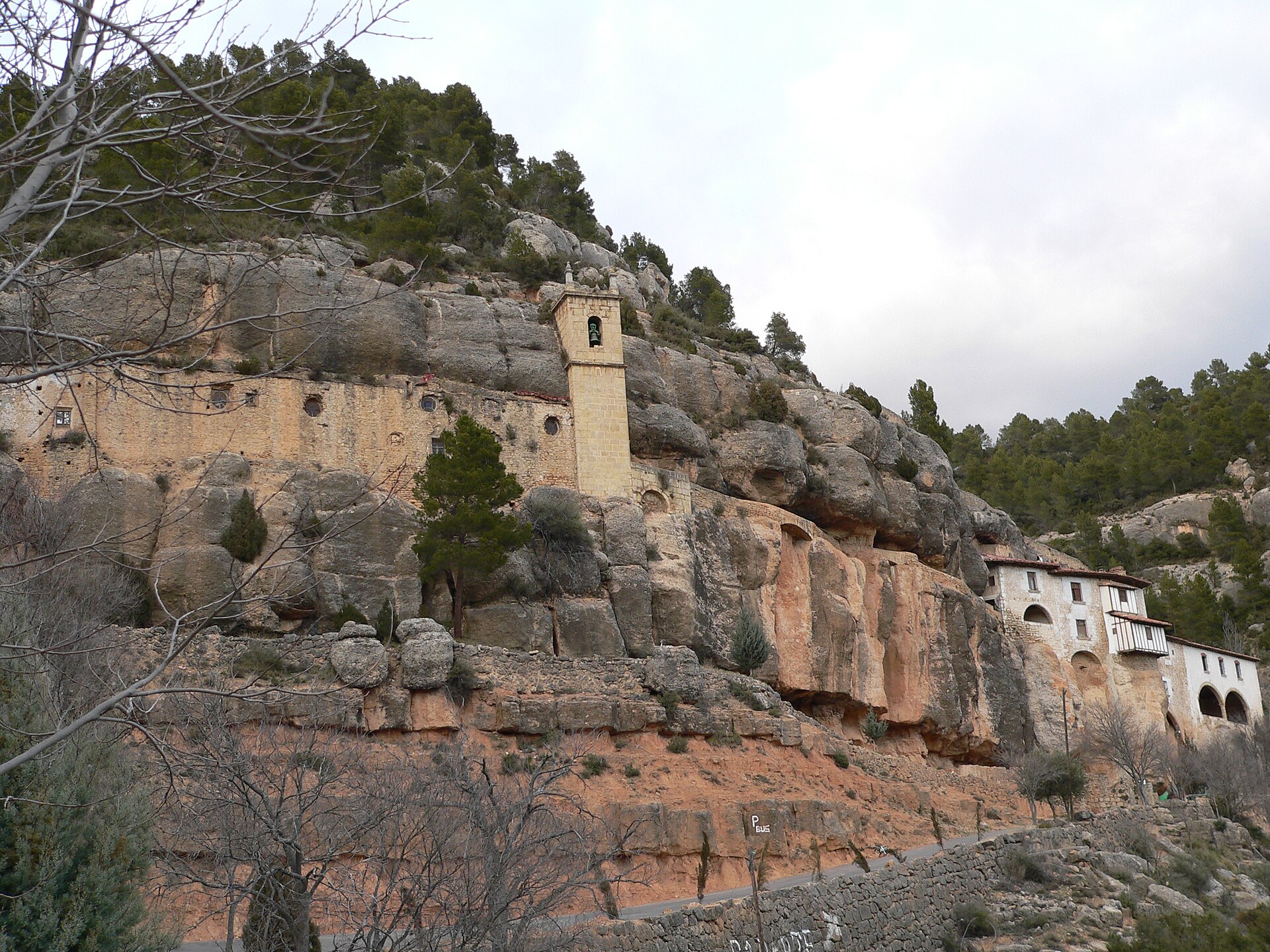
The Church of Saint Bartholomew stands in Herbés (also known by its Valencian name, Herbers), a small village in the Els Ports comarca, in the province of Castellón, within the Valencian Community. The village sits on the slopes above the Tastavins river, a tributary of the Matarranya, at an altitude of roughly 784 metres, and the church is one of the few surviving stone witnesses to its long history.
How did the village of Herbés come to exist?
Before the church was built, the site was home to a Muslim alquería. In 1233 it was taken by the forces of Blasco de Alagón, and the settlement was handed over for Christian resettlement under a founding charter (carta puebla) issued that same year. The charter went to the Aragonese knight Juan Garcés, the first baron of Herbers, who brought in settlers from the area around Lleida. That episode explains why the village name still appears in two forms today — the Castilian Herbés and the Valencian Herbers.
When was the church built, and how has it changed?
Most accounts date the present building to the 16th century, from which period the structure and its doorway survive. Other sources point to an earlier origin, in the 14th century, reflecting the fact that the building's style is difficult to pin down and blends elements from different periods. The church was rebuilt during the 18th and 19th centuries, and the bell tower was only added in 1911. This layered building history is typical of village churches in the region, where successive generations added their own features to an already standing structure.
What does the church look like architecturally?
The building follows a rectangular plan, divided into three naves, with a raised choir loft. The entrance is set within a semicircular arched doorway, a feature associated with the older part of the structure. The church has also been adapted for wheelchair access, with a step-free entrance that allows all parishioners and visitors to take part in services and community events regardless of mobility.
What surrounds the church?
Right next to the building lie the fossar vell — an old cemetery of medieval origin — and a Calvary, the traditional set of stations commemorating the Passion of Christ. This grouping of church, cemetery, and Calvary in close proximity is a common pattern among village parishes in the Els Ports region, and it reflects the site's historical role as the religious and communal heart of the settlement.
Herbés/Herbers remains a small village today, and the Church of Saint Bartholomew is still its most recognisable landmark, visible from a distance thanks to its position in the upper part of the village.
Frequently Asked Questions
Where does the village name Herbés come from? The village grew on the site of a former Muslim alquería, taken in 1233 and resettled by Christians under a charter granted to the knight Juan Garcés, first baron of Herbers.
What century does the church date from? Most sources point to the 16th century, though some suggest an earlier, 14th-century origin because of the building's mixed architectural style.
Is the church accessible to visitors with mobility impairments? Yes, the entrance has been adapted for wheelchair access.
What can be found near the church? Next to the church stand the fossar vell, an old cemetery of medieval origin, and a Calvary.
Nearby places

Earn badges for the places you visit
Download NextOnTrip, discover new places and check off your trails.