About this place
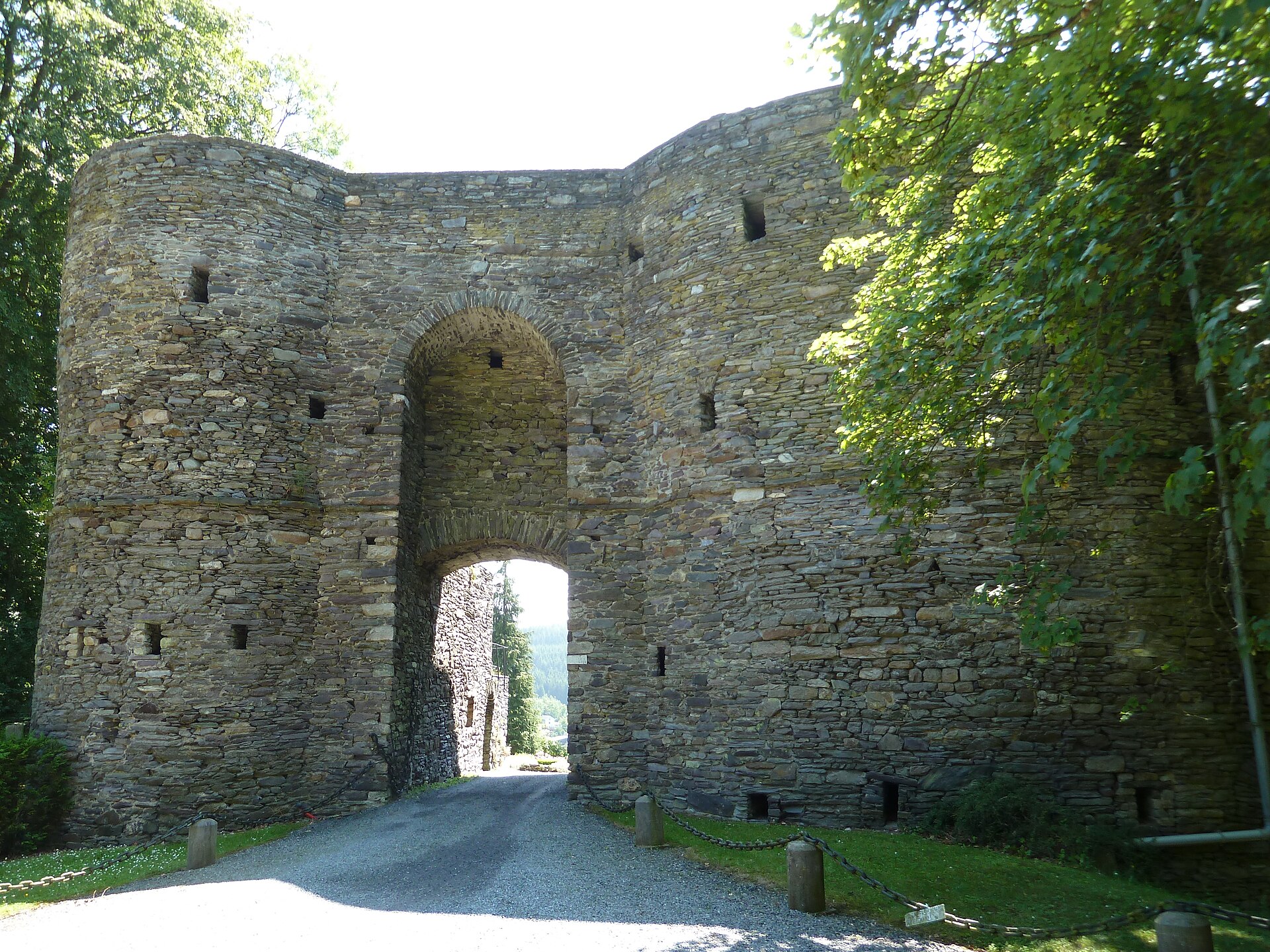
Château des Comtes de Salm is a ruined medieval castle overlooking the valley at Salmchâteau, a village belonging to the municipality of Vielsalm in the Belgian province of Luxembourg, in the region of Wallonia. Once the seat of the counts of Salm, the fortress today survives mainly as wall remnants, standing witness to centuries of turbulent Ardennes history.
When was the castle built?
Construction of the present castle began in the early 14th century, between 1305 and 1307, and the works were completed by 1362. The new stronghold replaced an earlier castle that had stood opposite the church of Vielsalm, which by then no longer met the family's defensive and representative needs. The chosen site above the Salmchâteau valley was deliberate: harder to besiege and offering better control over the surrounding land.
Where does the name Salmchâteau come from?
The name of the village itself still recalls the pivotal role this second castle played. Even before the building was finished, on 23 January 1362, Countess Mahaut of Thuin, widow of Count Henry VI of Salm, granted a series of privileges intended to encourage settlers to establish themselves right around the fortress. A settlement grew up around the castle as a result, eventually taking a name combining the river Salm with the French word château (castle).
How did the castle's role change over the centuries?
The fortress remained the residence of the counts of Salm until roughly 1500. After that it was occupied by a senior official of the Duchy of Luxembourg together with a garrison, marking a shift from a family seat to an administrative and defensive outpost within the duchy's structures.
What damage and turning points did the castle go through?
The building's history is marked by repeated crises. Fires struck the castle in 1645 and 1733, and in the first half of the 18th century it also suffered during the Wars of the Spanish and Austrian Succession, when the Ardennes region repeatedly became a theatre of troop movements and fighting. The French Revolutionary period brought another blow: the castle was plundered and subsequently confiscated by the Republican authorities once the area came under French control. In the 19th century the property changed hands again, being sold in 1807 and once more in 1821, after which it passed through the ownership of several different families.
What can visitors see there today?
What survives today of the old stronghold is chiefly the remains of its walls and the outline of its defensive layout, dominating the valley of Salmchâteau. The site combines a scenic view over the Ardennes landscape with a tangible trace of several centuries of history belonging to the counts of Salm, one of the region's notable noble families.
Frequently asked questions
Where is the Château des Comtes de Salm located? In Salmchâteau, a village within the municipality of Vielsalm, in the province of Luxembourg in Wallonia, Belgium.
When was the castle built? Construction began in the early 14th century (around 1305–1307) and was completed in 1362.
Until when was the castle the seat of the counts of Salm? It remained the family's residence until around 1500, after which it served administrative and defensive functions.
What destroyed the castle? Fires in 1645 and 1733, warfare during the Wars of the Spanish and Austrian Succession, and later damage from the French Revolutionary period.
Can the castle be visited today? Only ruins and wall remnants survive, accessible as a viewpoint overlooking the Salmchâteau valley.
Nearby places

Earn badges for the places you visit
Download NextOnTrip, discover new places and check off your trails.