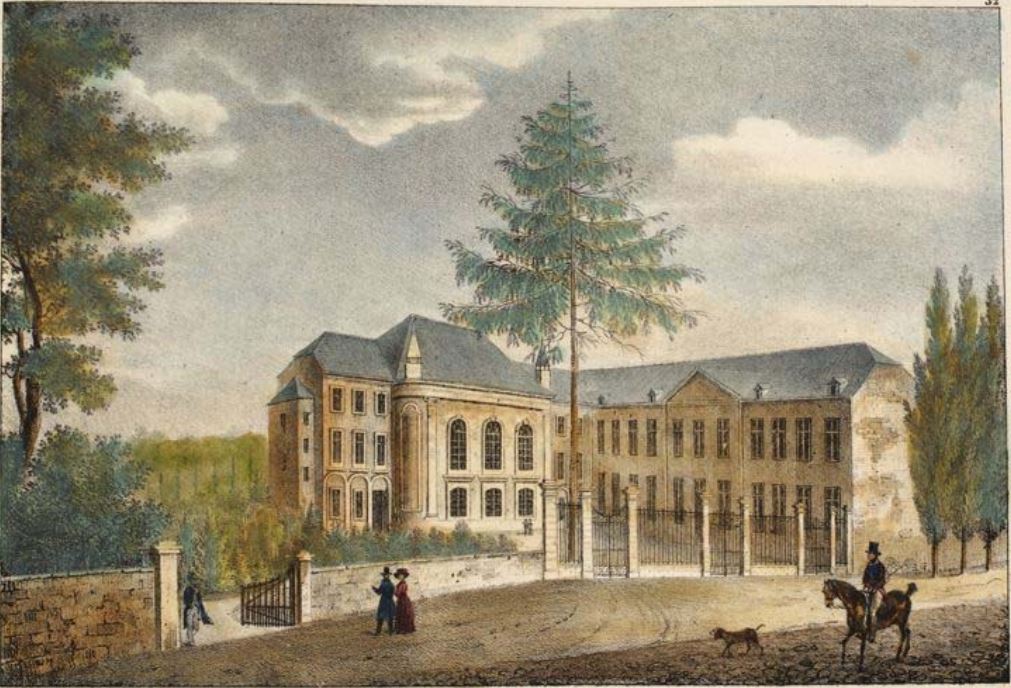
About this place
Waux-Hall de Spa is a historic entertainment building in the Belgian spa town of Spa, which once combined a ballroom, a concert hall and a refreshment establishment under one roof. It dates back to the second half of the 18th century, a period when Spa was one of Europe's most fashionable resorts, drawing aristocrats and crowned heads from across the continent.
When was the Waux-Hall built?
The building opened its doors in 1770. It was constructed in three distinct phases: the front section together with its two lateral wings went up first (1769-1770), followed a year later by the rear section (1771), and finally a corner wing was added at the end of the 1770s (1777-1779). That corner wing was later destroyed and rebuilt between 1966 and 1967, which means the structure standing today is the result of successive restorations rather than an untouched 18th-century original.
Who designed the building?
The architectural design is credited to Jacques-Barthélemy Renoz, an architect from Liège. The interior decoration was the work of stucco artist Antoine-Pierre Franck and painter Henri Deprez. Their combined efforts produced a striking contrast between the sober brick-and-bluestone exterior and the lavish interior, featuring wall stuccos, painted ceilings, marble fireplaces and mirrors.
Why did the Waux-Hall's opening cause controversy?
The Waux-Hall was built as a rival to another gaming venue in Spa, the Redoute, considered the first modern casino on the European continent, which had opened in 1763. The Redoute operated under an exclusive privilege granted by the prince-bishop of Liège, so the opening of a competing Waux-Hall in 1770 triggered a dispute between the two establishments. The tension eventually resulted in an agreement between the owners of both venues.
The conflict over gaming rights in Spa did not end there. In 1785, a third competing venue, the Levoz salon, opened near the Waux-Hall, reigniting the rivalry. This long-running dispute, known as the "affair of the games of Spa," is cited as one of the causes of the Liège Revolution of 1789 — a local uprising against the prince-bishop's authority that unfolded against the wider backdrop of revolutionary change in late-18th-century Europe.
What is the building's status today?
The Waux-Hall was listed as a protected monument on 24 July 1936, and in 1993 the Walloon Government added it to the list of exceptional heritage sites. It is regarded as one of the oldest surviving gaming rooms in Europe and one of the few remaining witnesses to Spa's "golden age," when the town was a fashionable meeting place for Europe's elite drawn by its thermal waters.
Frequently asked questions
Can visitors see the Waux-Hall today? The building survives as a protected heritage site tied to the town's history and cultural life, with local associations involved in efforts to preserve it.
How did the Waux-Hall differ from the Redoute? Both venues served a similar purpose — combining gaming, dancing and concerts — but they were built as competing enterprises, which led to years of legal and commercial disputes between their owners.
Why does the name echo "Vauxhall"? The name "Waux-Hall" references the famous Vauxhall Gardens in London, an 18th-century pleasure garden that served as a model for similar entertainment venues built in other European towns, including Spa.
Nearby places

Earn badges for the places you visit
Download NextOnTrip, discover new places and check off your trails.