About this place
Rolley Castle is a classical-style manor house tucked away in the tiny hamlet bearing its name, just north of Bastogne, in the province of Luxembourg in Wallonia, Belgium. Although the earliest written mention of the site dates back to the 13th century, historians believe the original structure was likely built as early as the 11th century, making Rolley one of the older fortified sites in the Ardennes region.
Where exactly is the castle, and how did the hamlet form around it?
A narrow lane branching off from the village of Champs leads to the hamlet of Rolley, which comprises the castle itself, a former farm — now converted into holiday cottages — and roughly ten ponds fed by the Rouette stream. The whole ensemble sits within a wooded setting, with the castle perched on a rocky promontory rising about 25 meters above two narrow valleys, a defensive position typical of medieval builders who relied on natural terrain rather than costly fortifications.
Who controlled the castle during the medieval period?
For centuries, Rolley belonged to the Lords of Boulland (also recorded as Bollands). The best-documented episode from this era is the visit of Charles the Bold, Duke of Burgundy, in September 1475 — a sign of the estate's standing within the regional balance of power under Burgundian rule.
How has the castle's architecture evolved over the centuries?
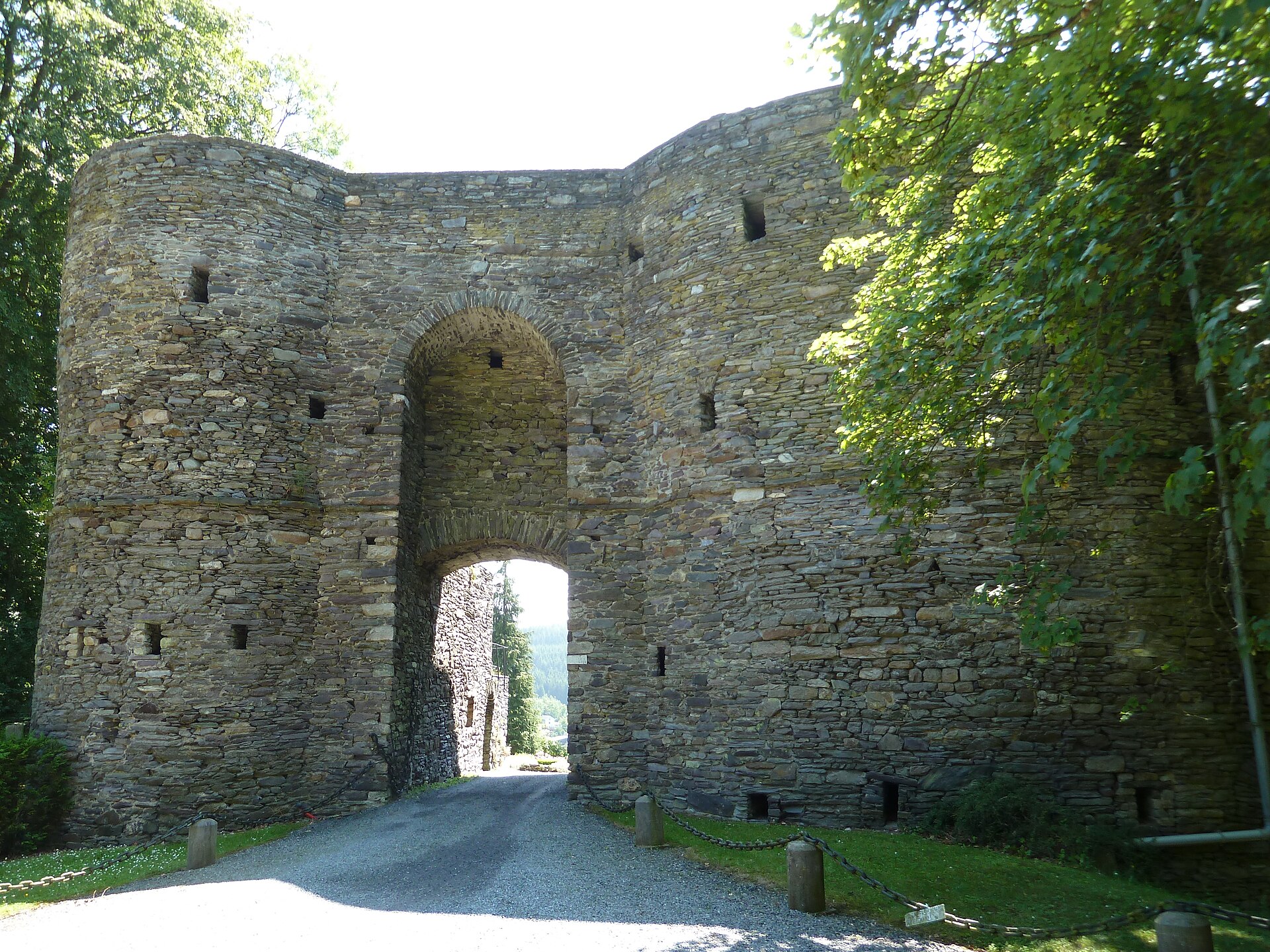
The year 1593 marks one recorded phase of reconstruction, followed by a more substantial rebuild around 1733, which gave the castle much of its present classical appearance. Of the original medieval fortifications, only a single tower survives, and it is on this tower that the large residential wing, built in classical style, now rests. The ruins of the earlier, older castle still stand in the immediate vicinity of the current residence.
Who owns the castle today, and can visitors stay there?
In the early 1900s, the estate was acquired by the Maus family, who remain its owners to this day. Since April 3, 1979, the castle and its surrounding land have been listed among Bastogne's protected immovable heritage sites, granting them legal protection. Today the property serves a tourism function: part of the former farm buildings has been converted into holiday apartments, allowing guests to stay right beside the historic walls and ponds.
What role did the castle play during the Second World War?
Rolley also holds a notable place in more recent history. During the occupation, the castle's occupants sheltered British and later American airmen, helping them escape across Allied lines. During the Battle of the Bulge, the castle served as the headquarters of the 502nd Parachute Infantry Regiment, part of the 101st Airborne Division — an episode that still draws military history enthusiasts to the Bastogne area today.
Frequently asked questions
Can Rolley Castle be visited? Yes — the former farm grounds have been converted into holiday gites, allowing visitors to stay on-site, though the castle itself remains the private residence of the Maus family.
How old is the castle? The earliest historical record dates to the 13th century, but researchers believe the structure may have been built as early as the 11th century.
Did the castle see wartime action? Yes — during the 1944–1945 Battle of the Bulge, it served as the command post of the American 502nd Parachute Infantry Regiment.
Is the castle legally protected? Yes, it has been listed as protected immovable heritage of the Bastogne municipality since 1979.
Nearby places

Earn badges for the places you visit
Download NextOnTrip, discover new places and check off your trails.