About this place
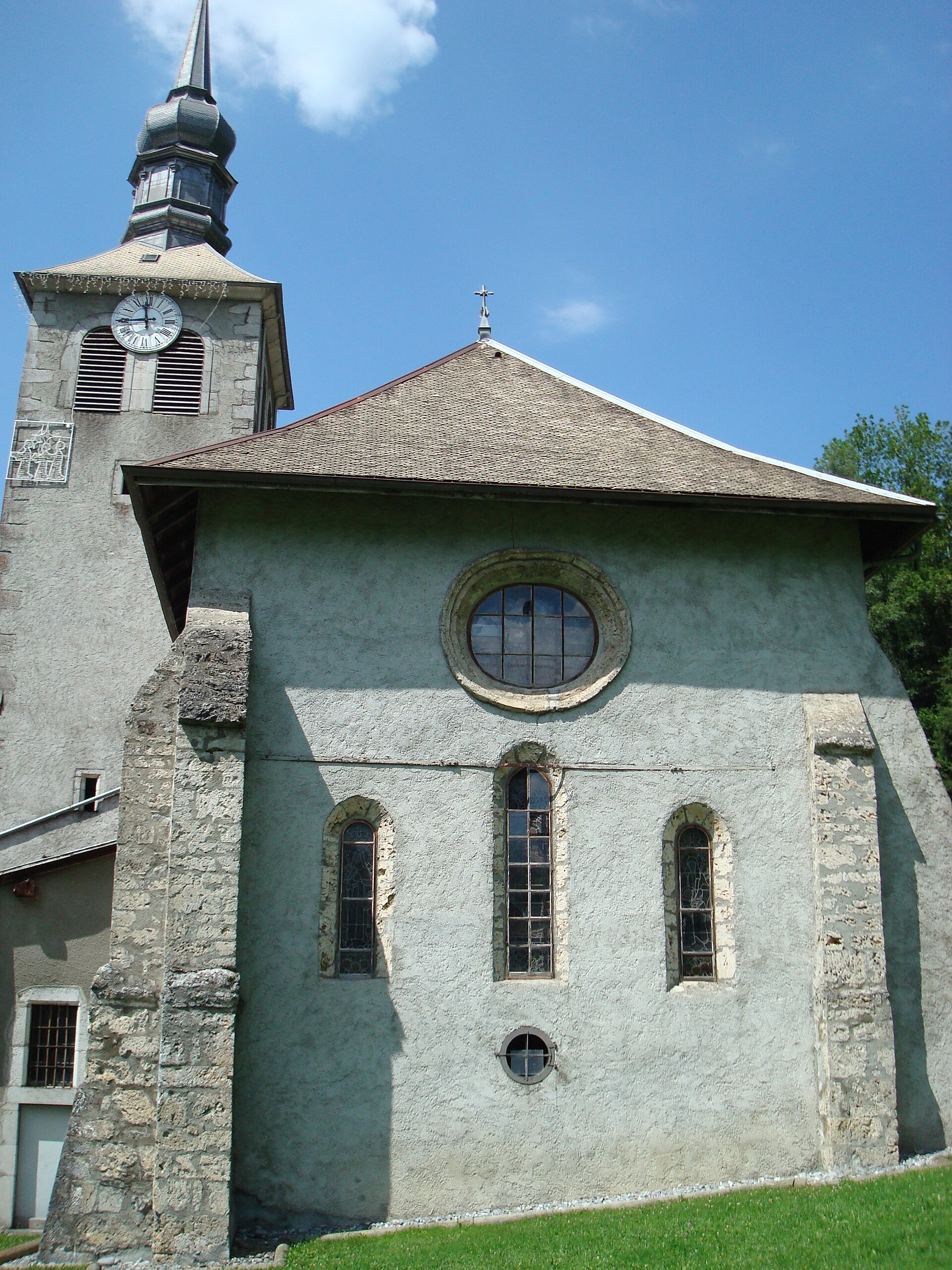
Chartreuse du Reposoir is a former Carthusian monastery in the commune of Le Reposoir, in the Haute-Savoie department, tucked at the northern edge of the Mont Blanc massif beneath the peak of Pointe Percée. For nearly a century the site has housed a community of Carmelite nuns and it is listed as a French historic monument.
Where does the name come from?
The name Reposoir comes from the medieval Latin word "repositorium," roughly meaning "resting place of the soul." Before the monastery existed, the valley was known as Béol. In 1151, the Carthusian monk Blessed John of Spain arrived there with six companions, judging the remote mountain setting well suited to the order's strict, contemplative way of life, and chose to settle permanently.
What was daily life like under the Carthusians?
Once established, the monks organized the clearing of the surrounding forests, the creation of alpine pastures, and the building of farms. For centuries afterward, the Carthusians effectively directed the economic life of the valley, overseeing farming and herding across the surrounding land. The monastery operated without interruption from the 12th century until the French Revolution, when the monks were forced out. They returned to Le Reposoir in 1866, but their presence there ended for good in 1901, when French anti-congregation legislation led to the order's expulsion.
What happened to the buildings after the monks left?
Following the Carthusians' departure, the buildings stood empty for a time. That changed in 1932, when a community of Carmelite nuns moved in — since then the site has been known as the Carmel du Reposoir and continues to serve as a contemplative women's monastery. The building complex itself was listed as a monument historique on February 3, 1995.
What does the architecture look like?
The monastic buildings were rebuilt and restored in 1686 and again in 1717. Surviving today are the monks' former cells, a large and a small cloister in flamboyant Gothic style, and a chapel constructed between 1480 and 1530. A distinctive feature of the large cloister is its "bec de sifflet" ("whistle-beak") vaulting, where the ribs run directly into the surrounding wall without corbels or supporting brackets — an unusual structural detail for a building of this kind.
Can visitors go inside?
Because the site remains an active enclosed Carmelite monastery, access to the interior — including the cloisters — is mainly possible during the annual Journées du Patrimoine (Heritage Days), when guided tours are organized. Outside those dates, visitors can view the building's exterior and the surrounding valley, but free access to the monastic interior stays limited.
Frequently asked questions
Who founded the Chartreuse du Reposoir? It was founded in 1151 by the Carthusian monk Blessed John of Spain, together with six fellow monks.
Who lives in the former charterhouse today? Since 1932 the buildings have been home to a community of Carmelite nuns, which is why the site is now known as the Carmel du Reposoir.
Is the building a protected monument? Yes, the complex was listed as a monument historique on February 3, 1995.
Where exactly is the monastery located? In the commune of Le Reposoir, Haute-Savoie, at the foot of Pointe Percée, at the northern end of the Mont Blanc massif.
Can the cloisters be visited up close? Regular access to the interior, including the flamboyant Gothic cloisters, is generally limited to the Journées du Patrimoine heritage-days weekend.
Nearby places

Earn badges for the places you visit
Download NextOnTrip, discover new places and check off your trails.