About this place
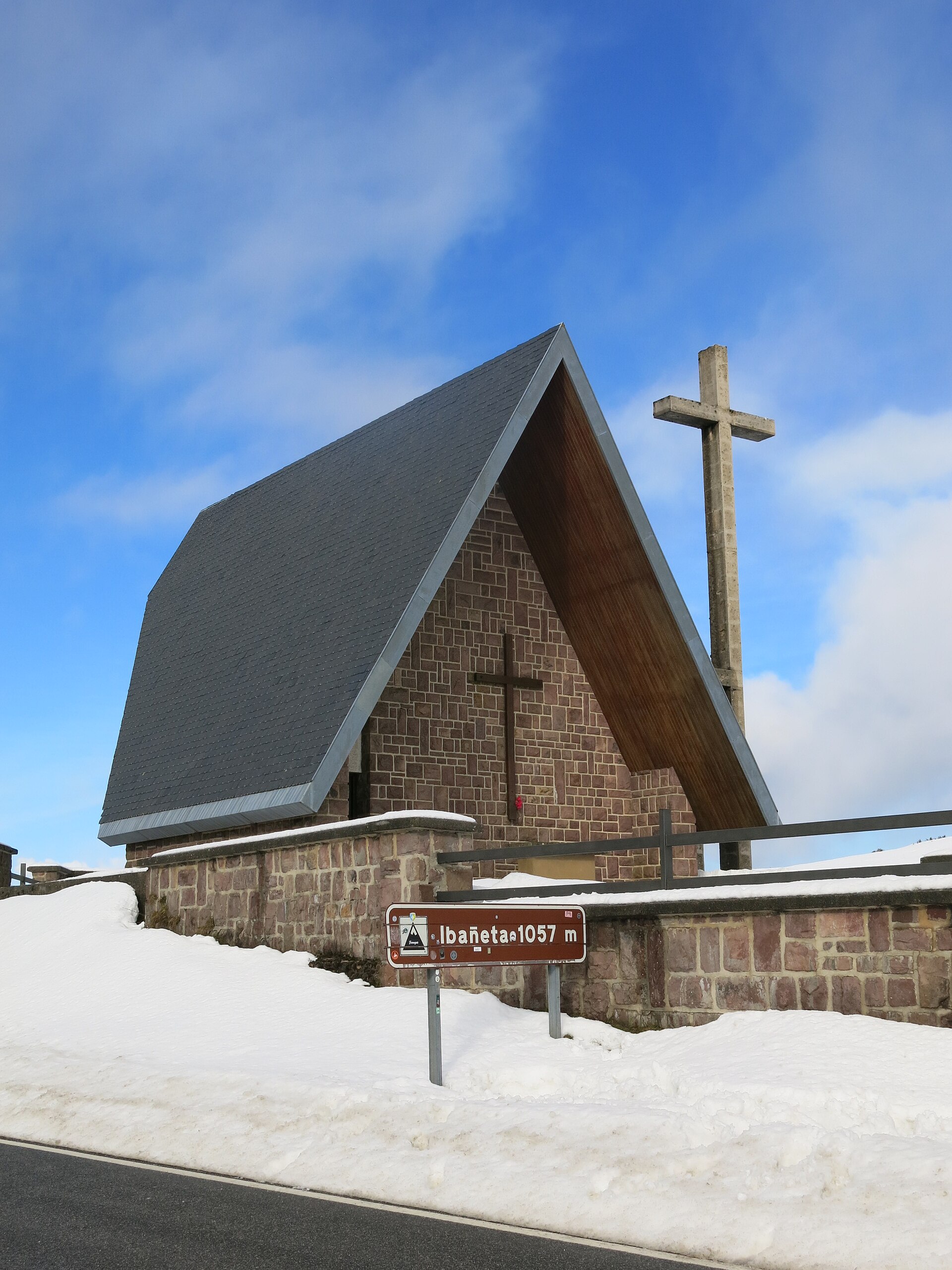
The Chapel of San Salvador de Ibañeta stands on the Ibañeta pass (roughly 1,057 m), just above Roncesvalles in Navarre, at the point where the French route of the Camino de Santiago crosses the Pyrenean ridge and descends into Spain. It's one of the first landmarks pilgrims reach after leaving Saint-Jean-Pied-de-Port.
What will you find there?
The present chapel is modest in size, built in 1965 during the Compostela Holy Year on the initiative of the Navarre regional authorities. It stands on the site of an earlier monastery-hospital dedicated to San Salvador, run by the abbey of Leire, which is documented on the pass as early as the 11th century — and which itself replaced an even older church believed to date back to the 9th century. By the late 19th century that older building had fallen into ruin, prompting the construction of the current chapel, which kept the historic San Salvador dedication.
Next to the chapel stands a memorial stone to Roland, the legendary commander of Charlemagne's rearguard who died in 778 in the battle at the Roncevaux gorge, later immortalized in the medieval epic "The Song of Roland." The spot therefore ties together two long-standing traditions: a Christian pilgrimage route and an epic legend about the defense of the Pyrenees.
What's the story behind the bell?
The best-known tale connected to Ibañeta concerns the bell of the original San Salvador chapel. Its ringing was used to warn and guide pilgrims who lost their way in fog, snow, or storms while crossing the pass — the terrain here can be demanding, and weather changes quickly. That legendary bell survived the demolition of the old chapel and was later installed in the Church of Santiago in nearby Roncesvalles, where it can still be seen today.
How do you get there?
Ibañeta sits directly on the Camino Francés, on the stage between Saint-Jean-Pied-de-Port and Roncesvalles — the most demanding but also most scenic section of the entire French route. On foot, it's reached during the very first day of the pilgrimage, after several hours climbing through Pyrenean slopes. By car, the pass is accessible via the road connecting Roncesvalles with the French side of the border; from Roncesvalles it's only a few kilometers uphill.
When should you visit?
Late spring through early autumn (May–October) is the best window, when the pass is easy to reach and views over the Pyrenean valleys are at their clearest. In winter and early spring, snow and heavy fog are common on the higher stretches, making both walking and driving harder — it's worth checking current conditions before setting out.
Frequently asked questions
Can you go inside the chapel? The chapel mainly serves a symbolic and devotional role for pilgrims passing through; opening hours can be limited, so it's worth checking locally on arrival.
Is it worth stopping here for long? A stop typically takes just a few minutes — the view from the pass, Roland's memorial stone, and the chapel itself make for a short but meaningful waypoint on the first day of the Camino Francés.
Where does the name Ibañeta come from? The name refers to the Pyrenean pass itself, where a monastery and the San Salvador chapel have served pilgrims heading to Santiago de Compostela since the Middle Ages.
Is this the same place as the battle from "The Song of Roland"? Yes — tradition links the Ibañeta pass with the Roncevaux gorge, site of the 778 battle commemorated in the medieval epic, and the memorial stone beside the chapel marks that event.
Nearby places

Earn badges for the places you visit
Download NextOnTrip, discover new places and check off your trails.