About this place
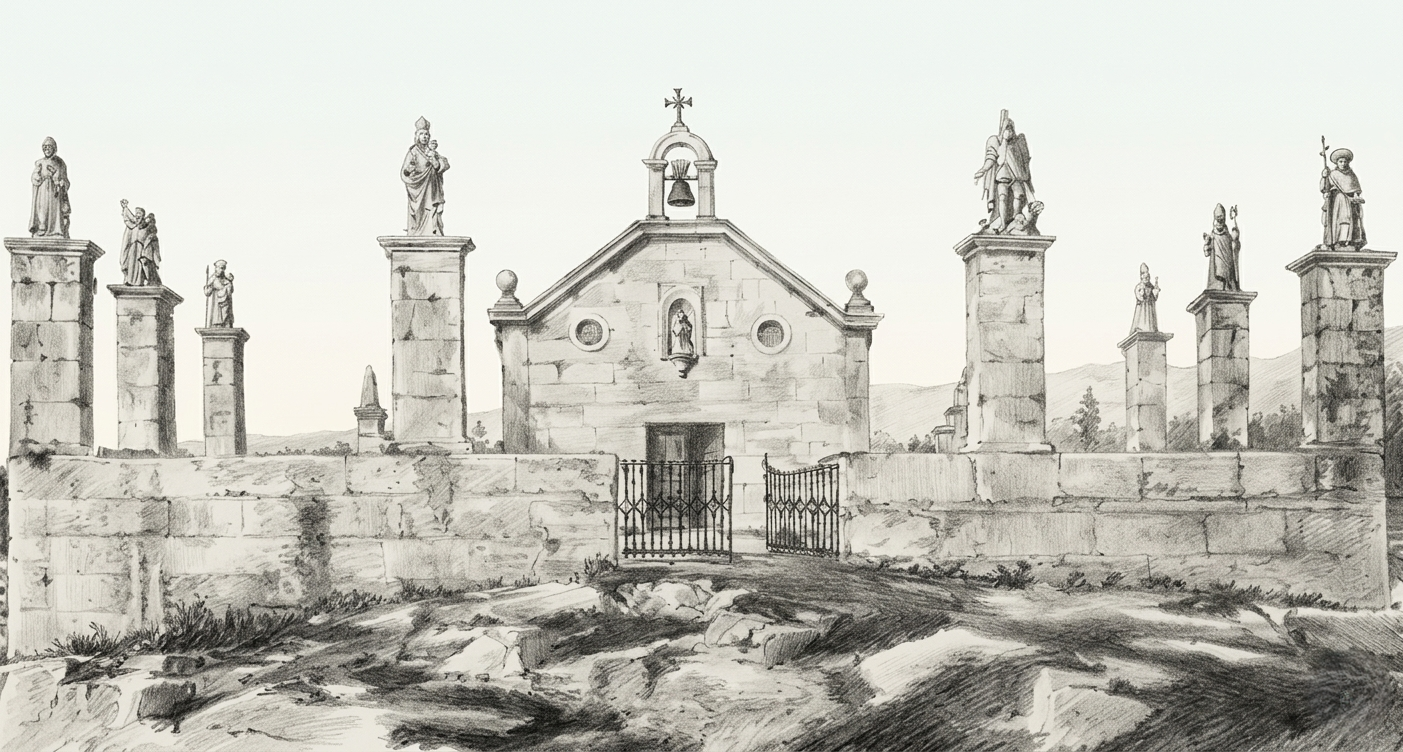
The Chapel of the Saints of Mollavao (Capela dos Santos de Mollavao) in Pontevedra is a Baroque shrine that no longer stands, yet its story and scattered stone saints can still be traced across the city today. It makes for an unusual stop for anyone who enjoys uncovering history hidden beneath modern buildings.
What happened to the chapel?
Construction was commissioned in 1737 by Juan de Marzoa and finished four years later, in 1741. The result was a small Baroque temple with a clear Portuguese architectural influence, a style that traveled easily across the nearby border into Galicia at the time. A stone statue of Saint Francis stood in a niche on the façade, while the building itself was ringed by columns crowned with ten separate saint figures: Saint James, Saint Joseph, Saint John, Saint Peter, Saint Michael, Saint Anthony, Saint Martin, Saint Lupus, the Virgin Mary and the Guardian Angel. A full set of ten statues on the surrounding columns was an unusually elaborate touch for a chapel of this size, hinting at the ambition of whoever paid for it.
The building lasted a little over a century. By the mid-1800s it had been abandoned and left to decay. Rather than vanishing without a trace, though, its stonework and statues were carefully moved elsewhere — to the cemetery of Salcedo, to the cemetery of Santo Amaro, and to the chapel of San Brais. That scattering is the reason the chapel's legacy survives at all, just not in one single place.
The final change came in 1927, when the Mollavao power plant was built directly on the old chapel site, part of Pontevedra's push to bring electricity to the city in the early twentieth century. That industrial building is what now occupies the ground where the Baroque chapel once stood.
What will you actually see there?
At the exact spot where the chapel used to stand, visitors today find the former Mollavao power station, a piece of early-twentieth-century industrial architecture rather than a religious monument. City officials have discussed giving the building a new public use, so a visit here is really an encounter with Pontevedra's electrical history, not with a surviving chapel — there is no chapel building left to walk into.
To get closer to the original artwork, the trail continues elsewhere. In the Santo Amaro cemetery, inside the Sánchez Cantón family pantheon, the stone statue of Saint Francis that once watched over the chapel's façade has been preserved — the most tangible piece of the original decoration still on public display. The remaining statues and architectural fragments can be traced to the Salcedo cemetery and to the chapel of San Brais.
How do you get there?
Mollavao is a neighborhood within Pontevedra itself, so no separate trip out of the city is needed. The compact, pedestrian-friendly historic center lies close by, and the area is easiest to reach on foot or by local bus. It's worth combining a stop in Mollavao with visits to the Salcedo and Santo Amaro cemeteries and the San Brais chapel — together they form an unusual walking route that follows the pieces of a single vanished building across the city.
When should you visit?
Since this is a historical and industrial site rather than an active place of worship with fixed opening hours, it can be visited at any time of year. Spring and autumn suit Galicia's mild, walkable climate best, and the lighter tourist traffic in those seasons makes it easier to explore Mollavao and the nearby cemeteries at a relaxed pace.
Frequently asked questions
Does the Chapel of the Saints of Mollavao still exist? No. The building was abandoned in the mid-1800s, and in 1927 the Mollavao power plant was built on its former site, where it still stands today.
Who built the chapel, and when? Juan de Marzoa commissioned it in 1737, with construction finished in 1741. It was a Baroque chapel with noticeable Portuguese architectural influence.
Where can the chapel's original elements be seen now? The statue of Saint Francis is preserved in the Sánchez Cantón family pantheon at the Santo Amaro cemetery. The remaining statues and stonework were moved to the Salcedo cemetery and the chapel of San Brais.
What stands on the chapel's original site today? The former Mollavao electric power plant, built in 1927 — an industrial landmark that the city has considered repurposing for public use.
Nearby places

Earn badges for the places you visit
Download NextOnTrip, discover new places and check off your trails.