About this place
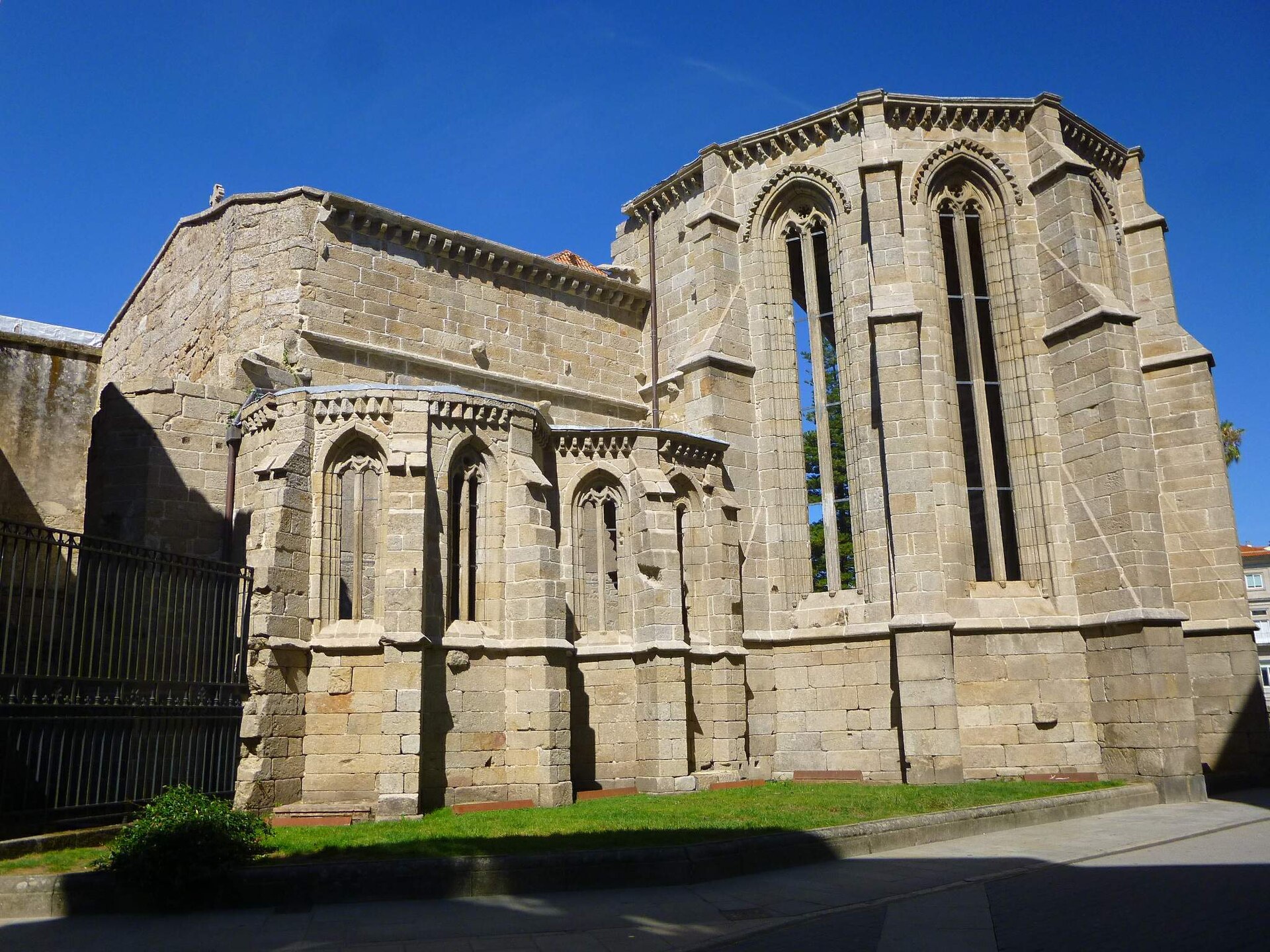
Ruins of San Domingos Convent — known locally as the Ruinas de Santo Domingo — are the roofless remains of a Gothic Dominican convent in Pontevedra, in Spain's Galicia region. Today the shell of the old church forms one of the city's best-known landmarks and doubles as an open-air annex of the Pontevedra Provincial Museum.
How did the convent come to exist?
The Dominican order reached Pontevedra toward the end of the 13th century. Its first convent was founded around 1281 in the A Moureira district, right against the walls of the medieval town. The site proved impractical, and within three years the friars relocated to where the ruins stand today. Construction of the new church began in 1295, with work on the chancel starting around 1304-1305. Building continued in stages over the following decades, stretching into the 15th century, so the surviving structure reflects more than a century of Gothic construction.
War changed the site's fate. In 1719, during clashes with English forces, the church suffered severe damage. It was never fully rebuilt, and over time the abandoned shell became the permanent ruin visitors see now.
What makes these ruins stand out?
The convent's most valuable surviving feature is its chancel, closed off by five polygonal apses. The central apse rises higher than the rest, its verticality emphasized by tall, paired windows, and the whole chancel is covered by ribbed vaulting. This five-apse arrangement is considered unique within Galician Gothic architecture — no comparable example survives elsewhere in the region.
Recognition of that value came early: the ruins were declared a protected heritage site back in 1895, one of the earliest such designations in the area. Today the open floor of the former church functions as an outdoor lapidary. Stone tombstones, heraldic shields, and other carved fragments gathered from Pontevedra and its surroundings are arranged among the standing walls and columns, effectively turning the ruins into an open-air museum of funerary and heraldic stonework.
How should visitors plan a stop here?
The ruins sit right in central Pontevedra, close to the Alameda gardens, making them an easy stop on a walk through the old town. Since the structure has no roof and only partial walls, visiting on a clear day works best — daylight brings out the tracery of the windows and vaulting most clearly. Seeing the ruins themselves typically takes fifteen to thirty minutes, though it's worth allowing extra time to look over the displayed tombstones and coats of arms at a relaxed pace.
The site fits naturally into a broader tour of Pontevedra's historic center, since several other churches and squares of the old town lie within easy walking distance — worth treating San Domingos as one stop among several on a longer walk through the city.
Frequently Asked Questions
When was the San Domingos convent in Pontevedra built? Dominicans founded an earlier convent around 1281, then began building the present church at its current site in 1295, with construction continuing into the 15th century.
Why is the convent in ruins today? The church was heavily damaged in 1719 during fighting with English forces and was never fully rebuilt afterward.
What is the most notable feature of the ruins? The chancel, with its five polygonal apses and ribbed vaulting, regarded as a unique example within Galician Gothic architecture.
What can visitors see inside the ruins? The open floor of the former church serves as an outdoor lapidary, displaying historic tombstones and heraldic shields from Pontevedra and the surrounding area.
Nearby places

Earn badges for the places you visit
Download NextOnTrip, discover new places and check off your trails.