About this place
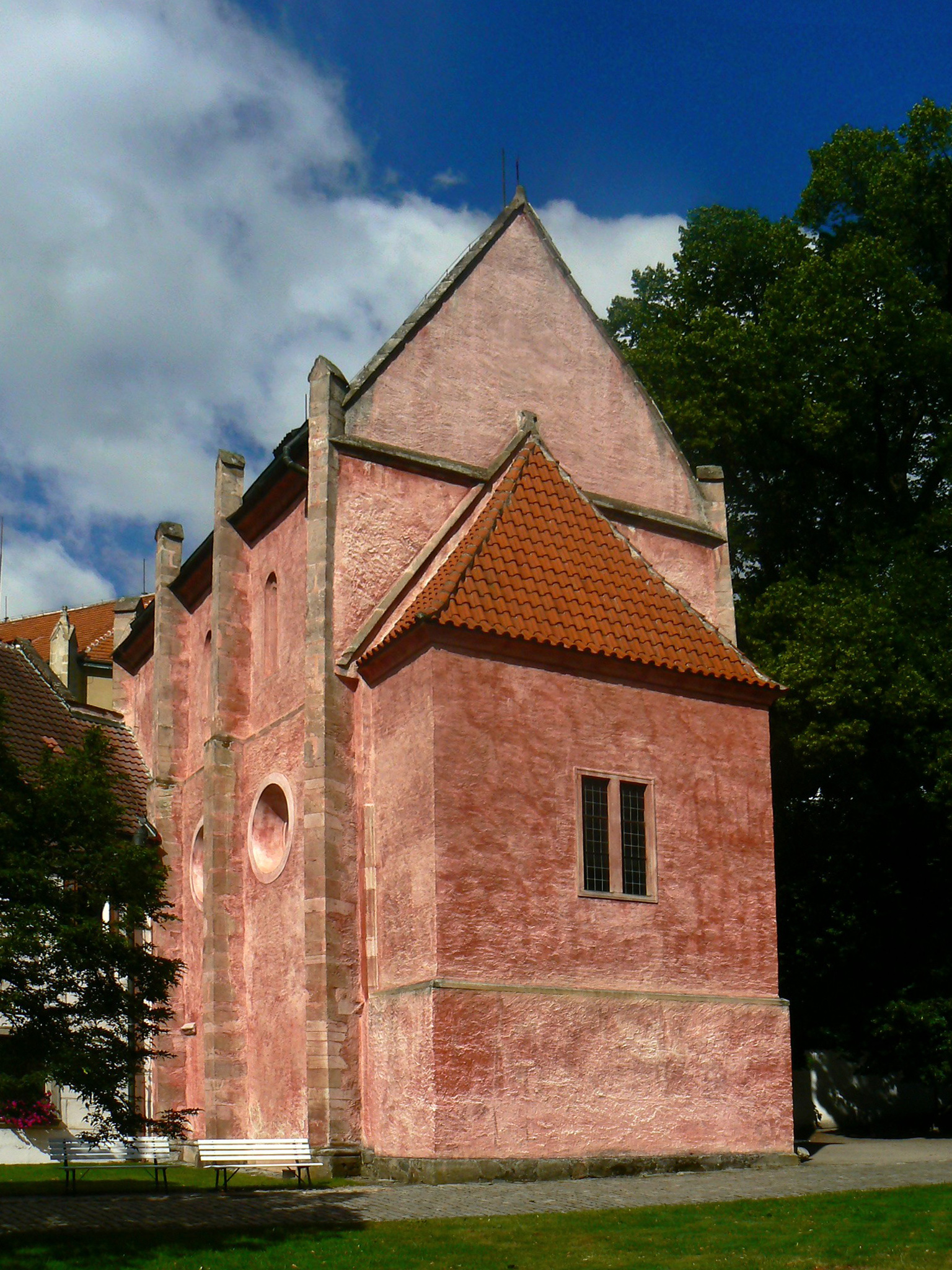
The Chapel of the Holy Guardian Angels is the oldest surviving building of the monastery complex in Zlatá Koruna, a small village on the Vltava river in the Český Krumlov district, close to the village of Rájov. This two-storey, early Gothic chapel stands in the northeastern part of the monastery grounds, right next to the choir of the convent church, and was built gradually over the last third of the 13th century.
How to get there?
Zlatá Koruna lies about a dozen kilometres north of Český Krumlov, along the road and railway line that follow the Vltava valley. The easiest way in is by car or by regional train from Český Krumlov or České Budějovice — the local railway station sits right next to the monastery. The chapel is part of the monastery complex and can only be visited as part of a guided tour of the grounds, not on its own.
What will you see?
The chapel stands out from the rest of the monastery buildings thanks to its two-storey layout — a rare arrangement for sacred architecture in the region, linked to its original purpose. Historians believe the building initially served as a hospital church, since the monastery's hospital for the sick and pilgrims was located in the front part of the convent.
The ground floor is covered by a cross vault divided into three bays, with keystones carved in a plant motif resembling a wreath of leaves — a detail typical of early Gothic Cistercian stonework. Some architectural elements of the ground floor correspond to solutions found in the choir chapels of the Cistercian monastery in Vyšší Brod, dated to the 1280s, which helps place the chapel more precisely in time. Inside, visitors can admire a Gothic winged altarpiece and surviving fragments of ceiling frescoes.
The chapel is included in the guided tour routes through the Zlatá Koruna monastery, alongside the cloisters, the chapter house and the monastery gardens. During winter, a separate "winter sacred route" is offered, focusing specifically on the sacred buildings, including this chapel.
When to visit?
The monastery and the chapel are open as part of the regular tourist season, generally from spring through autumn, with limited winter access via the sacred route mentioned above. It's worth setting aside enough time to see the whole complex at a relaxed pace — the chapel is just one of several unique stops, alongside the Gothic convent church and the Baroque monastery pharmacy.
Frequently asked questions
Can the chapel be visited independently, without a guide? No — the chapel is located within the monastery grounds and is only accessible as part of a ticketed guided tour.
Why does the chapel have two floors? The two-storey layout relates to its original function as a hospital church — the lower floor likely served the sick and pilgrims housed in the monastery hospital.
When was the chapel built? It was built gradually over the last third of the 13th century; some architectural elements are dated to the 1280s, by analogy with the chapels in Vyšší Brod.
What is the highlight of the interior? The vault keystones carved with a leaf-wreath motif, the Gothic winged altarpiece, and the surviving fragments of ceiling frescoes.
Nearby places

Earn badges for the places you visit
Download NextOnTrip, discover new places and check off your trails.