- Sacred Monuments
- Churches
Abbey Church of the Assumption of the Virgin Mary (Zlatá Koruna)
About this place
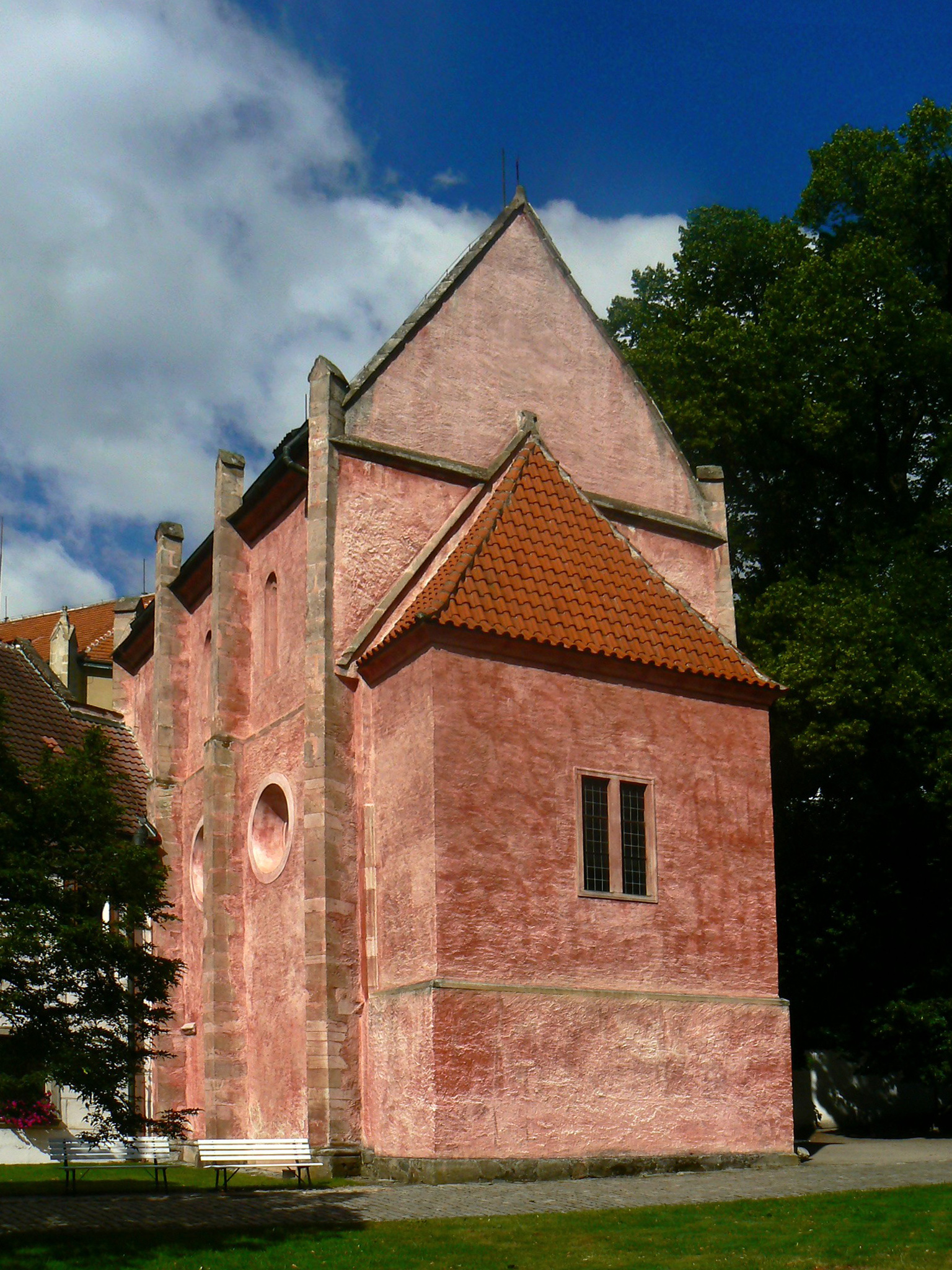
The Abbey Church of the Assumption of the Virgin Mary in Zlatá Koruna is the centerpiece of one of the most precious Gothic architectural complexes in Central Europe. The Cistercian monastery that gave rise to the church was founded in 1263 under a charter granted by the Bohemian King Přemysl Otakar II, and it stands on a rocky promontory surrounded on three sides by the waters of the Vltava River, just a few kilometers from Český Krumlov.
Where does the name Zlatá Koruna come from?
The monastery's original name was Sancta Corona Spinea — the Holy Thorn Crown. Přemysl Otakar II received a relic of a thorn from Christ's crown of thorns as a gift from the French king Louis IX (Saint Louis) and passed it on to the newly founded abbey as its foundation gift. That relic gave the monastery its original name, which later evolved into the Czech form used today, Zlatá Koruna, meaning "Golden Crown."
What will you see at the abbey church?
The Church of the Assumption of the Virgin Mary is a three-nave basilica, extended in 1370 with the addition of a chapel. The wider monastery complex brings together several phases of Gothic construction layered over the centuries, and the church itself is the largest in all of South Bohemia — an impressive fact on its own before visitors even step inside. Walking through the complex, you can trace the evolution of the region's sacred architecture from the medieval period onward, with the sheer scale of the nave giving a sense of the abbey's former importance.
How has the monastery's role changed over time?
The Cistercian community lived and worked at Zlatá Koruna for more than five centuries, until the monastery was dissolved in 1785 as part of the Josephine reforms that abolished contemplative religious orders across the Habsburg monarchy. The church, however, did not disappear from everyday life — it was converted into a parish church and continues to serve that role today, with Mass still held regularly within its walls. In 1995, the entire Zlatá Koruna monastery complex was declared a national cultural heritage site, confirming its exceptional historical and architectural value at a national level.
How do you get to Zlatá Koruna?
Zlatá Koruna lies in South Bohemia, directly adjacent to Český Krumlov — one of the most visited towns in the region and a UNESCO World Heritage Site. The scenic setting on a promontory looped by the Vltava River makes the monastery and its church a natural stop along the walking and cycling trails that follow the riverbank near Krumlov. It fits easily into a day trip combining several historic sites of South Bohemia.
Frequently asked questions
When was the abbey church in Zlatá Koruna founded? The Cistercian monastery associated with the church was founded in 1263 under a charter from King Přemysl Otakar II.
Where does the name Zlatá Koruna come from? The name traces back to the monastery's original title, Sancta Corona Spinea, linked to a relic of Christ's crown of thorns given by King Louis IX of France.
Is the church still used for religious services? Yes. After the monastery's dissolution in 1785, the building became a parish church, and Mass is still celebrated there today.
What makes this church stand out among others in the region? It is a three-nave basilica with a chapel added in 1370, considered the largest church in South Bohemia and part of one of Central Europe's most valuable Gothic architectural complexes.
Nearby places

Earn badges for the places you visit
Download NextOnTrip, discover new places and check off your trails.