About this place
Zlatá Koruna Monastery is a former Cistercian abbey complex in the village of Zlatá Koruna, on the Vltava river in South Bohemia, Czech Republic, between Český Krumlov and České Budějovice. It ranks among the most valuable surviving Gothic architectural complexes in Central Europe and is protected today as a National Cultural Monument of the Czech Republic.
Who founded the monastery, and when?
The monastery was founded in 1263 by the Bohemian king Přemysl Otakar II. The first monks came from the parent house at Heiligenkreuz in Austria, part of the same Cistercian order as the new foundation on the Vltava. The riverside setting, close to Český Krumlov, was typical of Cistercian practice: abbeys were usually established in river valleys, where water and farmland could support the community's agricultural economy.
Where does the name Zlatá Koruna come from?
The monastery was originally named Svatá Koruna (Latin: Sancta Corona, German: Heiligenkron), meaning "Holy Crown." The name referred to a relic - a thorn from the Crown of Thorns of Christ - that Přemysl Otakar II received indirectly from the French king Louis IX, a ruler famed for assembling passion relics in the Sainte-Chapelle in Paris. Only from the 17th century onward did the present name, Zlatá Koruna ("Golden Crown"), become established.
Why is the complex considered a Gothic showpiece?
The buildings at Zlatá Koruna are today regarded as one of the most valuable Gothic architectural complexes in Central Europe. Over the centuries the site grew into an extensive arrangement of religious and utilitarian structures typical of a large Cistercian abbey, combining a monastery church with cloister buildings and the working spaces needed for the community's daily life.
How did the monastery survive the Thirty Years' War?
The Thirty Years' War (1618-1648) was a difficult period for the abbey, which suffered military occupation and plundering as troops moved through South Bohemia. Despite this damage, the community recovered, and by the second half of the 17th century Zlatá Koruna was counted among the exemplary monasteries of the Bohemian-Moravian Cistercian province - a sign of how thoroughly it rebuilt both economically and spiritually after the crisis.
Why did monastic life at Zlatá Koruna come to an end?
This period of renewed prosperity was cut short in 1785, when Emperor Joseph II issued a dissolution decree as part of a broader church reform that reduced the number of contemplative monasteries across the Habsburg monarchy. From that point on, religious life at Zlatá Koruna was never resumed, and the buildings passed to other uses.
What can visitors see there today?
The monastery complex is now managed by the National Heritage Institute (Národní památkový ústav), which keeps the site open to visitors. Its status as a National Cultural Monument places Zlatá Koruna among the most significant and best-protected historic sites in the Czech Republic, alongside landmarks such as Český Krumlov Castle, which shares the same stretch of the Vltava valley nearby.
Frequently Asked Questions
Who founded Zlatá Koruna Monastery, and when? It was founded in 1263 by King Přemysl Otakar II, who brought Cistercian monks from Heiligenkreuz in Austria.
Where does the name Zlatá Koruna come from? It refers to a relic of the Crown of Thorns of Christ, received indirectly from the French king Louis IX. The monastery was originally called Svatá Koruna, with the current name established from the 17th century.
Why did the monastery stop operating? Emperor Joseph II issued a dissolution decree in 1785 as part of a church reform, permanently ending monastic life at the site.
Where is Zlatá Koruna Monastery located? On the Vltava river in the village of Zlatá Koruna, South Bohemia, near Český Krumlov.
Can the monastery be visited today? Yes, it is managed by the National Heritage Institute and, as a National Cultural Monument, is open to visitors.
Nearby places
-
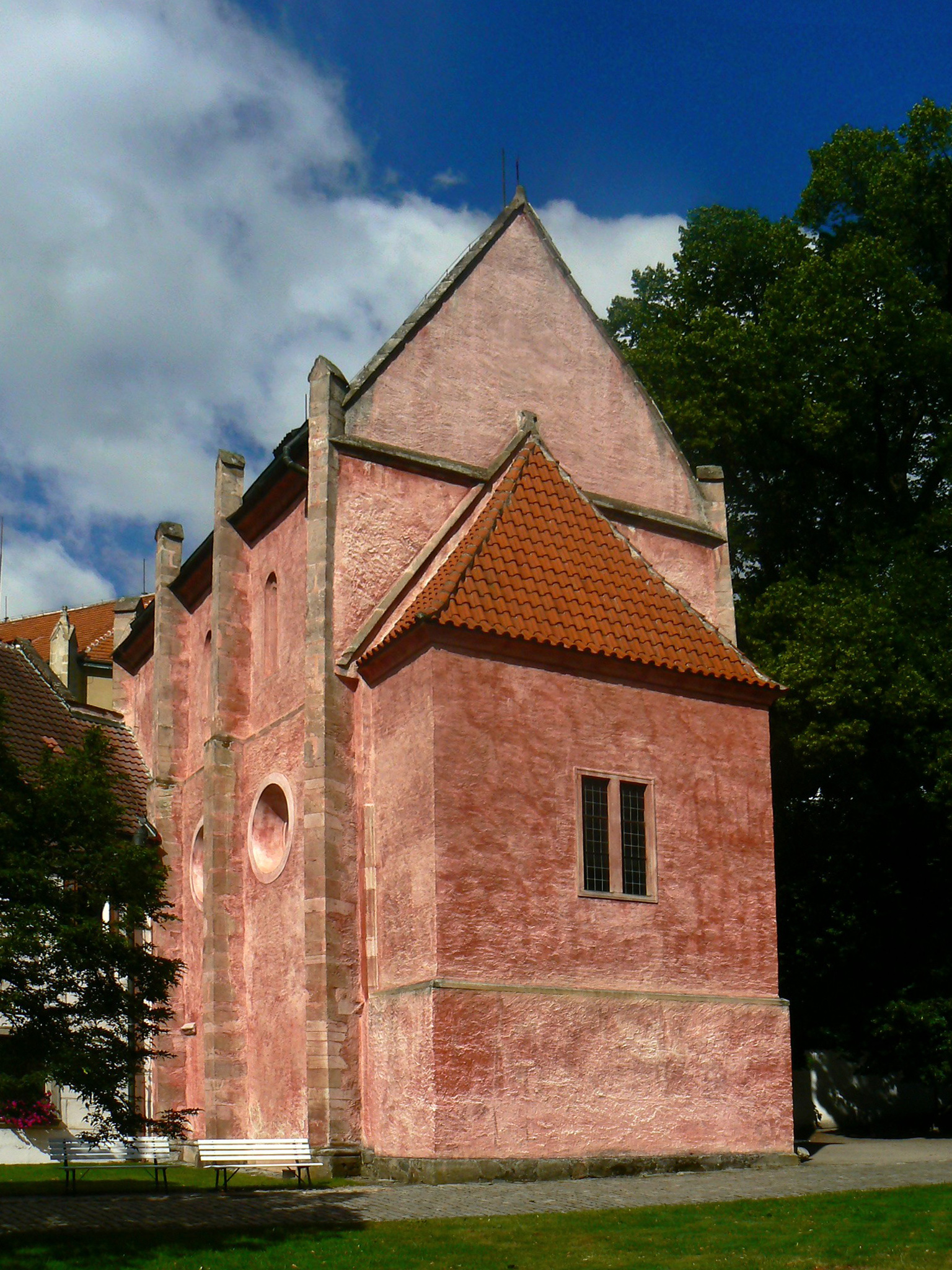
Chapel of the Holy Guardian Angels in Zlatá Koruna
Rájov
-

Abbey Church of the Assumption of the Virgin Mary (Zlatá Koruna)
Zlatá Koruna
-
Church of Saint Mary Magdalene
Mojné
-
Jewish cemetery in Český Krumlov
Czeski Krumlov
-
Městský hřbitov Český Krumlov
Czeski Krumlov
-
Chapel of Our Lady of Sorrows
Czeski Krumlov
Earn badges for the places you visit
Download NextOnTrip, discover new places and check off your trails.