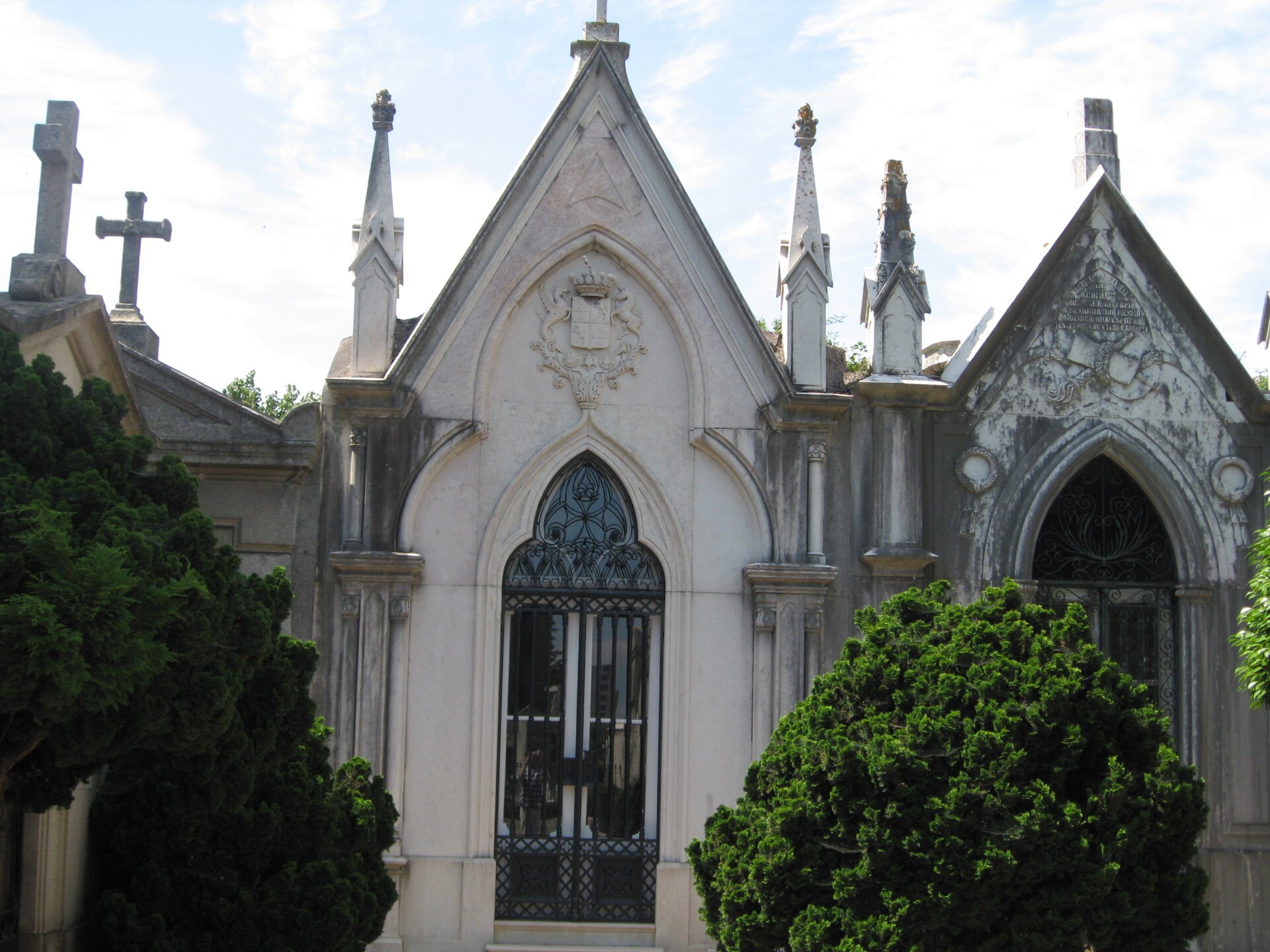
About this place
Agramonte Cemetery (Cemitério de Agramonte) in Porto is one of the city's two great Romantic-era burial grounds, opened in 1855 on the western side of town. It covers about 12 hectares and works like an open-air sculpture gallery, with tree-lined avenues running past tombs, chapels and mausoleums from the 19th and 20th centuries.
What will you see at Agramonte?
The main draw is the monumental funerary art. Leading Portuguese sculptors worked on many of the tombs, among them Soares dos Reis, António Teixeira Lopes and Alves Pinto. Look for the tomb of Count Ferreira, whose statue replicates a work by Soares dos Reis, and for the memorial to the victims of the 1888 Teatro Baquet fire, one of the worst disasters in the city's history.
The central landmark is the chapel, built between 1870 and 1874 to a design by engineer Gustavo Adolfo Gonçalves e Sousa. Architect José Marques da Silva enlarged it in 1906, and its interior carries Byzantine-style paintings. Separate sections belong to three religious orders: the Carmelites, Franciscans and Trinitarians.
Who is buried here?
The cemetery holds many figures from Portuguese culture and science. They include filmmaker Manoel de Oliveira, painter António Carneiro, cellist Guilhermina Suggia, sculptor Henrique Moreira, archaeologist António Augusto da Rocha Peixoto and architect Tomás Soller. Wealthy Porto families built chapel-style mausoleums here, and together they trace the shifting tastes of the era.
Why visit?
Agramonte is regarded as one of the most important Romantic cemeteries in Portugal. Together with Prado do Repouso, it has been recognised as a Monumental Cemetery since 2005. The city runs an annual cultural programme here, and a walk among the avenues makes a quiet counterpoint to the crowded sights downtown. It is a working cemetery owned by the Porto municipality, so keep voices low, skip the music and stay off the graves.
How long does a visit take?
Allow one to two hours for the main avenues and the chapel. Comfortable shoes help, as paths can be uneven. Morning and late afternoon give the best light for photographing sculpture. Check the Porto city website or a tourist office for current opening hours and guided theme walks.
Frequently asked questions
When was Agramonte Cemetery founded? It opened in 1855 as Porto's second public cemetery, on the western side of the city.
Can you go inside the chapel? The chapel is the centrepiece of the site. Access to the interior depends on cemetery hours and any ceremonies, so confirm before you go.
Is it the same as Prado do Repouso? No. That is Porto's other Romantic cemetery, in a different part of the city. Both have held Monumental Cemetery status since 2005, and they pair well in one trip.
Is there an entrance fee? This municipal cemetery is normally open to the public during opening hours. Verify current rules on the city website before visiting.
Nearby places

Earn badges for the places you visit
Download NextOnTrip, discover new places and check off your trails.