About this place
The cemetery in Brandýs nad Labem is a compact but historically layered burial ground on the northern edge of Brandýs nad Labem-Stará Boleslav, a town on the Elbe river in Central Bohemia. It's the town's main municipal cemetery — distinct from the older Jewish cemetery elsewhere in town — and one of the few sites in the region where chapels from two different architectural periods sit side by side on a single, modest plot.
Why was the cemetery founded?
The cemetery dates back to 1680, established in direct response to a major plague outbreak that struck the town that year. The previous burial site, next to the Church of St. Lawrence on Nižší Hrádek, could no longer cope with the number of dead, so the town council set aside a new, larger plot outside the old built-up area. The grounds were later enlarged twice, in 1832 and again in 1873, as the town's population grew.
What is the oldest structure on site?
The oldest surviving building is a Baroque niche chapel decorated with a fresco by C. J. Redmann, dated 1702. The earliest gravestones cluster around it, and most belong to officers of the Habsburg imperial army — a reminder of how closely Brandýs was tied to military garrisons and the royal court through the 18th and 19th centuries.
What is the significance of the St. Rosalie chapel?
In 1880, a new neo-Romanesque chapel dedicated to St. Rosalie was built just north of the older Baroque chapel. It was designed by Karel Lábler, an imperial builder who later served as the town's mayor and was himself buried in the cemetery he had helped shape. The new chapel effectively shifted the cemetery's centre of gravity northward, away from its original Baroque core. Around St. Rosalie's chapel, elaborate tombs of local merchants and townspeople began appearing at the turn of the 20th century, a visible mark of Brandýs's growing prosperity as a market town on the Elbe. Today, the chapel serves as the cemetery's funeral hall.
Who is buried here?
Three former mayors rest in the cemetery: Karel Lábler himself, along with Karel Fetter and Václav Kohout. A separate, more elaborate grave belongs to František Melichar (1842–1907), a manufacturer of agricultural machinery whose Brandýs factory was among the region's more significant industrial enterprises around 1900. His tombstone features a bronze sculptural group by Ladislav Šaloun, one of the most celebrated Czech sculptors of the era, best known for the Jan Hus monument on Prague's Old Town Square. The cemetery is also the resting place of writer Eduard Petiška (1924–1987).
Is the cemetery protected, and can it be visited?
The cemetery has been listed as a protected cultural monument of the Czech Republic since 1958. It lies north of the town centre, between U hřbitova and Martinovská streets, and is open to visitors during regular hours (7:00–20:00 in September).
Frequently asked questions
Is this the same as the Jewish cemetery in Brandýs nad Labem? No — this is a separate municipal cemetery. Brandýs nad Labem also has a much older Jewish cemetery, founded in 1568, in a different part of town.
When was the cemetery established? In 1680, after a plague outbreak overwhelmed the previous burial ground by the Church of St. Lawrence.
What are the main things to see? The 1702 Baroque niche chapel with its fresco, the 1880 neo-Romanesque St. Rosalie chapel, and the grave of František Melichar with its bronze sculpture by Ladislav Šaloun.
Is the cemetery a listed monument? Yes, it has been protected as a Czech cultural monument since 1958.
Nearby places
-

Former synagogue (Brandýs nad Labem)
Brandýs nad Labem-Stará Boleslav
-
Church of Saint Wenceslaus (Stará Boleslav)
Brandýs nad Labem-Stará Boleslav
-
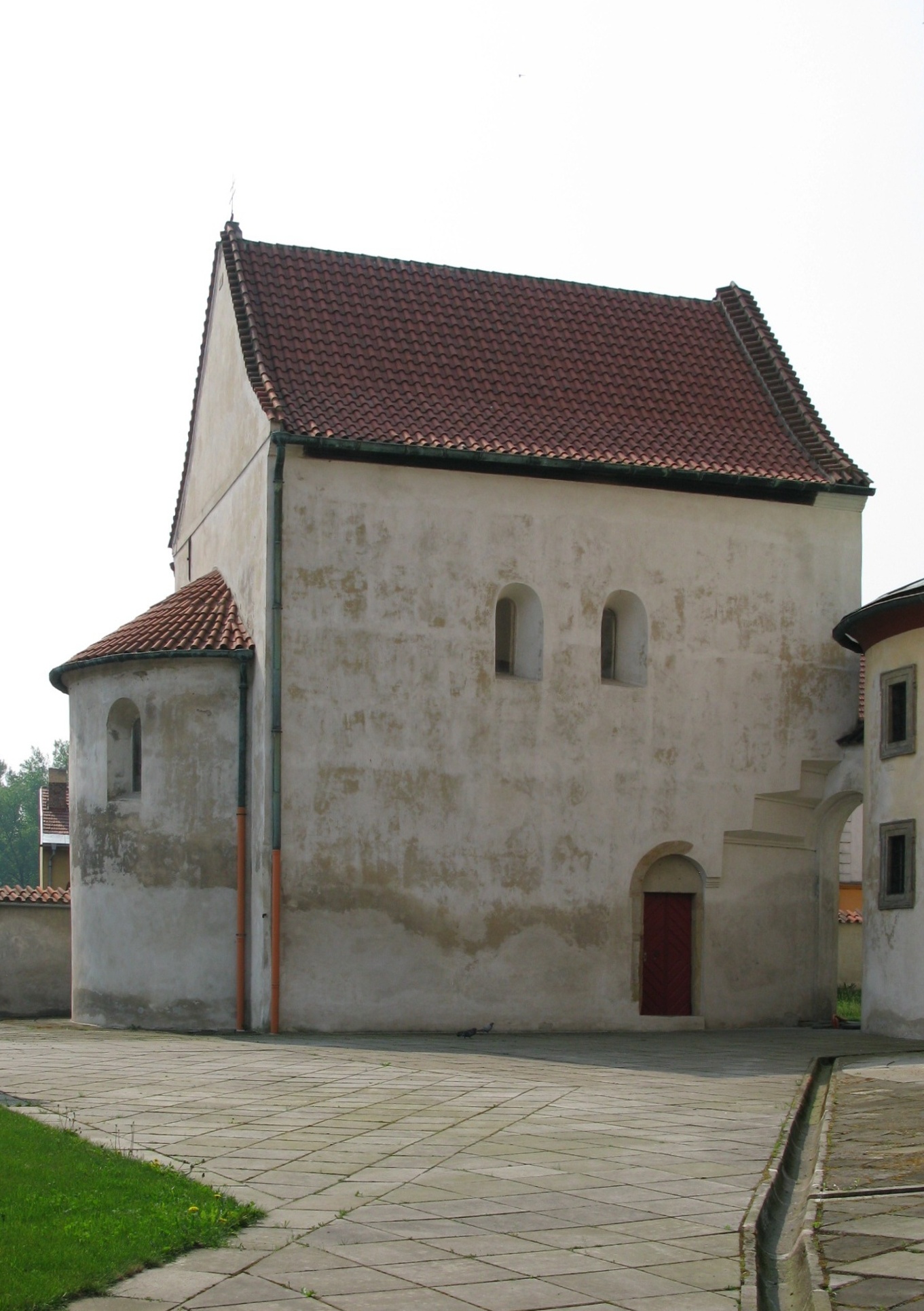
Church of Saint Clement (Stará Boleslav)
Brandýs nad Labem-Stará Boleslav
-
Church of the Assumption of the Virgin Mary (Stará Boleslav)
Brandýs nad Labem-Stará Boleslav
-
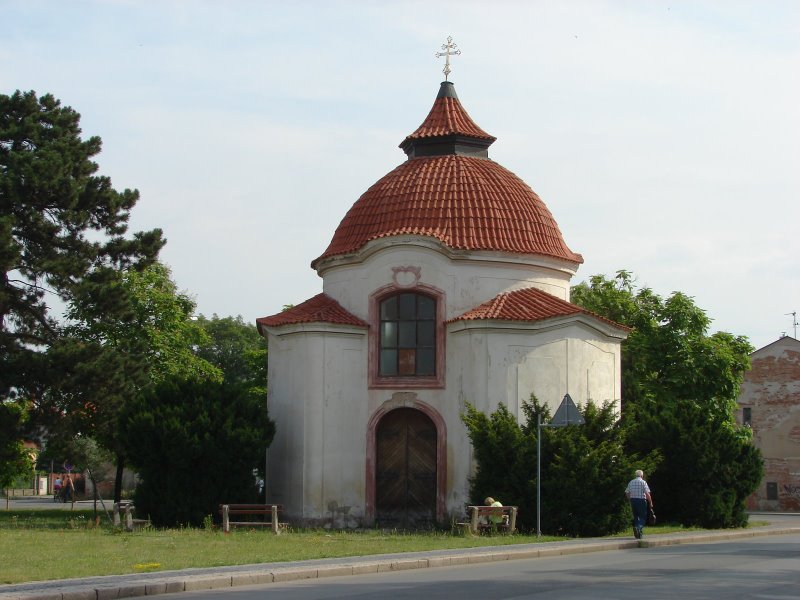
Chapel of Blessed Podiven
Brandýs nad Labem-Stará Boleslav
-
Church of Saint James the Greater
Ostrov
Earn badges for the places you visit
Download NextOnTrip, discover new places and check off your trails.