About this place
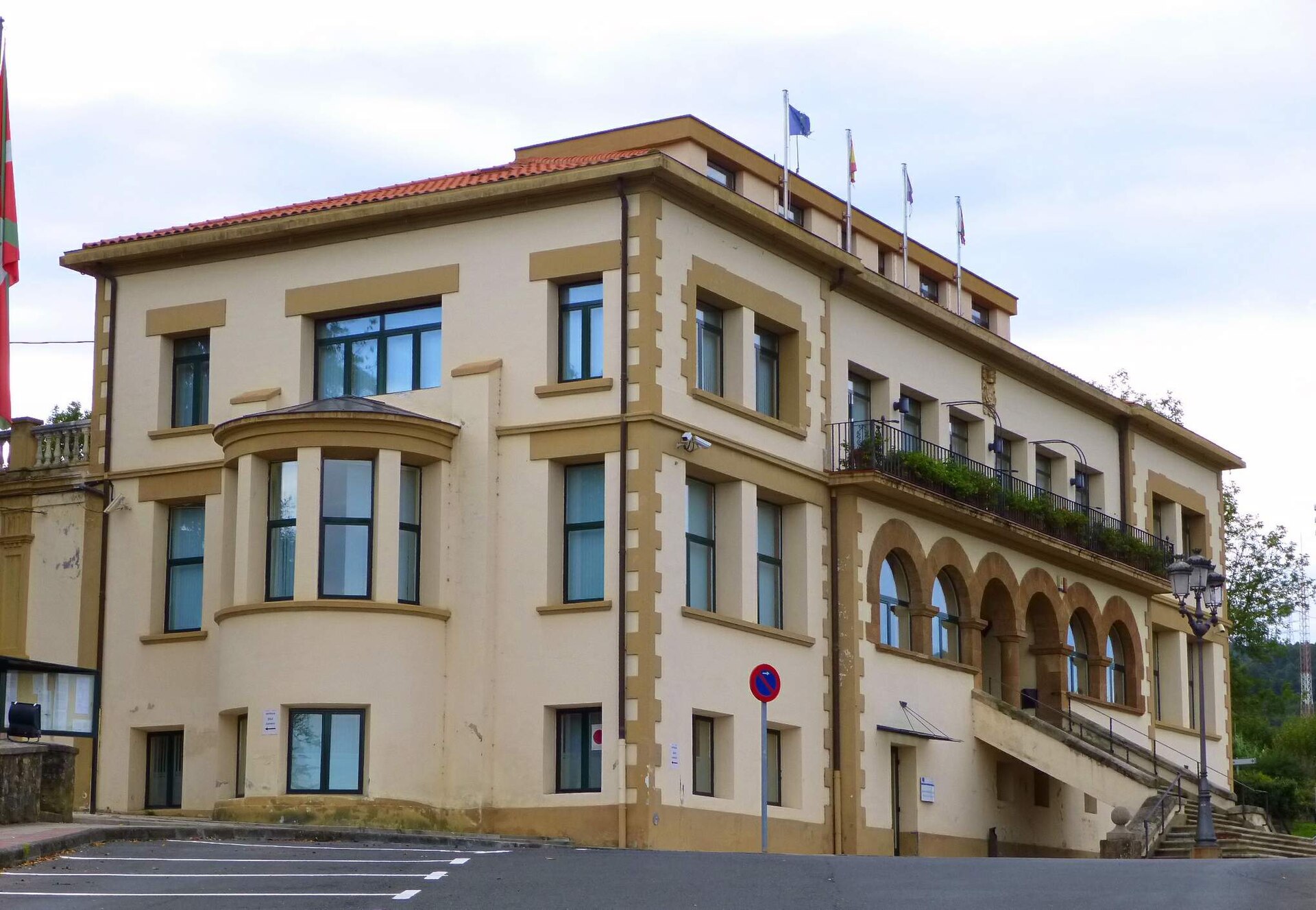
Castro-Urdiales Town Hall houses the municipal government of Castro-Urdiales, a coastal town on the Cantabrian shore in northern Spain. The building occupies the Palacio de Ocharan, a 19th-century mansion-palace, and stands as a landmark in the historic quarter just steps from the harbor.
Where does the town hall stand, and what does it look like?
The Palacio de Ocharan sits in the heart of Castro-Urdiales, close to the waterfront and the old fishing port. Its 19th-century palatial facade stands out from the surrounding streetscape — a grand building that replaced earlier, more modest premises used by the local administration. Walking inland from the port toward the old town, visitors pass the building almost by default on their way to the Gothic church of Santa María and the Roman bridge.
Why does the town hall occupy a former private palace?
Turning a wealthy family's mansion into a public administration building follows a pattern common in Spanish port towns: grand houses built in the 19th century on fortunes made from trade and shipping often passed to municipal ownership decades later, taking on a new civic role. That is exactly what happened with the Palacio de Ocharan in Castro-Urdiales — the building kept its representative character while becoming the daily workplace of municipal staff.
What is the history behind the town where the town hall stands?
Castro-Urdiales traces its roots back to Roman times, when a port settlement known as Flaviobriga operated on this stretch of coast. The earliest known historical reference to the town dates to 1102, tied to a visit by the Bishop of Burgos. A turning point came in 1163, when Castro-Urdiales was granted villa status under the fuero de Logroño, along with trading privileges and commercial freedoms — the first town on the Cantabrian coast to receive this charter.
For centuries the settlement's fortunes were tied to the sea: shipbuilding, fishing, and maritime trade shaped daily life. That maritime character is still visible in the layout of the old town, clustered around the harbor, and in nearby landmarks such as the Gothic church of Santa María and the Roman bridge spanning the town's inlet.
Administrative changes in the 19th century also shaped the municipality's structure: in 1822, Castro-Urdiales and the Junta de Sámano were established as separate constitutional municipalities, and the 1835 reform folded the Agüera district into Sámano while making Castro-Urdiales the seat of the region's judicial district.
What else is worth seeing near the town hall?
From the town hall, it is a short walk to the old town's main landmarks: the Gothic church of Santa María, rising above the harbor, and the Roman bridge, one of the town's tangible links to its ancient past. The still-active fishing port remains the natural hub of local life and a good starting point for exploring the surrounding streets.
Frequently Asked Questions
Where is the town hall located in Castro-Urdiales? Inside the Palacio de Ocharan, a 19th-century mansion-palace in the town center, close to the harbor and the old quarter.
Can visitors go inside the town hall? The building is an active seat of municipal administration rather than a museum, so public access is largely limited to the areas around the building itself.
What other landmarks are close to the town hall? The Gothic church of Santa María and the Roman bridge are both within easy walking distance, making them easy to combine with a visit to the old town.
Where does the name Castro-Urdiales come from historically? The settlement has Roman origins as the port of Flaviobriga, and its documented municipal history stretches back to at least 1102, when the first written reference to the town appears.
Nearby places

Earn badges for the places you visit
Download NextOnTrip, discover new places and check off your trails.