About this place
Castro de Carvalhelhos is an Iron Age hillfort perched above the Carvalhelhos thermal spa, at roughly 820 metres of altitude, in the parish of Beça, municipality of Boticas, in the Trás-os-Montes region of northern Portugal. It ranks among the best-documented protohistoric settlements in the northwestern Iberian Peninsula and is the most visited castro within the municipality.
How old is the site?
The settlement dates from the 1st century BC to the end of the 1st century AD. Archaeological finds show two overlapping occupation phases: a native castreja culture and a later Roman-period presence. Locally, the site is also known as Couto dos Mouros.
What structures can visitors see?
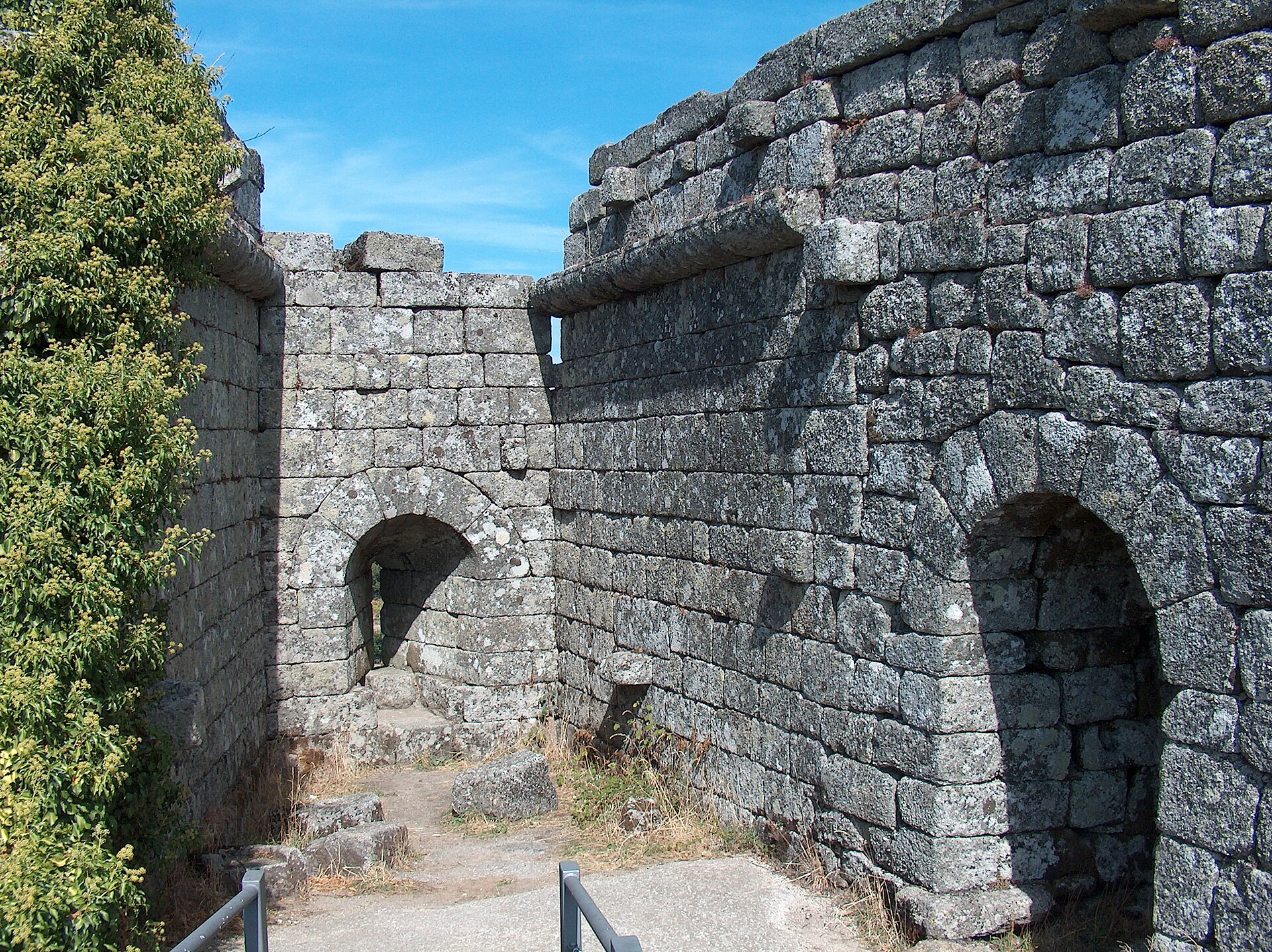
The excavated area reveals an elaborate defensive system built in three lines: walls roughly 4 metres high and 2 to 3.5 metres thick, ditches 3 to 4 metres deep, and a band of standing stones acting as anti-cavalry obstacles. Inside the perimeter, foundations of circular and rectangular dwellings survive, linked by internal access ramps, while an additional defensive redoubt guards the settlement's entrance. This triple-line defensive layout is found in Portugal only in a handful of Trás-os-Montes hillforts, making Carvalhelhos a nationally distinctive example.
How do we know so much about daily life here?
Successive excavation campaigns have taken place since 1951, initiated by Dr. J.J.R. dos Santos Júnior, professor at the Faculty of Sciences of the University of Porto. The digs produced a rich body of material: Iron Age pottery, millstones, weapons and tools tied to the castreja culture, alongside Roman-period glass, ceramics, fibulae, tegula roof tiles and coins. These finds have allowed researchers to anchor the settlement's chronology and confirm continuous occupation from the Iron Age through Romanization.
Where are the finds displayed today?
Objects recovered at the site are held by two institutions: the Museu da Região Flaviense and the Museu do Instituto de Antropologia at the University of Porto's Faculty of Sciences. Visitors touring the hillfort in person can complement the visit by viewing the original artefacts in a museum setting.
What protection status does the site hold?
Castro de Carvalhelhos is classified as a Núcleo Arqueológico de Interesse Público (Archaeological Site of Public Interest) under Decree No. 38,491 of 6 November 1951 — one of the oldest formal heritage protections in the region.
Frequently asked questions
Where exactly is Castro de Carvalhelhos located? In the parish of Beça, municipality of Boticas, above the Carvalhelhos thermal spa, at about 820 metres altitude.
What period does the settlement date from? The 1st century BC through the end of the 1st century AD, with a clear continuation into the Roman period.
What makes the defensive system notable? Three defensive lines — walls, ditches and standing stones — rarely found together outside Trás-os-Montes hillforts.
Where can the excavated artefacts be seen? At the Museu da Região Flaviense and the Museu do Instituto de Antropologia of the University of Porto.
Since when has the site been legally protected? Since 1951, under Decree No. 38,491.
Nearby places

Earn badges for the places you visit
Download NextOnTrip, discover new places and check off your trails.