About this place
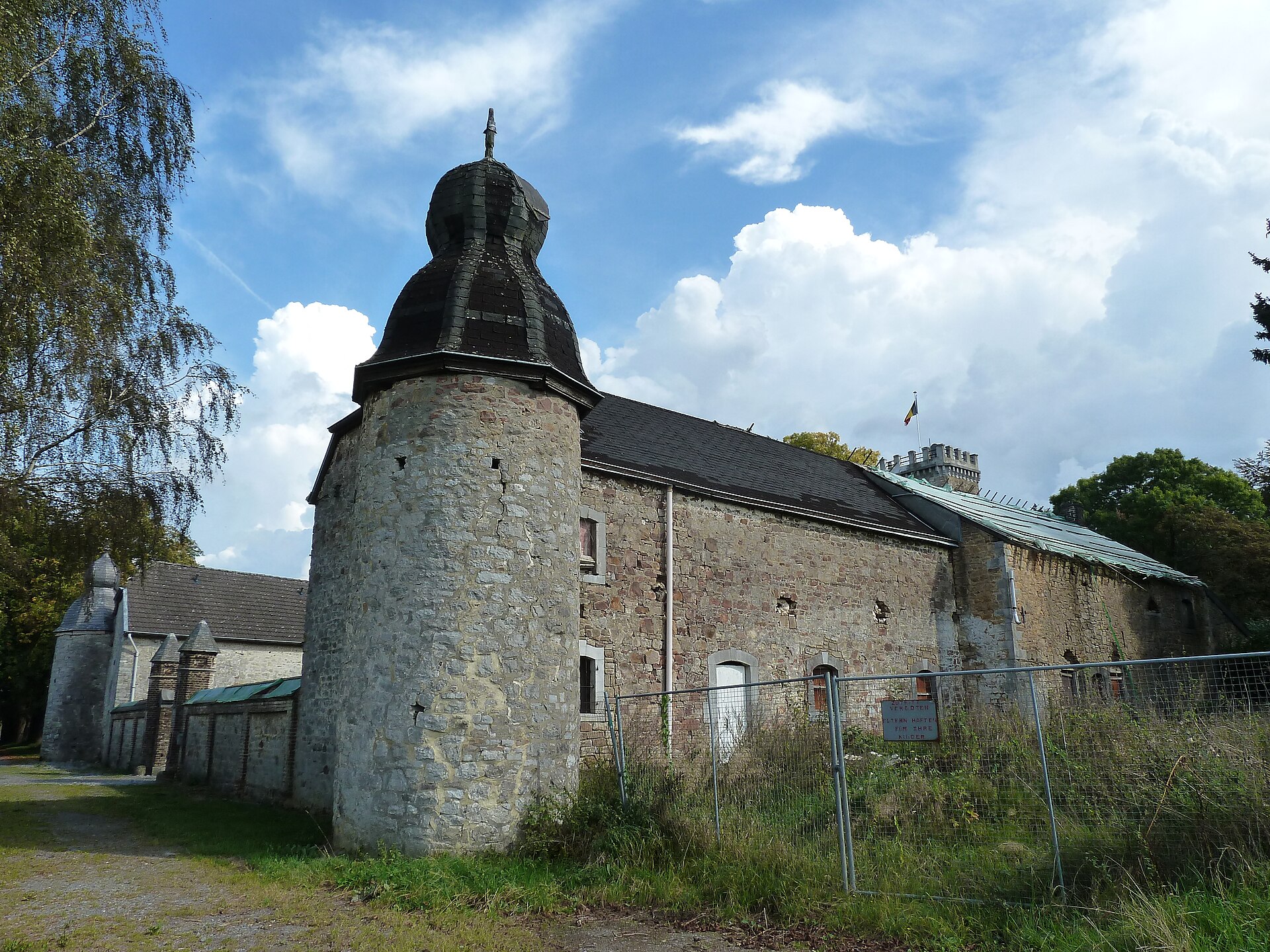
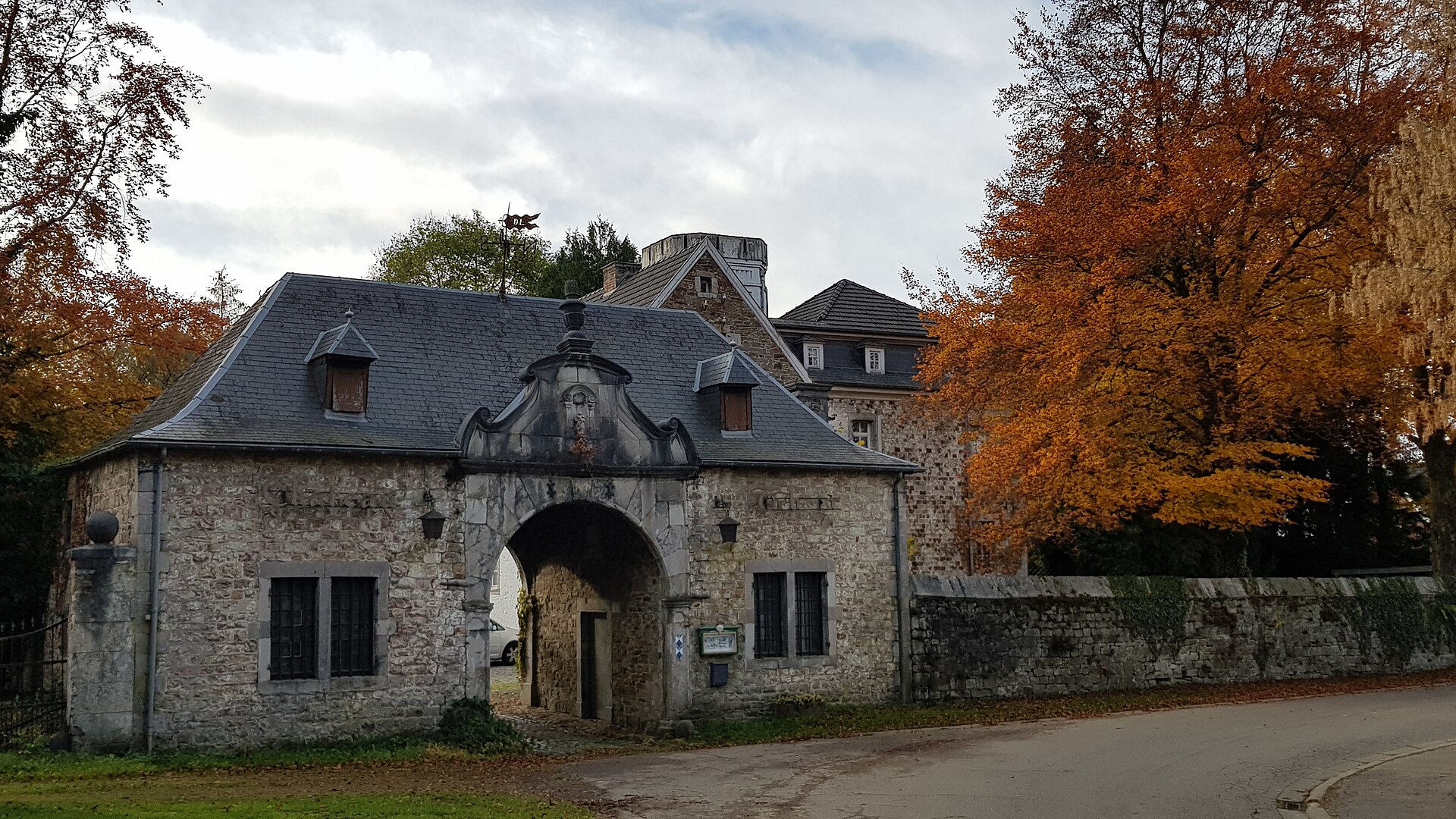
Castle Gross Weims is a moated manor house in Kettenis, a district of Eupen in the German-speaking part of eastern Belgium, close to the border with Germany. From the outside it reads today as a quiet country estate rather than a fortress, but its roots go back to the Middle Ages, and its long chain of owners mirrors the wider history of the Ostbelgien region.
Where does the name come from?
The earliest record of a stronghold on this site dates to 1334. At that time the estate was held as a fief of the cathedral chapter of Our Lady in Aachen, and for a period it shared its fate with the neighbouring fief of Libermé, remaining in the hands of a side branch of the von Libermé family. The property only acquired its present name in the early fifteenth century: in 1405 Jüttgen von Libernmyn married Johann von Weims, and his surname stuck to the estate from then on. Just under 120 years later, in 1524, the castle passed to the Van Hirtz family — again through marriage, which was the typical way such landed estates changed hands.
Damage and rebuilding
The Thirty Years' War (1618–1648) left its mark across much of Central Europe, and Gross Weims was no exception: the building suffered serious damage during the conflict, and the moats surrounding it were largely filled in as their defensive purpose faded. Reconstruction followed gradually, but the appearance visitors encounter today owes most to a physician named Rasquin. After taking over the estate as its new owner, he gave the manor its current form in 1755, turning what had been a defensive stronghold into a comfortable country residence suited to a well-off family rather than to warfare.
The Miessen family and today
Another significant change of ownership came in 1917, when the estate passed to brothers Nicolas and Leo Miessen. It was this family that later divided the buildings and land among different heirs, and their descendants have remained connected to the property for more than a century since. Part of the castle now operates as guest accommodation, letting visitors do more than admire the architecture from outside — they can actually stay within walls that date back to the medieval period.
The castle sits on Weimserstraße, in the quiet, rural surroundings of Kettenis — away from the bustle of central Eupen, even though it still falls within its administrative boundaries. That makes it a worthwhile stop for travellers looking for lesser-known, low-key heritage sites in the Belgian-German border region, where clusters of similar landed estates (such as the aforementioned Libermé) trace a kind of local history trail of the regional nobility.
Frequently asked questions
Can Castle Gross Weims be visited? The property remains privately owned by the Miessen family, and part of it functions as guest rooms — it's better suited to an overnight stay and a walk around the moat than to a conventional guided tour with full interior access.
Where does the castle's name come from? From Johann von Weims, who married the estate's heiress, Jüttgen von Libernmyn, in 1405.
How old is the castle? The earliest historical mentions date back to 1334, though the building owes its present appearance mainly to a 1755 remodel.
Was the castle damaged during any wars? Yes, it suffered serious damage during the Thirty Years' War (1618–1648), after which the surrounding moats were partly filled in.
Nearby places

Earn badges for the places you visit
Download NextOnTrip, discover new places and check off your trails.