About this place
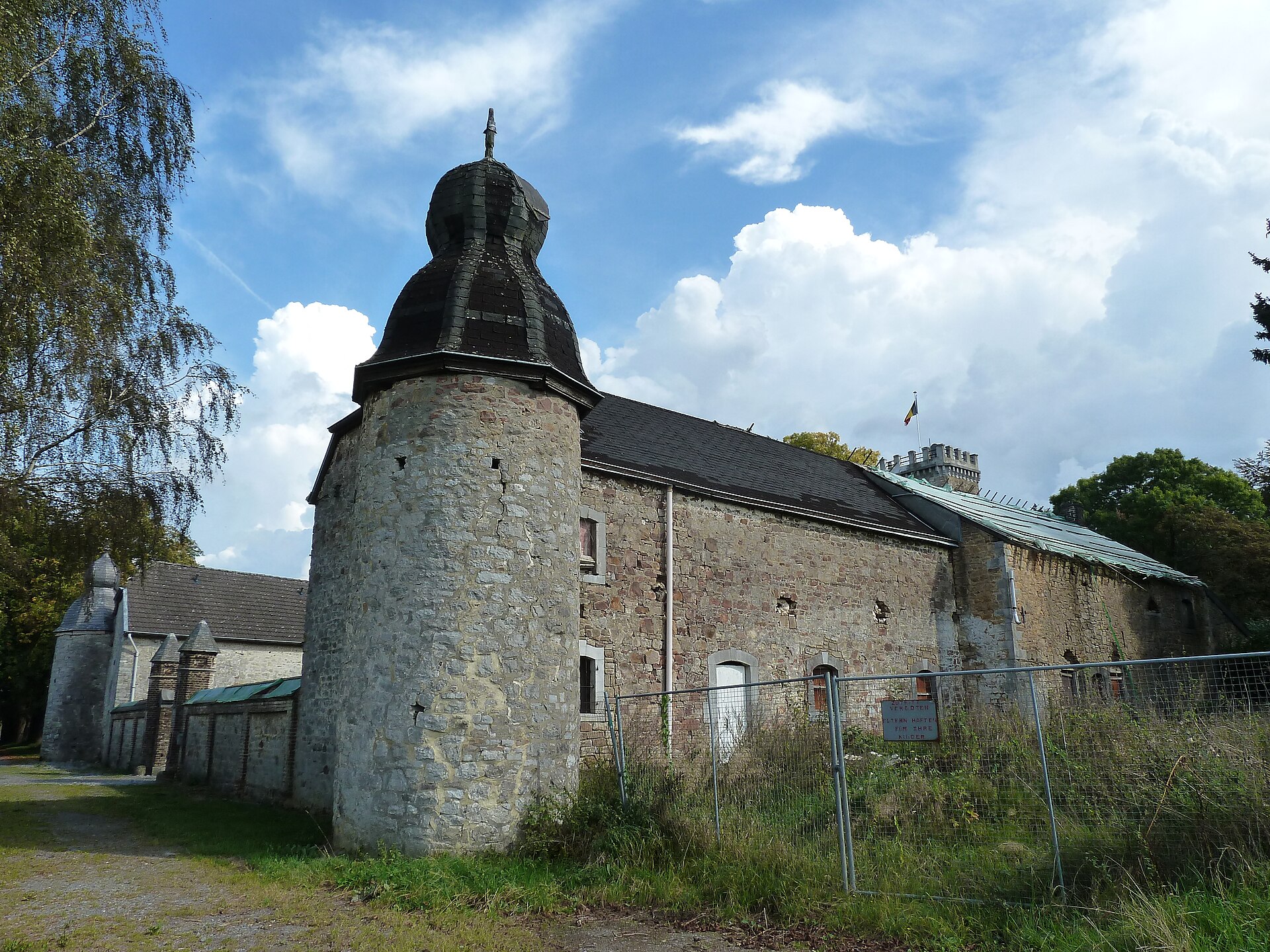
Knoppenburg is a former farm estate with a neoclassical manor house, set on the western edge of the hamlet of Neudorf in the municipality of Raeren, in the German-speaking region of eastern Belgium. Surrounded by open meadows, it combines the working history of a rural estate with a distinctive, almost fairy-tale silhouette, thanks to two onion-domed corner towers that make it recognizable from a distance.
Where does the name Knoppenburg come from?
The name has nothing to do with a noble family — it comes from an architectural detail. In the local Raeren dialect, the word "Knop" means bud or knob, and it was used to describe the shape of the domed roofs crowning the towers. Before it became known by this name, the estate was referred to simply as "Hof op der Heyde," meaning "farm on the heath," a name that reflects the character of the surrounding landscape at the time it was built.
How did the estate develop over the centuries?
The origins of Knoppenburg go back to the 16th century, when it was likely split off from the larger Belven estate, which belonged to the Bertolf von Belven family. A turning point came in 1615, when Simon Bertolf von Belven passed the property to Wilhelm Vischer and his son Leonard. It was this family that carried out the expansion that gave Knoppenburg its present form: they added the surviving economic wings — to the east and west — along with the round corner towers that remain the estate's most recognizable feature.
The onion domes that eventually gave the property its name were added later, roughly a century after the main buildings were constructed. They gave the complex a striking, almost castle-like appearance, even though Knoppenburg has always been, at its core, a working farm rather than a fortified residence.
What can visitors see there today?
The estate consists of a residential manor house together with its flanking economic wings, arranged around a courtyard in a layout typical of farms in this part of the region. The two round corner towers, capped with onion domes, remain the most striking visual element and the detail most often captured in photographs of the site.
The surrounding meadows reinforce the estate's rural, secluded feel — despite sitting close to the built-up area of Neudorf, Knoppenburg has kept the atmosphere of an isolated farmstead.
Is Knoppenburg a protected heritage site?
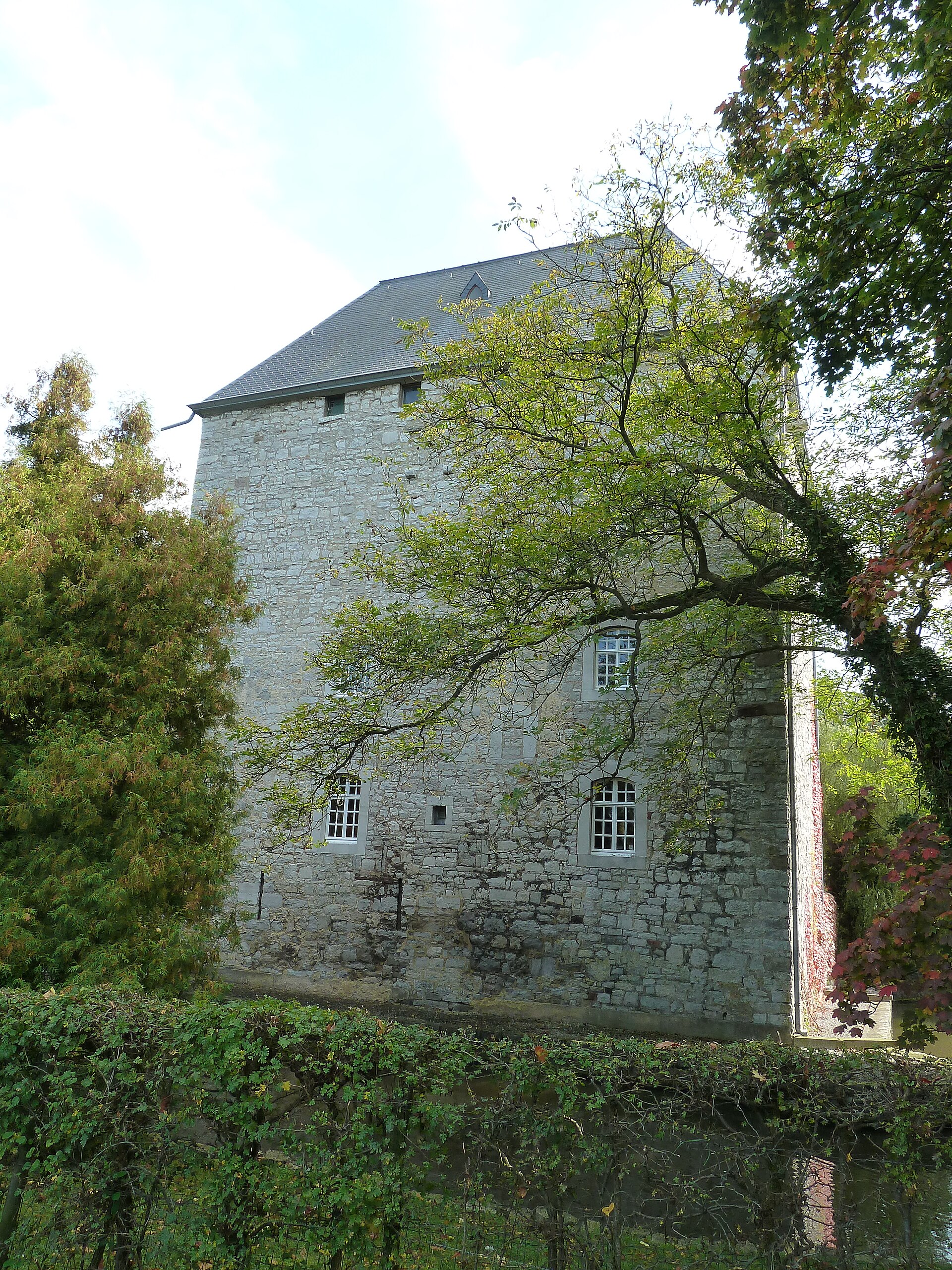
Yes. Since November 17, 1989, the estate has been listed as a protected monument by the German-speaking Community of Belgium. The protection covers specific elements: both round towers, the facades and roofs of the west and east wings, and the walls and roof of the residential building itself (excluding two adjoining side annexes), as well as the immediate surroundings of the estate. This scope of protection reflects an appreciation both for the architectural value of the individual buildings and for the coherence of the whole complex within its landscape setting.
Where exactly is Knoppenburg located?
The estate is located at Knoppenburg 1, postal code 4730, within the municipality of Raeren. This area belongs to East Belgium — the country's German-speaking region, known for its scattered rural heritage sites tucked among villages. For travelers exploring the Eifel region or the area around Aachen, Knoppenburg makes for an interesting, low-key stop, offering a glimpse of what agricultural architecture in this border region looked like several centuries ago.
Frequently asked questions
Can visitors enter Knoppenburg? The buildings are privately owned, so access is generally limited to viewing the estate from the outside, out of respect for the residents' privacy.
How is Knoppenburg different from a castle? It is a former farm estate rather than a defensive structure — the towers and onion domes give it a dramatic appearance, but its original purpose was agricultural, not noble residence or fortification.
Where does the name Knoppenburg come from? It derives from "Knop" (bud or knob) in the local dialect, referring to the shape of the onion domes crowning the estate's corner towers.
Nearby places

Earn badges for the places you visit
Download NextOnTrip, discover new places and check off your trails.