About this place
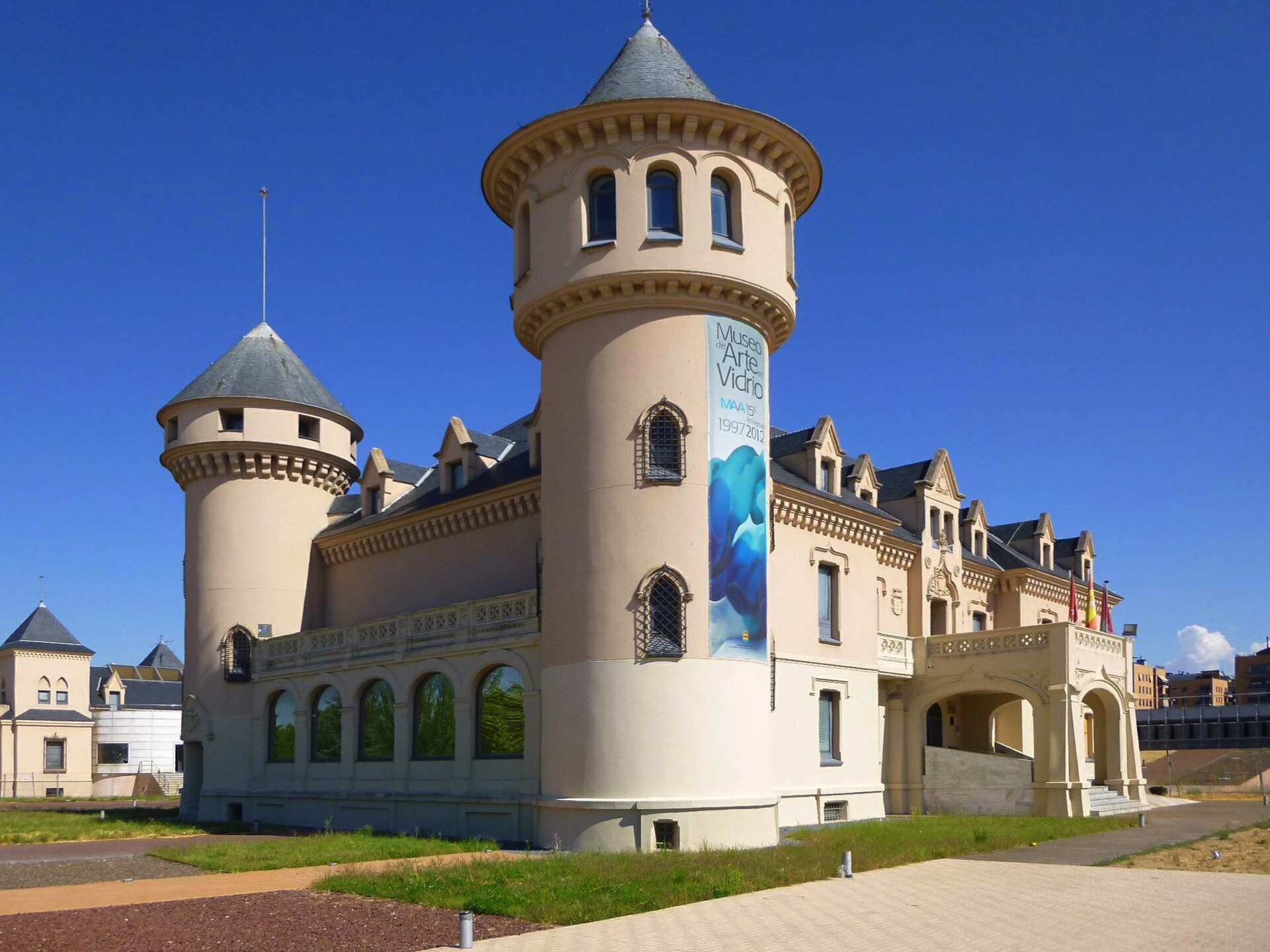
Castillos de Valderas y Museo de Arte en Vidrio de Alcorcón is an unusual combination in Alcorcón, just outside Madrid — a public park built around two early 20th-century "castles," one of which now houses a glass art museum. It brings together local aristocratic history and one of the region's more distinctive art collections.
Why are there castles in Alcorcón?
Despite appearances, these buildings are not medieval. Construction began in 1917 under José Sanchiz de Quesada, Marquis of Valderas, who commissioned three structures in a style echoing English country-house architecture rather than genuine defensive fortifications. Only two survive today: one was destroyed by fire in the 1950s, and another was demolished in 1991 after falling into disrepair. The main building, known locally as the Castillo Grande, still shows its original architectural character.
The city of Alcorcón acquired the site in 1988, and restoration work was completed in 1991, when the grounds opened as a public park. Covering roughly 14 hectares in the San José de Valderas neighborhood in the northeast of Alcorcón, the park now functions as one of the city's cultural focal points.
What is there to see?
The Castillo Grande is the centerpiece of the site: inside its roughly 2,200 square meters, the Museo de Arte en Vidrio de Alcorcón (MAVA) has operated since 1997. The museum was founded on the initiative of sculptor Javier Gómez, who wanted a dedicated space to demonstrate what glass can do as a contemporary art medium. The permanent collection now holds more than 200 pieces — sculptures, installations and objects made using blown, cast and flat glass techniques. A large part of the collection comes from a donation by collector Takako Sano, supplemented by pieces given directly by artists from a range of countries.
Outside the museum building, the park's grounds are worth a walk in their own right. Along the main avenue stands "El Refugio de la Vida," a set of sixteen concrete sculptures created by artist Carlos Armiño in 2005. The contemporary, geometric forms make a deliberate contrast with the older, more classical castle architecture nearby.
It's also worth knowing that the city once planned to expand the site with a further arts venue, CREAA, but the project was shelved during Spain's 2008–2014 economic crisis and was never completed.
How to get there?
The park sits in the San José de Valderas neighborhood of Alcorcón. The easiest way to arrive is by metro: Joaquín Vilumbrales station is about a nine-minute walk from the park entrance. Bus lines 2, 450, 514 and 560 also serve the area, making it a straightforward trip from central Alcorcón or from Madrid itself.
When should you visit?
As an open-air park, the site can be visited year-round, though a walk among the historic buildings and outdoor sculptures is most comfortable in spring and autumn, when temperatures in the Madrid region are milder. The MAVA museum interior is a weather-independent option, useful on days when conditions don't favor a longer stroll outside.
Frequently Asked Questions
Are the castles in Alcorcón genuine medieval fortifications? No — they are early 20th-century constructions, built from 1917 by the Marquis of Valderas in a style inspired by English residential architecture rather than actual defensive castles.
How many of the original buildings still stand? Of the three original structures, two remain. One was lost to fire in the 1950s, and another was demolished in 1991 due to its poor condition.
What can you see inside the Museo de Arte en Vidrio? More than 200 glass artworks — sculptures, installations and objects by artists from several countries, including a substantial collection donated by Takako Sano.
What is the best way to reach the park? By metro to Joaquín Vilumbrales station (about a nine-minute walk), or by bus lines 2, 450, 514 and 560.
Nearby places

Earn badges for the places you visit
Download NextOnTrip, discover new places and check off your trails.