About this place
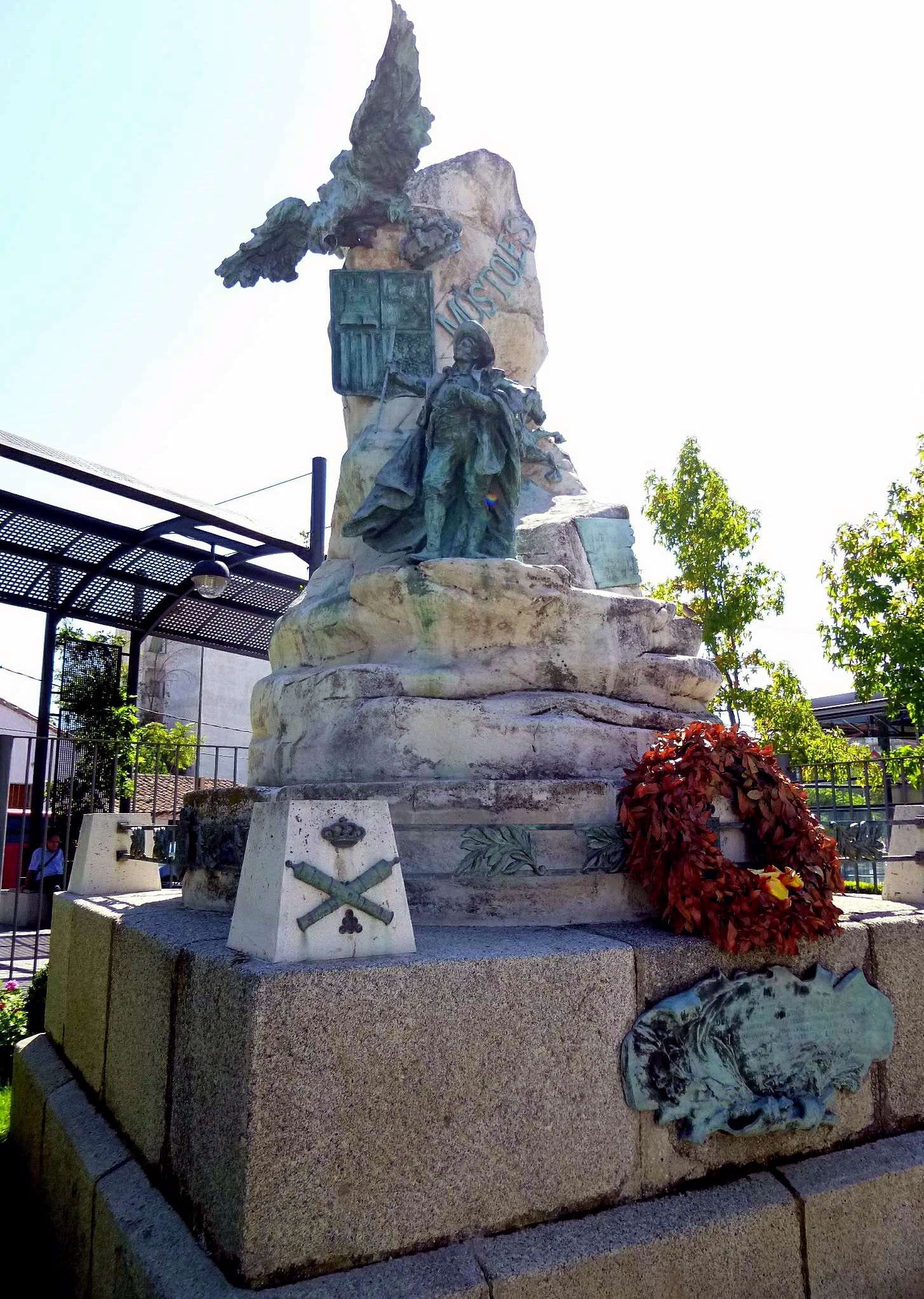
Monument to Andrés Torrejón stands in Móstoles, in the Community of Madrid, commemorating one of the pivotal episodes of Spanish history — the signing of the so-called Bando de Independencia on 2 May 1808. The monument honors the local mayor, Andrés Torrejón, who, together with the other alcalde, Simón Hernández, issued a proclamation calling for armed resistance against Napoleon's troops after news reached them of the massacre in Madrid.
The monument was unveiled in 1908, marking the centenary of those events, with King Alfonso XIII presiding over the inauguration ceremony in person. It was designed by the Spanish sculptor Aurelio Carretero.
What will you see?
The monument is a layered, symbol-heavy composition. On a granite base sits a chunk of rock brought from Segovia, meant to represent the Pyrenees — the mountain range through which Napoleon's army entered Spain in 1808. Perched on top of the rock is an imperial eagle with outstretched wings, one claw reaching to tear the royal crown from Spain's coat of arms, a clear allegory of the French invasion and the assault on Spanish sovereignty.
At the base of this composition stands the figure of Mayor Torrejón, alongside a horseman galloping with a copy of the famous bando — the text of the independence proclamation is reproduced on a bronze plaque set into the monument. That document, drafted by Juan Pérez Villamil, urged other towns and authorities to take up arms against the Napoleonic threat, and it became the founding local legend of Móstoles as the town that "declared war on Napoleon."
How to get there?
The monument sits in central Móstoles, a town in the southwestern part of the Madrid metropolitan area, well connected to the capital by Cercanías commuter trains and the metro. The journey from central Madrid typically takes 20 to 30 minutes. The site is easily reachable on foot from the town's main landmarks and forms a natural stop on a historical walk through Móstoles, alongside places such as the Casa Museo Andrés Torrejón, the house where the mayor himself lived.
When to visit?
The monument, standing in an open public space, can be visited year-round. A particularly notable time is 2 May, the anniversary of the bando's signing, when Móstoles holds commemorative events tied to the 1808 uprising. Visiting around that date offers a chance to see the site in the context of local historical memory rather than simply as a stop on a map.
Frequently asked questions
Who was Andrés Torrejón? He was the alcalde (mayor) of Móstoles who, in May 1808, after word arrived of the massacre of Madrid's residents by Napoleonic troops, signed the Bando de Independencia together with fellow alcalde Simón Hernández — a proclamation regarded as the symbolic opening act of Spain's War of Independence.
When was the monument built and who designed it? It was unveiled in 1908 to mark the centenary of the 1808 events. The design is the work of sculptor Aurelio Carretero, and the inauguration was presided over by King Alfonso XIII.
What does the eagle on the monument symbolize? The imperial eagle, wings spread over the rock, represents Napoleonic France attempting to tear the crown from Spain's coat of arms — a metaphor for the threat to national sovereignty that Torrejón and others stood against.
Is it worth combining the visit with other sites in Móstoles? Yes — nearby stands the Casa Museo Andrés Torrejón, the house where the mayor lived, now open as a small museum dedicated to the events of 1808 and Móstoles' local history.
Nearby places

Earn badges for the places you visit
Download NextOnTrip, discover new places and check off your trails.