About this place
Castillo del Ocaive is a medieval fortress crowning a rocky outcrop above Pedreguer, a charming town in the Alicante province on the Costa Blanca. The ruins sit atop the Ocaive rock within the Muntanya Gran range, which stretches between the Gorgos river and the town itself, and they command one of the finest panoramic views in the area.
What is the history behind the castle?
Human activity on this rock dates back to the Bronze Age: archaeologists have found a metallurgical furnace together with a casting mold used to produce arrowheads, dated to roughly 1000 BC. The fortification itself, however, is much younger. It originated during the Andalusian period (12th–13th centuries), when it served as a control point over the scattered farming settlements of the surrounding region.
The castle as it survives today was built by the Ruiz de Corella family between 1271 and 1284. It functioned as an administrative center for the outlying farmsteads and was linked to nearby Dénia, the region's historic capital at the time. Restoration work wrapped up in 2025, partly funded through European FEDER funds, uncovering a clearer picture of the castle's internal layout and stabilizing the walls against further decay. The surviving remains hold the status of Cultural Heritage Asset (Bien de Interés Cultural).
What will you see on site?
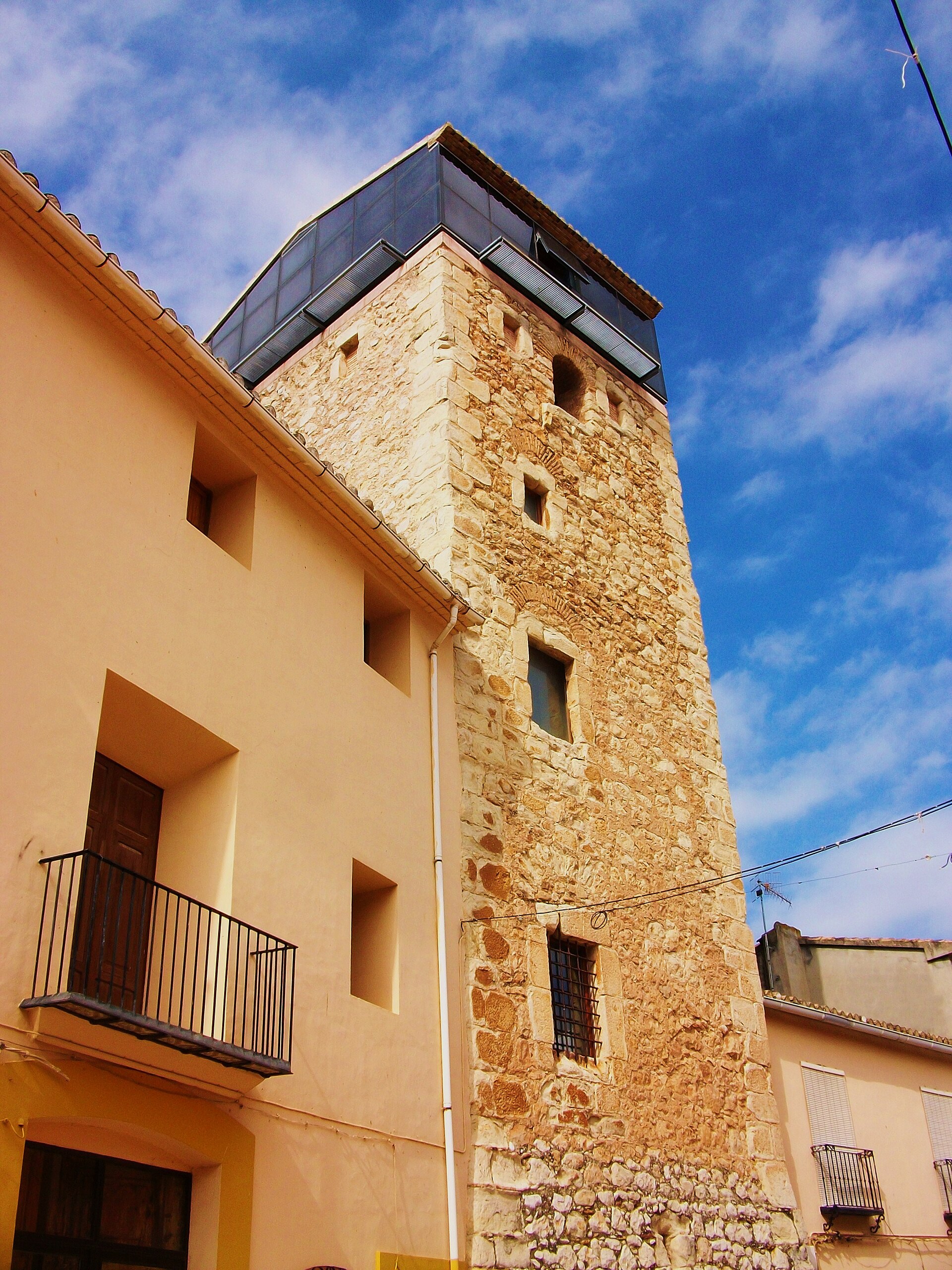
At the summit stands a rectangular tower that originally rose at least one storey higher, reinforced with a sloped buttress on the cliff side. The entrance faced south, opening into another room with a slightly trapezoidal floor plan — the springing of the lowered vault that once covered it is still visible today. A little further down, on the eastern side, a large rectangular cistern from the Andalusian period survives, evidence of a sophisticated water-management system.
Beyond the tower itself, the route reveals the remains of a courtyard, an eastern wing, and a guardhouse. From the viewing point, the panorama stretches across the Llosa valley and the territory the fortress once oversaw, extending toward the outskirts of Dénia.
How do you get there?
The starting point is the town of Pedreguer, from where you drive to Cova de les Miqueles, the trailhead for the hiking path that climbs to the summit. The full circular route — known as the "route of the castle of l'Ocaive and the medieval farmhouses" — covers roughly 10 km and takes about 3 hours to complete. It is rated medium-low difficulty, making it accessible to hikers with average fitness, though sturdy trekking shoes, plenty of water, and sun protection are recommended, since most of the ascent offers little shade.
When is the best time to visit?
Spring (March–May) and autumn (October–November) are the best seasons for the hike, when Costa Blanca temperatures are mild and visibility from the summit is at its best. Summer heat can make the exposed climb considerably harder, so an early morning start is advisable if visiting in July or August.
Frequently asked questions
How long does it take to reach the Castillo del Ocaive? The full circular route from Pedreguer covers about 10 km and takes roughly 3 hours, depending on your pace and how many stops you make to enjoy the views.
Is the hike difficult? The trail is rated medium-low — no climbing equipment is needed, but the uneven terrain and lack of shade make good trekking shoes and enough water essential.
What else can you see besides the tower? Alongside the main tower, visitors can spot the remains of a courtyard, the Andalusian-era cistern, an eastern wing, and a guardhouse, with the viewpoint overlooking the Llosa valley.
Is the castle open to the public today? Yes, the ruins are accessible on foot via the trail from Pedreguer; restoration work completed in 2025 improved both the preservation and the readability of the site for visitors.
Nearby places

Earn badges for the places you visit
Download NextOnTrip, discover new places and check off your trails.