About this place
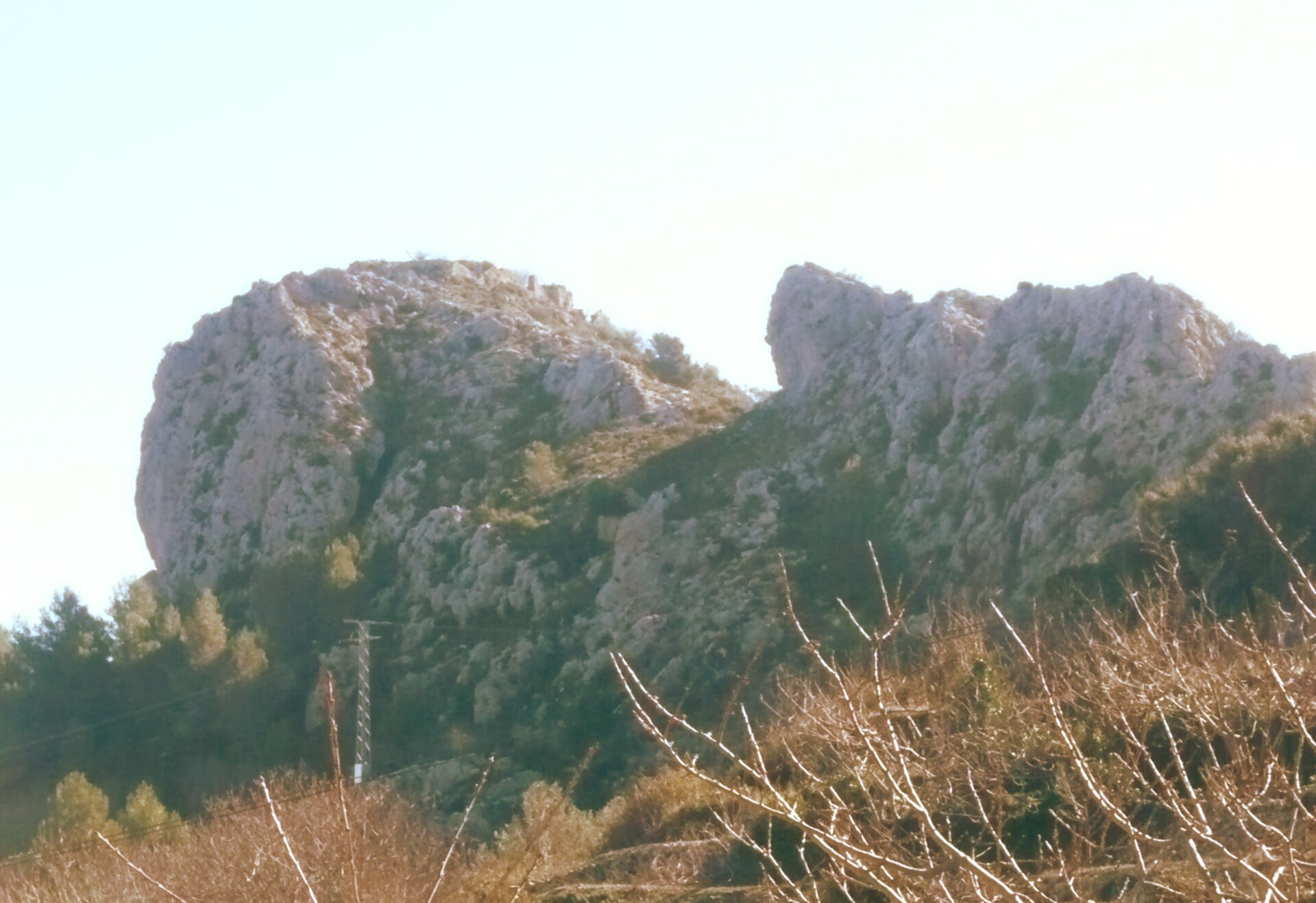
Castillo de las Adzaharas sits above the village of La Vall de Laguar, tucked into the mountainous interior of the Marina Alta district in Alicante province. This crumbling hilltop fortress near Fontilles rewards travelers willing to leave the coast behind and head into one of the wildest corners of the Costa Blanca hinterland.
What is the history behind the castle?
The fortification has Muslim-era origins and originally consisted of two rectangular chambers, partly carved directly into the rock and enclosed by walls of rammed earth (tapial) so dense they have outlasted centuries of weathering. After the Christian conquest of the area, the estate passed in 1300 to Constanza of Aragón, and in 1609 the castle was taken by Sancho de Luna. Its final chapter came with the expulsion of the Moriscos ordered by Philip II: residents of the Laguar valley fled toward Mount Cavall Verd, where troops from Naples under commander Agustín Mejías cornered them, and roughly 1,500 people — men, women and children among them — died in the ensuing violence. The castle was abandoned soon after and never resettled.
What will you actually see on site?
What remains today is a genuine ruin — sections of defensive wall, a stone water cistern (aljibe), and the base of one tower, all half-swallowed by scrub vegetation. There are no ticket booths, information panels, or visitor facilities of any kind. This is a site for travelers who want raw history and a bit of scrambling, not a polished monument.
How do you get there?
The ruins stand within the municipality of La Vall de Laguar, on high ground near Fontilles, a short drive inland from the Costa Blanca coastline. The valley is threaded by narrow mountain roads connecting the villages of Campell, Fleix and Benimaurell, and a rental car is by far the most practical way in, since public transport through this area is minimal. The final stretch to the castle is on foot over unmarked terrain, so sturdy footwear is essential.
When is the best time to visit?
Because the site sits exposed on rocky, largely shadeless terrain, spring (March to May) and autumn (September to November) offer the most comfortable conditions, with milder temperatures than the peak of summer. Midsummer heat in this part of Marina Alta can be intense, so an early-morning visit is the smarter choice if you're coming between June and August.
Frequently Asked Questions
Is there an entrance fee for Castillo de las Adzaharas? No — there is no ticket office or formal visitor infrastructure. It is an exposed ruin on open ground.
Is the site suitable for young children? The ground is uneven, rocky and partly overgrown with no marked paths, so visits call for caution and are not especially comfortable for very young kids.
What else can you pair with a visit to the castle? La Vall de Laguar valley works well as a base for hiking through the mountainous backcountry of Marina Alta and for exploring the stone architecture of the region's terraced villages.
Are there other historic sites nearby? The municipality itself and neighboring settlements, including Fontilles, carry a long history tied to the area's period of Muslim rule and the Christian resettlement that followed in this part of Alicante province.
Nearby places

Earn badges for the places you visit
Download NextOnTrip, discover new places and check off your trails.